dailynewsnblog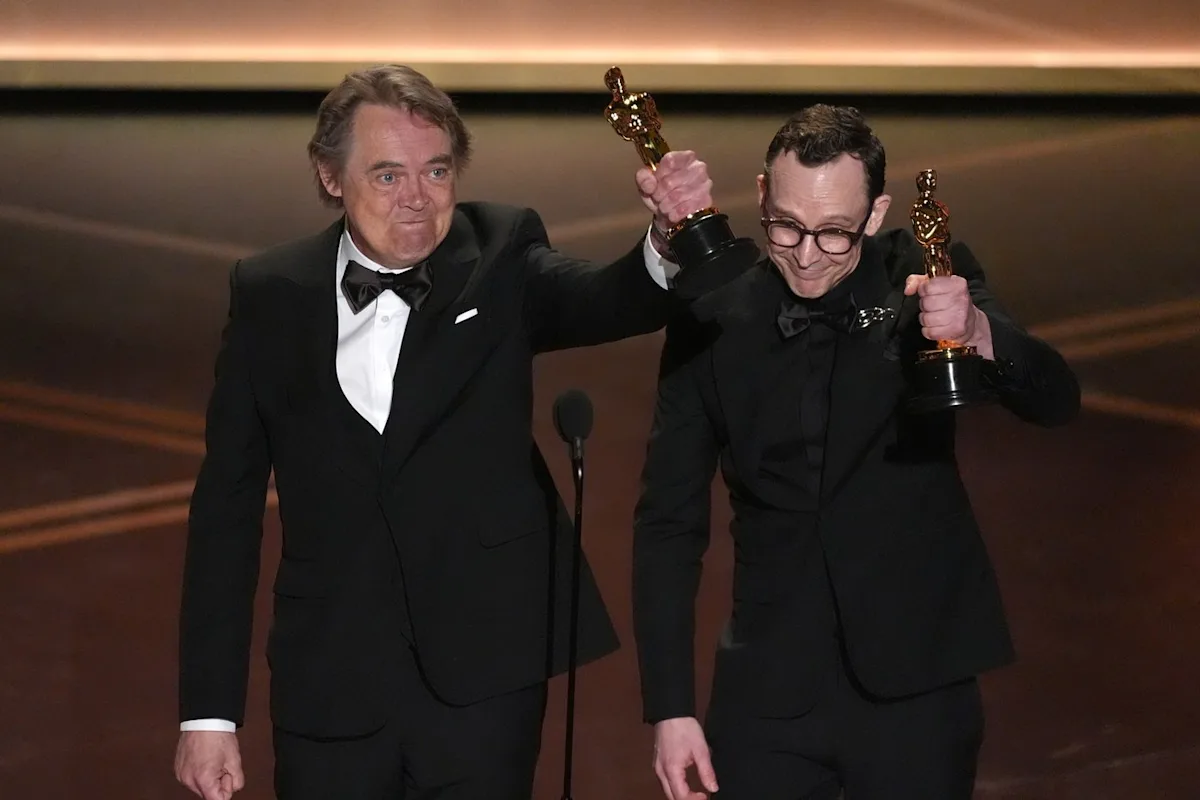
Moments after winning an Oscar, Maciek Szczerbowski reflected on his parents fleeing Poland decades ago in search of a better life in Canada.
“My mother and my father packed two suitcases and abandoned their entire life, packed me and my little brother into a crappy Yugoslavian car, and escaped two weeks before the Russians came in,” said the Montreal-based director in a phone interview from backstage at the Academy Awards on Sunday.
“If they could see that the country they chose for us to live in is this happy with me, it would have moved me to tears. If my mother were to know this, it would move her to tears.”
Szczerbowski and filmmaking partner Chris Lavis had just won the Academy Award for best animated short for “The Girl Who Cried Pearls,” part of a surge of Canadian triumphs at the ceremony.
The haunting stop-motion film, set in turn-of-the-century Montreal, tells the story of an impoverished boy who falls in love with a mysterious girl who weeps pearls at night. But the filmmakers say the Oscar represents something bigger than their own project.
“We recognize this as the conclusion of many decades of policy,” Szczerbowski said, crediting Canada’s cultural funding system for supporting the arts. Their film was funded by the National Film Board of Canada.
He thanked the public film producer for “allowing goofs like us who, in our 50s, play with dolls to make things that actually inspire the world.
“There’s a billion people that just heard about our country.”
It was a big night for homegrown animation — Korean-Canadian filmmaker Maggie Kang won the Oscar for best animated feature for “KPop Demon Hunters,” which she wrote and co-directed with Chris Appelhans.
The musical fantasy about a demon-slaying K-pop group is the most-viewed film in Netflix’s history.
While accepting the award, an emotional Kang dedicated the win “to Koreans everywhere,” saying she was sorry it took so long “for those of you who look like me” to see themselves represented in a film like the smash hit.
“But it is here. And that means that the next generations don’t have to go longing,” she said, fighting back tears.
The film’s song “Golden” — performed by Ejae, Audrey Nuna and Rei Ami as fictional K-pop group Huntrix — became the first K-pop song to win best original song at the Oscars.
Meanwhile, the Canadian craftspeople behind Guillermo del Toro’s “Frankenstein” also had reason to celebrate Sunday.
Production designer Tamara Deverell and set decorator Shane Vieau won the Oscar for best production design, while Jordan Samuel and Cliona Furey were part of the team that won best makeup and hairstyling.