dailynewsnblog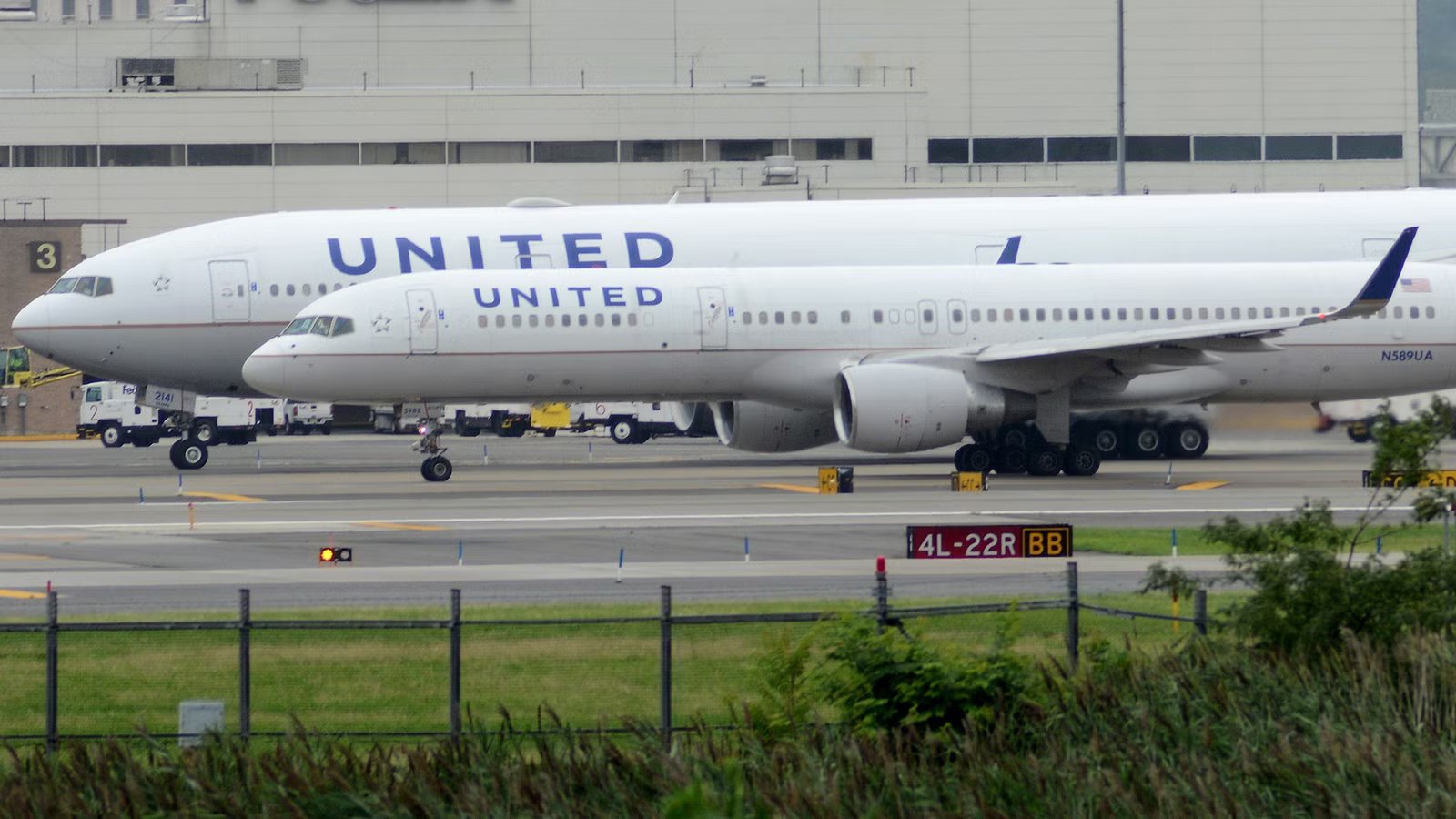
The Boeing 757 has long held a unique place in  United Airlines’fleet, serving as a versatile workhorse capable of flying both transcontinental routes and shorter international hops. Known for its powerful engines, long range, and narrowbody efficiency, the 757 became a staple for United starting in the 1980s. It fitted neatly between smaller domestic aircraft and larger widebodies, allowing the airline to serve secondary cities and thinner long-haul markets with greater profitability.
Over the decades, United operated several variants of the 757, using them for premium-heavy transcontinental flights, high-demand leisure destinations, and even transatlantic routes from the East Coast. However, as the aviation industry modernizes and fuel efficiency becomes paramount, United has begun phasing out its aging 757 fleet in favor of next-generation aircraft such as the Airbus A321XLR and Boeing 737 MAX 10.
United & The 757: Building A Legacy In The Skies

United Airlines first introduced the Boeing 757-200 into its fleet in 1989, a few years after the aircraft’s commercial debut in 1983. It was designed as a narrowbody, twin-engine jet capable of flying, dependent on a number of factors, up to 3,915 nautical miles (7,250km) for the 757-200 variant and up to 3,685 nautical miles (6,825km) for the 757-300 variant. United ordered and took delivery of numerous 757s over the years, eventually operating one of the largest fleets of the type in the world.
Throughout the 1990s and early 2000s, United deployed the 757 on a wide variety of routes, including transcontinental flights, as well as international services from East Coast hubs to destinations in Europe and South America. The 757’s range and fuel efficiency allowed United to serve long and thin routes, namely those with lower passenger demand but longer distances that wouldn’t be economical with a widebody aircraft.
At its peak, United operated more than 120 Boeing 757s. The aircraft’s long service life is a testament to its versatility and reliability. However, by the 2010s, the aging fleet began to show its limitations, prompting United to begin phasing some variants out. Despite this, the legacy of the 757 at United remains strong. It was not just a transitional aircraft: rather, it was a foundational tool that helped the airline expand its network and define premium domestic travel for nearly four decades.
The 2010 Merger With Continental

The merger between United and Continental Airlines in 2010 marked a significant turning point in the US aviation industry. It was billed as a ‘merger of equals,’ though United technically acquired Continental. The merged airline retained the United name but adopted Continental’s globe logo and corporate branding, symbolizing a blending of strengths rather than a full takeover.
Together, the two carriers formed the world’s largest airline at the time, creating a global network that offered passengers more destinations, better connectivity, and a more competitive loyalty program under the unified MileagePlus brand. Operational integration after the merger was a massive undertaking. The airlines had to combine complex systems, ranging from IT infrastructure and booking platforms to crew scheduling and maintenance programs.
Merging labor groups such as pilots, flight attendants, and ground staff proved especially challenging, as each group came with its own contracts, seniority systems, and workplace cultures. The integration gradually stabilized, and the airline began reaping the benefits of a larger and more efficient operational footprint. From a strategic standpoint, the merger significantly enhanced United’s global reach and financial competitiveness, with the combined airline operating around 700 aircraft at the time of the merger.
A key point of the merger was United’s acquisition of Continental’s 757 fleet, which strengthened United’s presence in key domestic hubs, making it easier to funnel passengers through major connecting points. Financially, the merger helped the airline reduce duplicate costs, consolidate operations, and achieve annual savings. While the integration process took several years, the merger ultimately positioned United as a global leader in commercial aviation.
Rolls-Royce VS Pratt & Whitney

The Boeing 757-200 was offered with two engine options: the Rolls-Royce RB211-535 and the Pratt & Whitney PW2000 series. While both engines delivered similar thrust ranges, typically between 37,000 and 43,000 pounds of thrust, they had distinct differences in design philosophy, performance characteristics, and long-term operating economics. The Pratt & Whitney PW2000 was selected by several major US carriers, including United for its early 757s.
Meanwhile, the Rolls-Royce RB211-535 became the more popular global choice, especially among international and long-haul operators like  British Airways,
  Delta Air Lines, and Continental Airlines. The table below, using data from Pratt & Whitney and Rolls-Royce, shows a comparison of two engine types offered on the 757.
Specifications | Pratt & Whitney PW2000 | Rolls‑Royce RB211‑535E4 |
|---|---|---|
Thrust Range | 37,000 to 43,000 lbf | 40,100 to 43,100 lbf |
Bypass Ratio | 6:1 | 4.3:1 |
Length | 141.4 inches (approx 3.6m) | 198.2 inches (approx 5m) |
One of the key advantages of the Rolls-Royce engine was its strong performance on longer-haul flights and in challenging environmental conditions. It was often praised for its fuel efficiency during cruise and its durability over time, which made it ideal for transatlantic operations. The RB211 was also ETOPS-certified earlier than the PW2000, making it more appealing for airlines flying extended overwater routes.
A Choice To Be Made

United’s decision to retire its legacy Boeing 757-200s powered by Pratt & Whitney engines and adopt Continental’s Rolls-Royce-powered 757 fleet following the merger was likely driven by a combination of fleet standardization, cost efficiency, and operational reliability. Maintaining two separate engine types across the same aircraft model significantly increases maintenance complexity, training requirements for mechanics and flight crews, and the need for separate inventories of spare parts.
As such, by consolidating around the Rolls-Royce-powered fleet inherited from Continental Airlines, United simplified its operations and reduced long-term costs. Another factor influencing the decision was aircraft age and condition. United’s 757s entered service in the late 1980s and early 1990s, making them among the oldest in the fleet by the time of the merger.
In contrast, many of Continental’s RB211-powered 757-200s, and especially the longer 757-300s, were delivered later, with some arriving as recently as the early 2000s. Older aircraft tend to require more frequent and costly maintenance, particularly as they approach or exceed 20 years of service. With newer, more capable aircraft available within the combined fleet, it made strategic sense to phase out the older, less efficient models rather than invest in expensive upgrades or life-extension programs.
Performance and operational flexibility likely played a role as well. The Rolls-Royce RB211 engines were generally viewed as more suitable for long-haul and overwater missions with proven transatlantic performance. Post-merger, United continued using its remaining 757s on premium transcontinental and international routes, where reliability and performance margins are crucial. The RB211-powered aircraft also had broader global support and better resale value, making them a more valuable long-term asset.
The Right Or Wrong Decision?

As we’ve established, United’s decision to retire its Pratt & Whitney-powered 757s after the merger with Continental was primarily driven by efficiency. Operating two different engine types on the same aircraft model increases maintenance costs, training requirements, and parts inventory complexity. United likely saw more value in simplifying its fleet and focusing on newer aircraft. Interestingly, the 757s that came from the Continental side of the merger are still flying and in use today.
This is likely largely due to the original manufacturing date of these aircraft. The original decision by United to retire its legacy 757s was no doubt a long-term plan, which appears to have been hugely successful for them. The following table from a US Government Accountability Office Report displays a comparison of the aircraft type and number operated by United and Continental around the time of the merger.
Aircraft Type | United | Continental | Combined |
|---|---|---|---|
Boeing 737 | 226 | 226 | |
Airbus A319/A320 | 152 | 152 | |
Boeing 747 | 24 | 24 | |
Boeing 757 | 96 | 61 | 157 |
Boeing 767 | 35 | 26 | 61 |
Boeing 777 | 52 | 20 | 72 |
Total | 359 | 333 | 692 |
In the end, keeping the Continental 757s while retiring the older United 757s shows that United made a practical choice. It is cutting down on costs while keeping aircraft that still meet their needs, at least until newer models fully take over.
The Future Of The 757 At United

The Boeing 757 has played a critical role in United Airlines’ fleet for decades. Its unique combination of range, power, and narrowbody efficiency made it a versatile asset. However, as the aviation industry moves toward newer, more fuel-efficient aircraft, there is a distant end in sight for the 757’s time at United is nearing its end. United has already begun transitioning away from the 757 by placing large orders for next-generation aircraft.
The Airbus A321XLR, in particular, is expected to be a key replacement. With a similar range to the 757 and significantly better fuel economy, the A321XLR will allow United to maintain long, thin routes without the operational drawbacks of an aging fleet. Additionally, the Boeing 737 MAX 10 is set to replace the 757 on high-demand domestic routes, offering modern systems, commonality with the rest of United’s MAX fleet, and improved passenger comfort.
While a number of Rolls-Royce-powered 757s remain in active service, especially during peak travel seasons, their numbers will start to decrease steadily over time. United’s move to phase out the 757 reflects a broader industry trend of modernizing fleets for better efficiency, reliability, and sustainability. There is still clearly a place for it in United’s day-to-day operations. However, the eventual final phase-out of the 757 will mark the end of a significant chapter in United’s history.