dailynewsnblog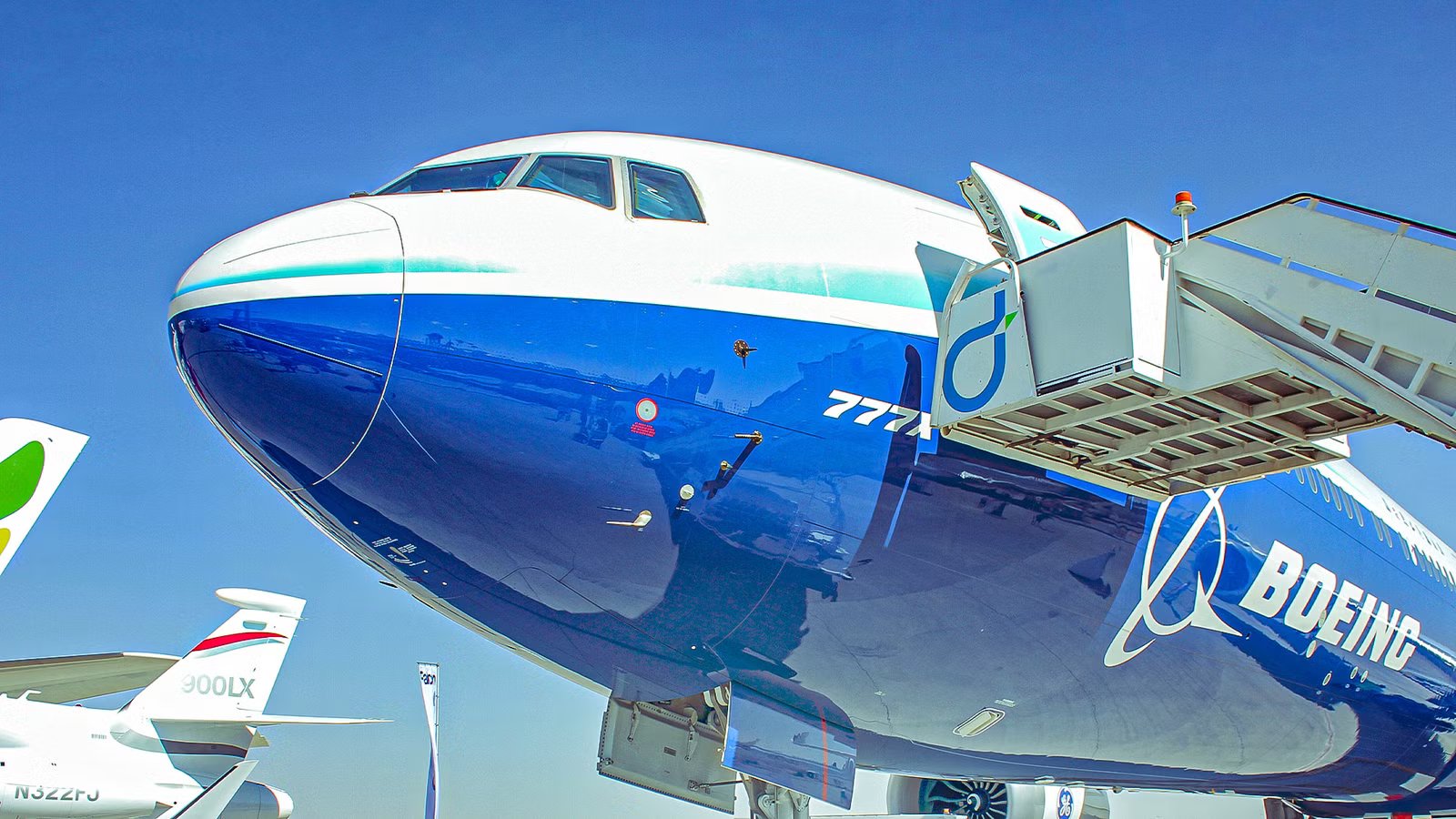
The  Boeing 777X is one of the most high-profile aircraft development programs of the past decade. The aircraft’s design is incredibly innovative, featuring folding wingtips, a wider cabin, larger windows, and a quieter, more refined long-haul experience. One of the aircraft’s most fascinating features is something that most passengers may never even notice. There is a hidden space above the main cabin that gives the aircraft a kind of secret upper deck. No, this is not a Boeing 747-style second floor made for travelers, and it is not any kind of flashy onboard lounge. Instead, it is a tightly engineered overhead rest area built into the crown of the jet, ultimately designed to keep pilots rested, connected, and ready on the world’s longest flights.
That ultimately makes the aircraft more than just an aviation curiosity. In many ways, this concealed upstairs compartment captures what the 777X is really about. Specifically, the jet combines visible passenger comforts with unseen operational upgrades that matter just as much. Boeing has marketed the 777X as a next-generation flagship with a more spacious interior and improved cabin environment, but the plane’s hidden upper spaces show just how much modern airline design now revolves around overall endurance, efficiency, and crew performance as well. For ultra-long-haul operators, the 777X’s secret upper deck may be one of its smartest innovations.
A Brief Overview Of The Boeing 777X

Before we start diving into the specifics of the crew rest area, it is important to analyze the jet at a high level. The 777X is Boeing’s next-generation evolution of the long-running 777 family, as it is a very large twin-engine widebody aimed at airlines that want flagship long-haul capacity, strong economics, and a more modern onboard product without stepping up to a four-engine aircraft.
The family centers on the Boeing 777-9, the largest passenger aircraft Boeing will put into service over the next decade. Complementing this larger model is the 777-8, an aircraft which trades some capacity for ultra-long range, something which is very appealing to operators of all kinds. Boeing is pitching the jet as delivering lower overall fuel burn and emissions than the aircraft it replaces, bringing with it lower operating costs than competing aircraft in its segment. Boeing has also been quick to market the aircraft’s quieter overall noise footprint for airports and communities.
Technically, the headline features are its new General Electric GE9X engines, a new composite wing with folding wingtips, and a cabin package that builds on Boeing 787-style improvements such as larger windows, better humidity, and a wider-feeling interior. In practical terms, that means the Boeing 777X is meant to give airlines more seats, longer range, and premium-cabin flexibility, all of which carriers are actively seeking. This allows the jet to offer better per-seat economics on dense intercontinental routes. Boeing’s latest simulator qualification milestone also shows the program is still moving toward eventual airline entry into service, even after a long and closely watched development path.
A Hidden Space Upstairs

The Boeing 777X’s crew rest area is best understood as a carefully concealed upper-deck module that is quietly built into the crown of the fuselage. It is important to note immediately that this is not a second passenger floor, as the Boeing 747 has one. On the 777, Boeing has long used this overhead volume to its advantage, capitalizing on the space between the cabin ceiling and the aircraft’s outer skin to create private rest quarters for off-duty crew.
That basic idea carries into the era of the ultra-large, ultra-efficient, and ultra-capable Boeing 777X. The manufacturer’s 777-9 minimum equipment documentation explicitly references both an overhead flight crew rest and an overhead flight attendant rest, confirming that dedicated overhead crew-rest installations are part of the aircraft’s fundamental architecture. In practice, that means that the jet can provide separate spaces entirely for pilots and cabin crew, ultimately keeping the flight crew close to the cockpit while moving flight attendants into a secluded compartment away from the principal passenger cabin.
Analysts have evaluated the Boeing 777X’s proposed crew-rest areas extensively. They have been designated as enclosed Class 1 crew-rest facilities because they are equipped with horizontal bunks and amenities such as lighting, ventilation, power, and communication. The result is ultimately a hidden, highly functional secret upper deck that most passengers will never actually see, but which plays a major role in how the aircraft is equipped for ultra-long-haul flying.

The Airbus A350’s Days As The World’s Widest Twinjet Are Numbered
Boeing’s 777X will soon dethrone the Airbus A350 as the widest widebody twinjet, redefining comfort and passenger experience in long-haul travel.
Why Does This Matter On Ultra-Long-Haul Flights?

Novelty, on its own, is not what makes the 777X’s crew rest area particularly interesting, given that crew rests on widebodies have existed for decades. However, it says a lot about modern long-haul aircraft design. On missions that can stretch well beyond 14 hours, airlines need augmented crews, and augmented crews need genuine sleep space rather than improvised rest in passenger seats.
The broader evolution of 777 design philosophy is also fully on display. The manufacturer has begun shifting crew accommodation into unused overhead space, leaving the main deck and lower hold available for seats and cargo, improving the aircraft’s revenue potential while also giving crews more privacy and better rest quality. Boeing said that this approach on the 777 could preserve revenue seats and cargo positions, and supplier Collins Aerospace seems equally confident in the capabilities of this upstairs rest concept.
Cabin crew will also be excited by this concept, as it will increase comfort while preserving cabin real estate. This is a fundamental reason why the Boeing 777X’s hidden rest area is so significant. It blends human-factors thinking with airline economics. It will help ensure that crews stay alert, compliant, and operationally ready, while allowing airlines to market the visible parts of the cabin to paying passengers in a much more aggressive manner. In other words, the secret upper deck is not a gimmick but rather a quiet, modern efficiency tool.
What Other Innovative Features Does The Boeing 777X Offer?

Beyond hidden crew-rest spaces, the aircraft is packed with dozens of innovations that show how Boeing is trying to modernize the large long-haul twinjet. The most eye-catching piece of this jet is its folding wingtip system, which allows the aircraft to capitalize on the aerodynamic advantages of giving the 777X an incredibly long wing, while also fitting into most gates on the ground. Manufacturer Boeing has also highlighted the wing’s advanced aerodynamics and laminar-flow nacelles, both of which serve to cut drag and improve aerodynamics.
Power comes from the huge General Electric GE9X, the latest engine developed for the program, something which gives the Boeing 777X more thrust and better efficiency than earlier 777 variants. Inside, the aircraft borrows heavily from the 787 playbook, with larger windows, immersive LED lighting, bigger overhead bins, a quieter cabin, lower cabin altitude, improved humidity and cleaner air. Boeing is also promoting smooth ride technology to help reduce the sensation of turbulence.
On the operational side, the Boeing 777X includes main-gear aft axle steering to improve maneuverability and reduce tire scrubbing when turning into tight gates. When put together, these features make the Boeing 777X more than just a stretched update of the current 777. It is designed as a flagship that combines better passenger comfort, improved airport compatibility and lower operating costs in one very large package.

Automatic? Boeing Test Pilot Explains How The 777X’s Folding Wings Work
Curious how the innovative new wingtips of the 777X actually work?
Who Ordered The Boeing 777X?

The Boeing 777X’s customer list is a mix of long-established Boeing 777 operators and newer buyers using the jet for both passenger and cargo growth. On the passenger side, the best-known customers include Emirates,  Qatar Airways, Lufthansa, Singapore Airlines, All Nippon Airways (ANA), Cathay Pacific, Etihad Airways, and British Airways’ parent company, the International Airlines Group (IAG). All of these were identified by Boeing among early 777X buyers, according to carrier documents.
Since then, the roster has expanded further, with Air India, Ethiopian Airlines, Korean Air, and China Airlines all placing orders, underscoring the program’s continued appeal across Asia, Europe, the Middle East, and Africa. Boeing said in 2025 that customers worldwide had ordered more than 550 Boeing 777X-family aircraft, underscoring the program’s importance at the upper end of the long-haul market.
Cargo operations are also a major part of the story. The Boeing 777X family now includes the 777-8 Freighter, and Boeing has landed orders from Qatar Airways, Lufthansa Group, Cargolux, Silk Way West Airlines, and China Airlines for that model. That means that some customers are buying the 777X purely as a passenger flagship, while others are backing it as a next-generation freighter platform as well.
What Is the Bottom Line?

At the end of the day, the Boeing 777X is an incredibly capable flagship jet. The plane, however, remains the subject of endless discussion among industry analysts, many of whom are unsure whether it will be the cure to Boeing’s woes or the cause of its financial downfall.
Customers are really being held out in the cold awaiting the jet’s certification, which remains uncertain. However, some remain excited about the aircraft’s delivery. The jet will offer a best-in-class combination of range and passenger payload, making it a staple of long-haul fleets worldwide.
Another significant factor why the aircraft will have a substantial impact on the market is the plane’s impressive overall operating efficiency. In a world where jet fuel prices only continue to rise, the importance of a capable, fuel-efficient widebody cannot be understated in any way, especially on high-frequency routes.