dailynewsnblog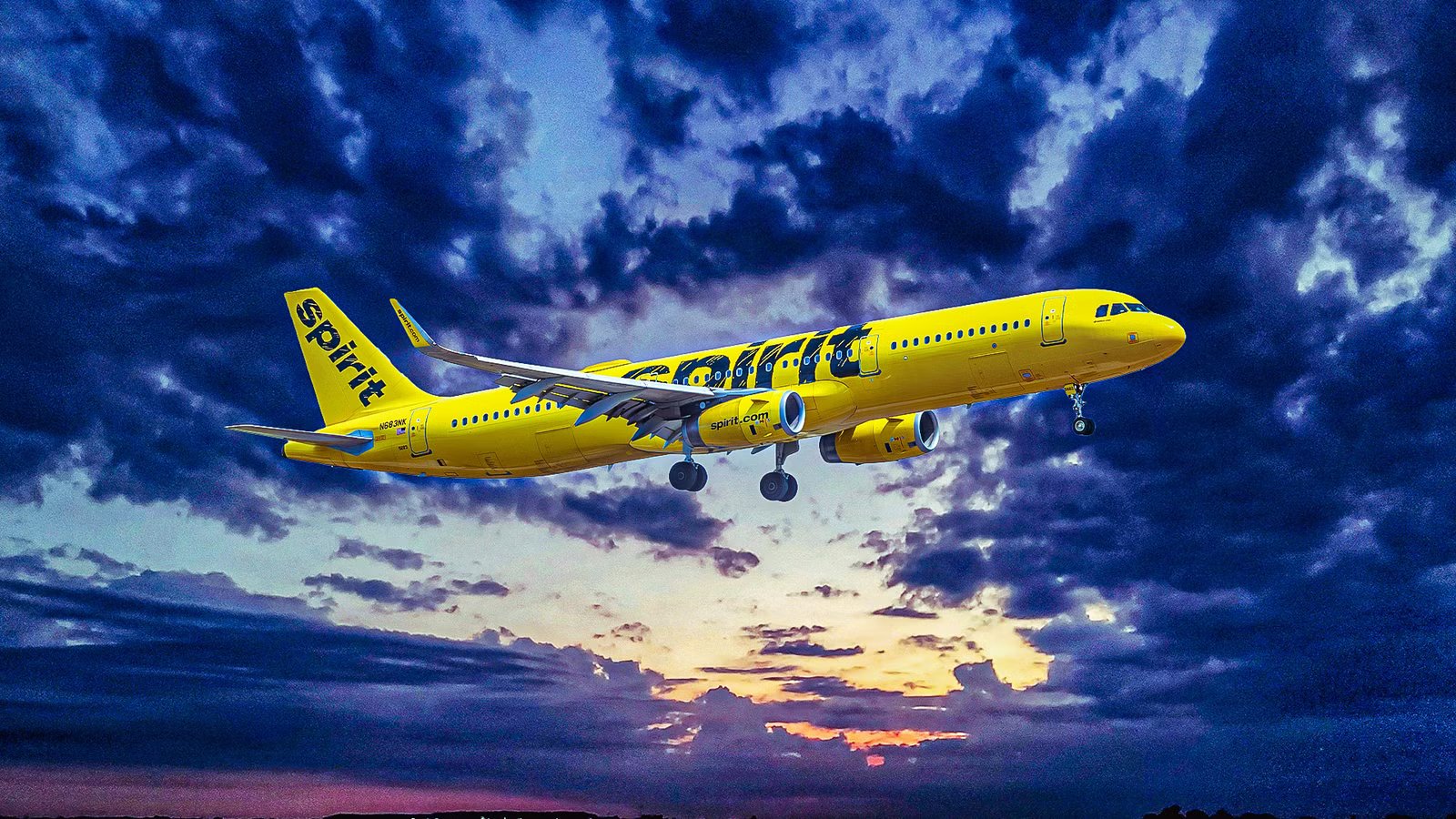
The financial and operational struggles of ultra-low-cost carrier Spirit Airlines have been well documented in recent times, with the airline having made cuts to both its workforce and network while under Chapter 11 bankruptcy protection. There are few places where the former point is more evident than in Las Vegas, Nevada, where, at Harry Reid International Airport (LAS), Spirit Airlines will operate 23 fewer routes in Q2 than last year.
Given the importance of  Harry Reid International Airport as a destination in the leisure market, a sector that budget carriers such as Spirit Airlines often place a considerable emphasis on, the cuts there show just how deep the airline’s issues run. With that being said, it is now preparing to exit its bankruptcy protection.
Huge Cuts

According to scheduling data made available by Cirium, an aviation analytics company, Spirit Airlines penciled in a grand total of 4,957 one-way departures from Las Vegas in the second quarter (April to June) of 2025. However, this time around, the figure for Q2 of 2026 sits at just 1,434 flights, representing a proportional year-on-year decrease of around 71.1%. This has resulted in it only serving 14 routes, compared to 37 last Q2.
Of course, these reductions haven’t exactly come out of the blue. Indeed, News 3 Las Vegas reported last month that Spirit was considering ending its services from ‘Sin City’ to several more destinations on the West Coast of the United States of America, having already cut Albuquerque, Portland, Sacramento, and San Diego in 2025. On Spirit’s network shift, the publication quotes Cranky Flier President Brett Snyder as explaining that:
“When you think about how Spirit wants to focus itself, it is talking about Fort Lauderdale, Orlando, New York, and Detroit. The places where it is biggest right now.”
Where Is Spirit Flying From Las Vegas In Q2 Of 2026?

As previously noted, Spirit Airlines’ Q2 network from Harry Reid International Airport in Las Vegas, Nevada, now amounts to a grand total of just 14 destinations. These are shown in the map above, and, despite the number of cities served having been cut by a factor of around 62% from last year’s total of 37, they do still offer a reasonably comprehensive geographical spread. The West Coast of the United States remains a key market.
Indeed, this is where the highest frequencies can be found, with 251 Spirit Airlines flights scheduled from Las Vegas to Hollywood Burbank Airport (BUR) in the second quarter of 2026, and another 242 going to John Wayne Airport (SNA) in Santa Ana, California. Elsewhere on the West Coast, Los Angeles (LAX) ranks third, with 163 flights, putting it just ahead of Reno (RNO), to which Spirit has scheduled 160 services from Las Vegas in Q2.
The only other destination with a three-figure total is Houston Intercontinental (IAH), with 148 Spirit flights planned in the second quarter of this year. Detroit (DTW) sits just below this cutoff, with 91 flights, followed by Newark (EWR) on 73, Dallas/Fort Worth (DFW) on 72, and Chicago O’Hare (ORD) and Kansas City (MCI) both on 59. Lower frequencies can be found in Atlanta (ATL), Fort Lauderdale (FLL), Indianapolis (IND), and Nashville (BNA).

3,000+ Flights Gone: Spirit Airlines Ditches 54% Of Its Las Vegas Flights This Winter
The news comes as the airline filed for Chapter 11 bankruptcy protection for the second time this year.
Pilots Recalled Ahead Of Bankruptcy Protection Exit

With that being said, it isn’t all doom and gloom at Spirit Airlines at this moment in time. Indeed, Simple Flying reported earlier this week that the US-based ultra-low-cost carrier had recalled 500 of its pilots from furlough as it prepared to exit from its Chapter 11 bankruptcy protection. However, this is not necessarily an indicator of growth, but, rather, a sign that pilot attrition has been higher than expected during its challenging recent history.
Elsewhere, the carrier is aiming to restructure its operating model amid its bankruptcy protection exit, with plans to ditch its ‘cheap and cheerful’ playbook in order to run more reliably. This includes an increased emphasis on premium offerings, as has also been seen emerging at other US budget carriers.