dailynewsnblog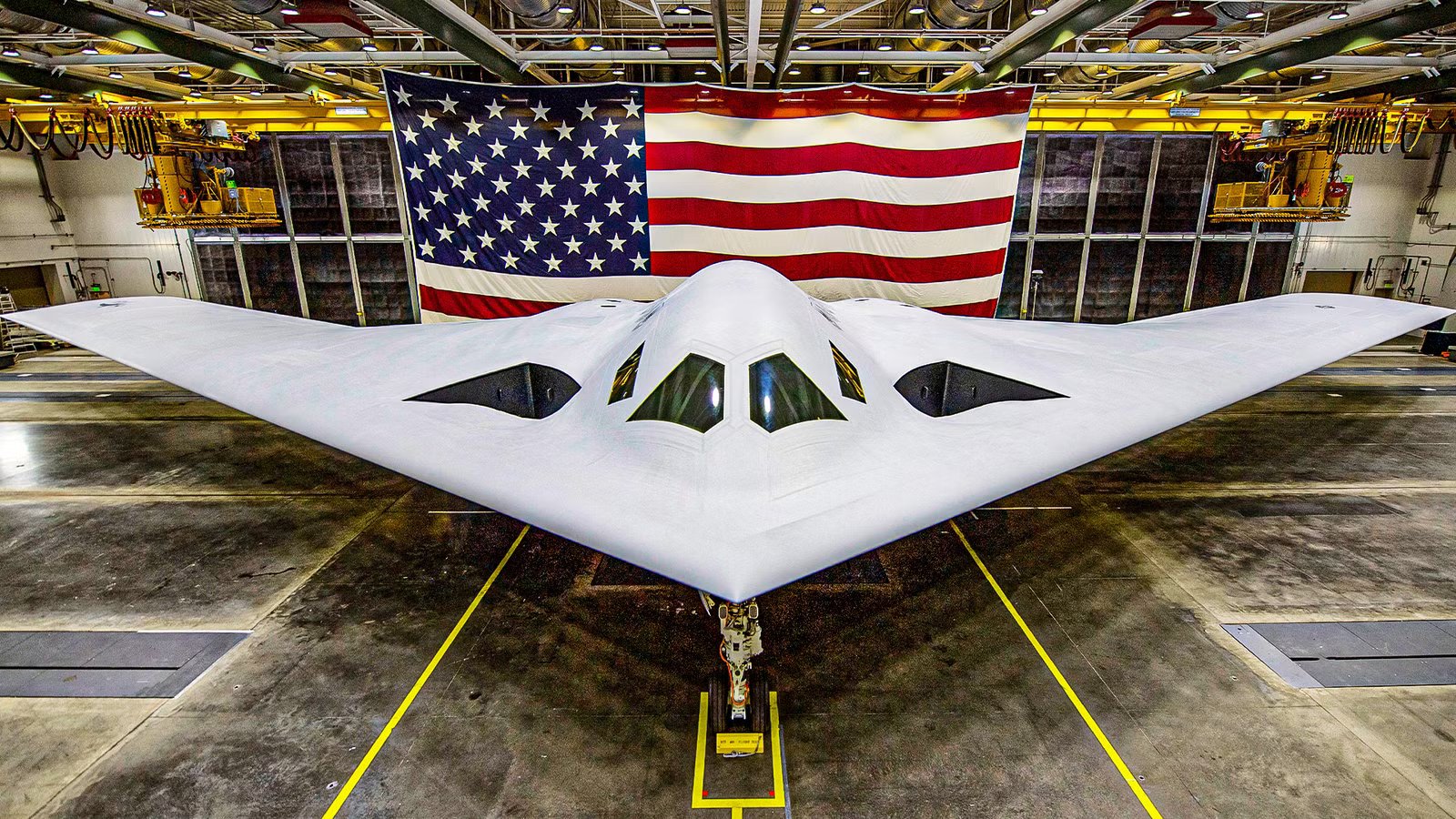
The unveiling of the Northrop Grumman B-21 Raider was a major turnaround in the modernization of the United States Air Force’s strategic bomber fleet. As the first new American bomber designed in more than three decades, the aircraft is expected to eventually replace both the Rockwell B-1 Lancer and the B-2 Spirit. Naturally, this has prompted intense interest from aviation enthusiasts and defense analysts alike. One of the most frequently asked questions is surprisingly simple: Is the B-21 Raider actually bigger than the B-2 Spirit bomber?
At first glance, the two aircraft appear very similar. Both feature the distinctive flying wing design associated with stealth bombers, and both were developed by Northrop Grumman. The B-2 Spirit was designed during the Cold War primarily to deliver nuclear weapons against heavily defended Soviet targets. The B-21 retains that penetrating strike capability but has been built for a much wider operational environment, integrating with modern sensors, data networks, and multi-domain warfare systems. This article examines how the B-21 Raider compares with the B-2 Spirit in terms of size, explores why the two aircraft differ, and explains how their roles and operational histories fit into the evolving strategy of the United States Air Force.
Is The B-21 Raider Bigger Than The B-2 Spirit?

The short answer is no. Based on publicly available information and analysis from defense experts, the B-21 Raider is widely believed to be smaller than the B-2 Spirit, although exact specifications for the new bomber remain classified. The B-2 Spirit is one of the largest stealth aircraft ever built. It has a wingspan of approximately 172 feet (52.4 meters) and a length of about 69 feet (21 meters).
Its large flying wing structure was designed to maximize internal space for fuel and weapons while maintaining the smooth surfaces necessary for radar evasion. The aircraft’s massive wingspan also contributes to its long range and endurance, allowing it to fly intercontinental missions with aerial refueling.
By contrast, the B-21 Raider appears noticeably more compact. Observers analyzing photographs and footage from the aircraft’s public unveiling have estimated its wingspan to be somewhere between 140 and 150 feet (42.7 and 45.7 meters), though official figures have not been released. The aircraft’s overall profile appears slightly narrower and more refined than that of the B-2.
This difference in size reflects changes in technology and operational requirements. When the B-2 was designed during the 1980s, engineers had to rely on the computing power, sensors, and materials available at the time. To achieve the necessary range and payload capacity, a large airframe was required. Today, however, improvements in electronics, weapons miniaturization, and stealth materials allow modern bombers to accomplish similar missions with more compact designs. As a result, the B-21 does not need to be larger than the B-2 in order to match or exceed its capabilities. In fact, a smaller aircraft may offer advantages in terms of maintenance, efficiency, and survivability.
What Factors Influence The Size Of A Stealth Bomber?

The size of any strategic bomber is determined by a combination of technical requirements and mission objectives. These factors include payload capacity, operational range, stealth characteristics, and the types of missions the aircraft is expected to perform.
One of the most important considerations is payload capacity. Bombers must carry large quantities of weapons internally in order to maintain their stealth characteristics. External weapons pylons increase radar visibility, so stealth bombers rely heavily on internal bomb bays. The B-2 Spirit, for example, can carry approximately 40,000 pounds of ordnance, including precision-guided bombs and nuclear weapons.
Another major factor is range and endurance. Strategic bombers are designed to strike targets thousands of miles away from their bases. The B-2 was specifically designed to conduct intercontinental missions from the continental United States, allowing it to reach targets anywhere in the world with aerial refueling support. Achieving this level of range required large internal fuel tanks, which in turn influenced the aircraft’s overall size.
Stealth requirements also affect aircraft dimensions. The flying wing design used by both the B-2 and B-21 is particularly effective for minimizing radar cross-section because it eliminates vertical surfaces such as tail and fuselage protrusions. However, shaping the aircraft for stealth can sometimes lead to larger wingspans in order to maintain aerodynamic stability. Advances in technology have changed how engineers approach these design challenges.
Modern avionics systems are far smaller and more powerful than those used in the 1980s. Sensors, computing hardware, and electronic warfare equipment that once required significant space can now be integrated into compact modules. Similarly, improvements in precision weapons mean that bombers do not necessarily need to carry as many munitions to achieve the same operational effects.

The Last USAF Bomber Without A Stealth Profile
This aging bomber continues to adapt, proving its resilience in a changing world.
What Has The B-2 Spirit’s Operational History Shown?

To understand the significance of the B-21 Raider, it is important to consider the operational history of the aircraft it will eventually replace. The B-2 Spirit entered service with the United States Air Force in 1997, several years after the end of the Cold War. Although originally designed as a stealth nuclear bomber capable of penetrating Soviet air defenses, the aircraft quickly demonstrated its value in conventional warfare. Over the past two decades, the B-2 has become one of the most capable long-range strike platforms in the US arsenal.
The aircraft’s first combat deployment occurred during the 1999 Kosovo War. During the NATO air campaign against Serbia, B-2 bombers flew missions directly from Whiteman Air Force Base in Missouri to targets in the Balkans. These missions highlighted the extraordinary reach of the aircraft. Crews flew round-trip sorties lasting more than 30 hours, striking heavily defended targets while remaining extremely difficult for enemy radar systems to detect.
Despite representing only a small portion of the NATO aircraft involved in the Kosovo campaign, B-2 bombers were responsible for a significant share of high-value precision strikes. Their stealth capabilities allowed them to operate in heavily defended airspace without the need for large escort packages of fighter aircraft or electronic warfare platforms.
Following the attacks of September 11, 2001, the B-2 was again used for long-range strike missions during the opening stages of the war in Afghanistan. Some sorties lasted more than 40 hours, making them among the longest combat missions ever flown. The bomber also played a major role during the 2003 invasion of Iraq, where it delivered precision-guided munitions against strategic targets in the early hours of the conflict.
Another notable mission occurred in 2011 during Operation Odyssey Dawn in Libya, when B-2 bombers destroyed hardened aircraft shelters and other critical targets at Libyan airbases. These strikes helped neutralize key elements of the country’s air power at the very start of the NATO intervention. In 2025 and 2026, the B‑2 Spirit was again called into action against Iranian targets under named campaigns. During Operation Midnight Hammer in June 2025, B‑2s conducted precision strikes against nuclear facilities, including Fordow and Natanz, demonstrating the bomber’s ability to penetrate heavily defended areas.
This was followed by Operation Epic Fury in the 2026 Iran Crisis, where B‑2 bombers targeted hardened ballistic missile sites and other critical military infrastructure, further highlighting the strategic value of stealth and long-range strike capabilities in shaping modern conflict dynamics. Across these operations, the B-2 Spirit has consistently demonstrated the strategic value of stealth bombers. Its ability to strike targets anywhere in the world while avoiding sophisticated air defenses has made it a critical tool for the United States Air Force. The lessons learned from these missions have also helped shape the design and operational concepts behind the next-generation B-21 Raider.
Why Is The B-21 Raider Smaller Than The B-2?

The supposed difference in dimensions between the B-21 and the B-2 reflects how stealth bomber design has evolved over the past several decades as new technologies have allowed engineers to reduce aircraft size without sacrificing capability. Several technological developments have made it possible for modern stealth bombers to be designed with smaller airframes:
- Miniaturized avionics and computing systems: The B-2 was designed in the 1980s, when mission computers, navigation systems, and electronic warfare equipment were far larger than modern equivalents. Advances in microelectronics have drastically reduced the physical size of these components, allowing engineers to integrate powerful systems into a much smaller space inside the aircraft.
- More accurate precision-guided weapons: Earlier generations of bombers often relied on large numbers of unguided munitions to destroy targets. Today’s precision-guided weapons can strike targets with far greater accuracy, meaning fewer weapons are needed to achieve the same operational effect. This reduces the size of internal bomb bays required on modern aircraft.
- Improved stealth shaping and radar-absorbent materials: Engineers now have decades of experience designing aircraft to minimize radar signatures. Advances in radar-absorbent materials and refined shaping techniques allow designers to achieve extremely low observability without relying on the larger airframes that earlier stealth aircraft sometimes required.
- Greater reliance on networked warfare systems: Modern combat aircraft increasingly operate as part of interconnected networks that include satellites, drones, and intelligence platforms. This allows aircraft such as the B-21 to receive targeting data from external sources rather than carrying every sensor internally, reducing the need for additional onboard equipment and space.
These technological improvements help explain why the B-21 Raider may appear smaller than the B-2 Spirit while still offering comparable or even greater capabilities. The new bomber benefits from decades of technological progress in computing, stealth engineering, and weapons design.
A somewhat smaller aircraft can also provide advantages in terms of cost and sustainability. The B-2 Spirit became one of the most expensive aircraft ever built, and maintaining its complex stealth coatings requires extensive maintenance work. By designing the B-21 with a more efficient structure and modern manufacturing methods, the United States Air Force hopes to field a much larger fleet of stealth bombers while keeping long-term operating costs under control. Taken together, these factors illustrate how advances in technology allow the B-21 Raider to maintain the strategic capabilities expected from a modern stealth bomber while adopting a more compact overall design.

The Real Reason Why Boeing Is Building The F-47 Stealth Fighter And Not Lockheed
Stealth, Speed, and Strategy: Inside the F-47 Revolution.
The Operational Challenges Of Modern Stealth Bombers

Despite their impressive capabilities, both the B-2 Spirit and the B-21 Raider face certain limitations that affect how they can be deployed and sustained. Strategic stealth bombers are among the most complex and expensive aircraft ever built, which inevitably creates operational and logistical challenges.
One of the most notable limitations of the B-2 Spirit is its minimal fleet size. Only 21 aircraft were produced, and fewer remain in operational service today. This limited number restricts how frequently the aircraft can be deployed and places heavy demands on maintenance and logistics teams to keep the fleet operational. Because the B-2 is such a valuable strategic asset, it is typically reserved for high-priority missions rather than routine operations.
Another challenge is the aircraft’s maintenance requirements. The B-2’s stealth characteristics rely heavily on specialized coatings and materials that help absorb radar waves. Maintaining these materials requires significant time and effort, particularly after long missions. As a result, the aircraft can require extensive maintenance between sorties compared with conventional bombers.
The B-21 Raider has been designed in part to address some of these issues. The United States Air Force plans to build at least 100 aircraft, which would significantly expand the availability of stealth bombers. The Raider is also expected to incorporate improved stealth materials and maintenance processes that reduce the time required to prepare the aircraft for flight.
However, the B-21 will still face challenges typical of any advanced military platform. As a new aircraft entering service, it will likely experience a period of operational adjustment as crews gain experience and systems are refined. Integrating cutting-edge technologies such as advanced sensors, networking capabilities, and modern stealth materials can also introduce technical complexity during the early years of service.
B-21 Raider Size Comparison: The Bottom Line

So, is the B-21 Raider bigger than the B-2 Spirit? Based on current public information, the answer appears to be no. The B-21 is likely somewhat smaller than the B-2, reflecting modern design choices that prioritize efficiency, stealth optimization, and advanced networking capabilities over sheer size.
The B-2 Spirit remains one of the most remarkable aircraft ever built, with a combat history that spans multiple conflicts and demonstrates the strategic value of stealth bombers. Its operational record helped shape the design and mission philosophy behind the B-21 Raider.
Meanwhile, the B-21 is expected to become the backbone of the US Air Force’s bomber fleet for decades to come. Despite the reduced dimensions, it represents a major technological leap forward, ensuring that stealth bombers remain a critical component of global air power well into the mid-21st century.