dailynewsnblog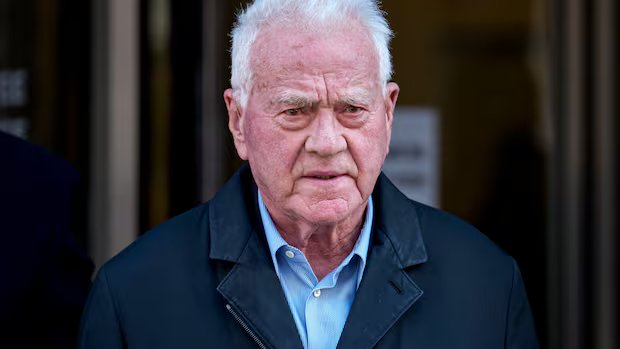
WARNING: This story references sexual assault allegations and may affect those who have experienced sexual violence or know someone affected by it.
When his trial began in February, Frank Stronach faced 12 counts related to seven female complainants whose allegations included sexual assault and the historical charges of rape and attempted rape.
Now, with all the evidence heard and closing submissions set for the end of the month, those charges have been whittled down to seven — related to four of the initial seven complainants.
That the Crown has decided to drop five charges, and discard the testimony of three complainants, has raised some questions about the initial strength of some of their cases and whether enough was done beforehand to anticipate potential problems.
Crown’s job is to assess, lawyer says
It’s the role of the Crown attorney to constantly assess every case for reasonable prospect of conviction, Adam Weisberg, a Toronto-based criminal defence lawyer, told CBC News in a recent interview.
“Obviously, there are some difficulties with many of these witnesses, which I think makes this case look fairly weak at this point,” Weisberg said. “Some of which had to have been foreseen in some way.”
The allegations against Stronach date back almost 50 years, spanning the period between 1977 and 1990. Two of the counts, rape and attempted rape, were considered historical charges, as they were abolished when the Criminal Code was amended in 1983 to create the offence of sexual assault.
All of the initial seven complainants testified in court, offering an emotional account of the sexual offences they say they experienced at the hands of Stronach.

Canadian billionaire Frank Stronach now faces seven sexual assault charges from four women — a sharp decrease from the number of charges and alleged victims when the founder of Magna International was first charged in 2024. CBC’s Jaime Strashin walks you through the trial so far to explain how we got here.
The 93-year-old founder of auto-parts giant Magna International, who was in court every day but never took the witness box in his own defence, has denied the allegations and pleaded not guilty to all charges.
The judge-alone trial is being overseen by Ontario Superior Court Justice Anne Molloy.
Many of the women told similar stories — meeting Stronach at Rooney’s, the Toronto restaurant he used to own, and then accepting an invitation back to his Harbourfront condo. It’s there where they allege he sexually assaulted them.
Two of the seven complainants alleged they were attacked in other locations — one woman claimed Stronach raped her in a hotel, while another said Stronach attempted to rape her in a midtown Toronto apartment.
Defence attacked complainants’ credibility
Stronach’s lawyer, Leora Shemesh, went through each complainant’s past statements to police meticulously, attempting to undermine their credibility.
She suggested that details they initially relayed about their alleged assaults had either changed once they came to court, or that new details had emerged.
Shemesh challenged complainants over specific details, including potential inconsistencies relating to the dates of when some of the assaults were alleged to have occurred. She accused some of the complainants of outright lying, while suggesting to some others that the sexual acts they described were consensual.

Shemesh also scrutinized some of their personal backgrounds, linking them to credibility issues.
It was during the testimony of the sixth woman when the Crown informed the court it would be withdrawing its charge of forcible confinement.
The woman had testified she had met Stronach at Rooney’s, gone back to his condo, where she said he raped her. But her cross-examination ended abruptly following concerns about her mental health.
Both Molloy and Shemesh expressed repeated frustration over the complainant’s inability to focus on the questions and her interrupting, talking over Shemesh during cross-examination.
String of charges withdrawn
When the trial resumed after the weekend, the Crown withdrew the sexual assault charge related to her.
Later in the trial, Crown prosecutor Jelena Vlacic told court that the Crown would be dropping another charge — the attempted rape count related to the third complainant to testify.
Days later, on March 9, Vlacic said the Crown would be withdrawing two counts of sexual assault related to the fourth and fifth complainants in the case to testify.
The fourth complainant told court that during dinner with Stronach, she accepted an invite to see the view from his Harbourfront apartment. Once there, she said Stronach raped her.

Crown prosecutor Jelena Vlacic told court Monday that two more charges will be withdrawn in in the sexual assault trial of Frank Stronach, who now faces seven counts, down from the original 12. CBC’s Jamie Strashin explains what this means for the case.
But on her second day in the witness box, she began by apologizing to the court for having denied, under questioning by Vlacic the day before, that she read a June 2024 article in the Globe and Mail by a woman who is suing Stronach in a civil lawsuit.
Meanwhile, the fifth complainant told court that Stronach had raped her inside a hotel room back in 1990. Then Shemesh told court that the woman was involved in numerous litigation cases and had been sued over 20 times, including being accused of falsifying a contract and of having a man falsely arrested.
Criminal defence lawyer Hilary Dudding said that much of the case appeared to unravel under “modest scrutiny.” She also expressed concerned that complainants are not necessarily being well served by the Crown taking a “kid glove approach” to the kinds of hard questions that they’re going to be asked when they get in the witness box.
“It seems to me that not discovering this evidence on the front end, not asking those tough questions … can really set them up for failure,” Dudding told CBC News in an interview.
‘A very difficult position’
Dudding, who was one of the defence lawyers in the Hockey Canada sex assault trial, says it may have been wise in this trial for the Crown to “draw the sting,” meaning raise potential credibility issues with the complainant before they could be confronted by the defence.
Or, she said, in the case of the fifth complainant, perhaps better evaluate if her legal issues made it not worthwhile to include her in the case.
The fact the fourth complainant admitted she hadn’t told the truth about reading the news article may have helped, Dudding said, though, “it’s difficult to come back from.”
“It puts [the Crown] in a very difficult position, just because the witness was — at least for some period of time — prepared to lie under oath,” she said.
“And then there’s the bigger question there, of course, which is like the degree to which reading that article impacted what she was telling the court.”
However, Dudding stressed, the Crown prosecutors who tried the case are “very, very experienced” and “very good Crown attorneys.”
“Although I’m critical of the broader decision-making, I don’t pin that on them, certainly not entirely, and not even particularly,” Dudding said.
Crown ‘forced to reassess’
Michael Coristine, a Toronto-based criminal defence lawyer and former Crown prosecutor, said the Crown in this case did the responsible thing by “reading the room” and cutting their losses.
He said, while some may perceive it as the case crumbling, these developments can happen.
“Your witnesses are not always accurate and the defense sheds light on things, the truth kind of bubbles to the surface, and the Crown is forced to reassess,” Coristine said.
“And that’s, at the essence, what’s happening in this one.”

Coristine also placed some blame on some of the members of the Peel Region police force, for not doing a thorough enough investigation.
“There’s no reason the police could not have done background checks on their own complainants to try to, at least, assess the veracity of their character or what they were saying,” he said.
Shemesh ended the evidence portion of her case with the questioning of two police officers who were part of the special victims unit that investigated the allegations against Stronach.
Was the police investigation thorough enough?
Investigators acknowledged in court they never contacted the Canada Border Services Agency (CBSA) for records to determine if Stronach was out of the country for some of the dates the alleged assaults are said to have occurred on.
Police also acknowledged that no one investigated to confirm the address of a midtown apartment where the third complainant to testify alleged Stronach assaulted her, or any connection Stronach may have had to that rental unit.
Under questioning, they also told court that they never attempted to access records to determine the fleet of motor vehicles Stronach owned. The seventh complainant to testify had said that Stronach picked her up at her apartment driving a Porsche, something the defence has suggested he never owned.
“If the police in this case had done more to at least try to corroborate stories and investigate, maybe the case would have been more streamlined,” Coristine said.
“Maybe they would have talked to people and cut witnesses who didn’t really add anything or weren’t maybe credible enough,” he said.
“And, maybe the Crown would have just run with four witnesses at that point.”