dailynewsnblog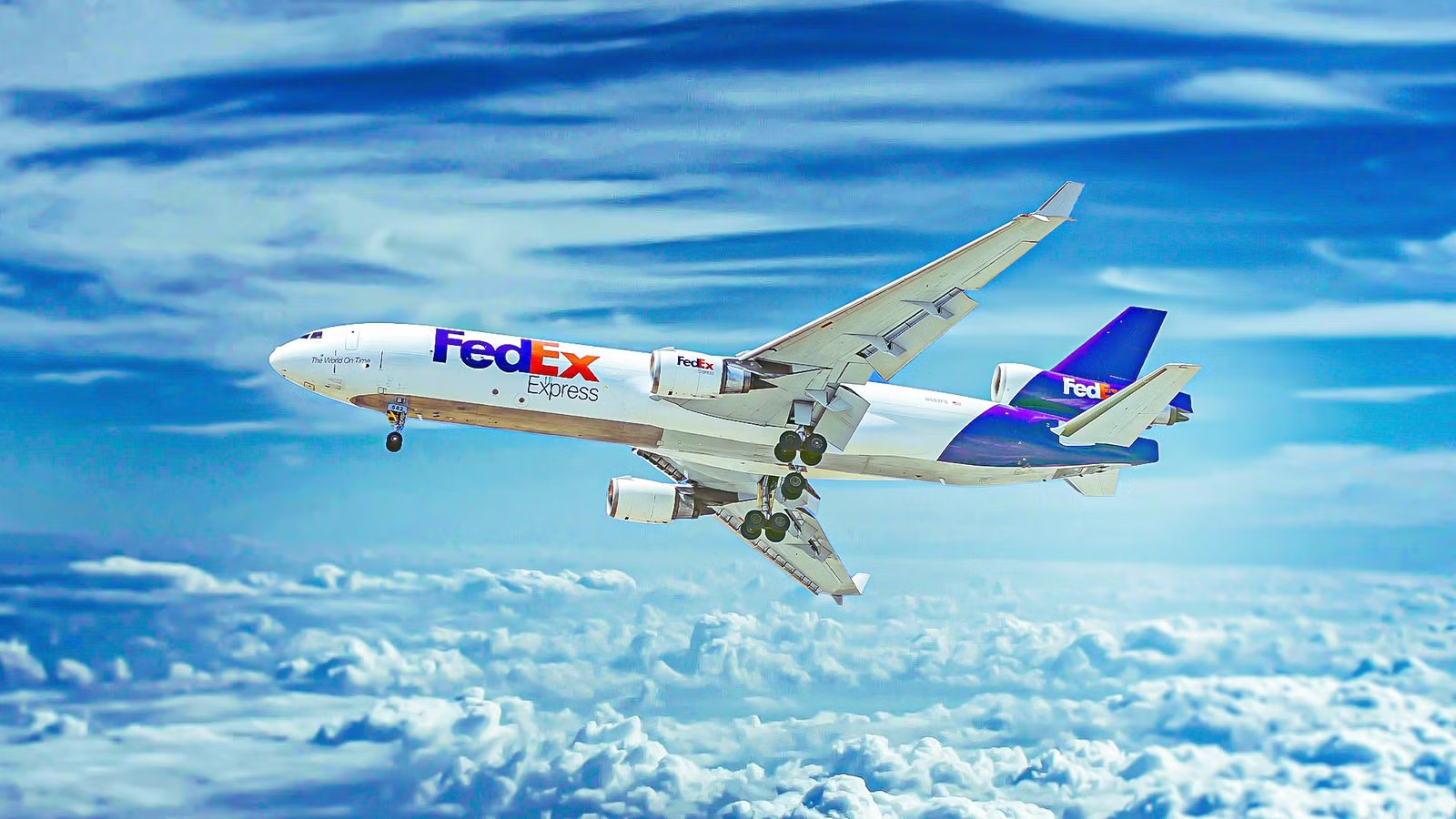
Unlike its predecessor, the DC-10, the McDonnell Douglas MD-11 was designed to be flown by a two-person crew, removing the requirement for a flight engineer. Several innovative technologies that automated the aircraft’s monitoring and management allowed for the removal of the flight engineer.
Airlines saved greatly on operating and training costs by lowering the needed cockpit crew from three to two. This automation was so effective that Fedex Express eventually retrofitted many of its earlier three-crew DC-10s with MD-11 avionics, eliminating the flight engineer post from older aircraft.
The Third Wheel In The Cockpit

The Flight Engineer (FE), also referred to as the Second Officer, was an essential third crew member who served as the committed manager of the aircraft’s mechanical heart before the automation of the MD-11. The FE was seated at a huge panel that faced sideways and had hundreds of switches and gauges on it. They oversaw electrical power, regulated hydraulic pressures, and manually balanced fuel between tanks.
In order to preserve efficiency, FEs adjusted throttles or other settings while continuously monitoring engine health metrics like oil pressure, temperature, and fuel flow. The FE served as the main technical expert in an emergency. In addition to reading emergency checklists and diagnosing problems, they occasionally carried out in-flight physical repairs like removing stuck mechanisms or resetting tripped circuit breakers.
Managing cabin pressurization and temperature on aircraft such as the DC-10 required full-time attention. The FE had to manually control the engines’ bleed air to keep the cabin comfortable during climbs and descents. The FE also added an important layer of safety by being the only crew member who did not physically fly the plane. Because they weren’t preoccupied with the yoke or radio, they frequently identified pilot errors or detected tiny instrument anomalies that the two front pilots would have missed during high-workload periods.
Before the pilots even arrived for a flight, FEs conducted the walk-around inspection, looking for leaks, structural damage, or mechanical wear. They used intricate charts and slide rules to manually calculate vital information prior to takeoff, such as maximum weight limits and takeoff speeds. A pilot’s visual scan on the DC-10 had to verify several gauges and return to the FE for an update. The MD-11 successfully digitalized the human flight engineer by combining all of these analog tasks into automated software.
MD-11: Automation In The Backseat

The MD-11’s fully digital glass cockpit with six cathode-ray tube (CRT) displays that offered extensive electronic flight instrument systems (EFIS) took the place of the flight engineer’s enormous wall of dials, as Weebly describes. The flight engineer’s responsibilities for monitoring engines, fuel, hydraulics, and electrical systems were replaced by highly integrated computers. Pilots can access diagram pages of the fuel, hydraulic, or electrical systems on central displays, rather than reading dozens of physical gauges.
The MD-11 was unique for its time because it could perform many normal, abnormal, and emergency checklist functions automatically rather than just alerting the crew. Electrical and hydraulics are automatically reconfigured on the fly for load distribution, while system diagnostics are gathered from sensors and avionics. The environmental system controls cabin pressurization, bleed air management, and air conditioning packs.
The aircraft included a dual Flight Management System (FMS) and a Central Fault Display System (CFDS) to assist the two-pilot crew in managing complex operations more efficiently. Fuel Management computers automatically handle fuel balancing and center-of-gravity (CG) control by moving fuel to a ballast tank in the tail to reduce drag.
The Jet’s New Computer Brain

Because the MD-11 had a smaller horizontal stabilizer to reduce weight and drag, it was inherently less stable than the DC-10. To compensate and reduce pilot workload, McDonnell Douglas implemented a number of computer aids. The LSAS is a computer-assisted pitch system designed to compensate for the MD-11’s smaller horizontal stabilizer, which was reduced in size to save weight and fuel. The FMS acts as the ‘brain’ of the aircraft’s mission, managing the complex calculations required for a two-pilot crew to operate a widebody jet.
The Longitudinal Stability Augmentation System (LSAS) is a computer-assisted pitch system that uses fly-by-wire logic to maintain stability and make the aircraft handle like its larger-tailed predecessor. It makes the aircraft feel more stable and ‘heavier’ during manual flight, mimicking the handling of the larger-tailed DC-10. LSAS also provides automatic overspeed and stall protection by adjusting pitch if the aircraft approaches dangerous limits.
Dual Flight Management Systems (FMS) automated both navigation and vertical flight paths, allowing two pilots to manage a long-haul flight that previously required three. FMS calculates the most efficient flight path and flight profile from takeoff to landing. The Dual setup means there are two independent Flight Management Computers (FMCs). If one fails, the other can take over the entire flight plan, ensuring mission continuity.
The Aviation Paradigm Shift Of The 1980s

The launch of the MD-11 began in 1986, with the program aiming to reduce operating costs as one of its top priorities. Central to that goal was the elimination of the third crew member. By the mid-1980s, the Boeing 767 and Airbus A310 had already proven that widebody jets could be safely operated by two pilots. Thus, McDonnell Douglas undertook a new design effort to modernize its DC-10 line and compete with other emerging twinjets from Boeing, Lockheed, Airbus, and others.
To achieve FAA certification for a two-pilot crew, the developers had to prove that the automation was reliable enough to maintain a safe workload during emergencies. Before the MD-11 was officially launched, McDonnell Douglas explored several DC-10 derivatives. The MD-100 was a proposed series of upgraded DC-10s that first introduced the idea of a two-pilot glass cockpit to replace the flight engineer station. The MD-11X came after the MD-100 failed to gain traction as the project was refined but eventually became the production MD-11.
The technical heart of the flight engineer’s removal was the development of the Advanced Common Flightdeck (ACF). McDonnell Douglas partnered with Honeywell to develop the VIA 2000 computers, which consolidated all the mechanical monitoring systems into a digital interface. The program focused on automating the utility systems so that the computers could handle the thousands of tasks formerly managed by the engineer.

The Striking Differences Between The McDonnell Douglas DC-10 & MD-11
Discover how the DC-10 and MD-11 reshaped wide-body design, defined the trijet era, and why their legacy still lingers in today’s skies.
McDonnell Douglas Falls Short

The MD-11 notoriously failed to meet its promised range and fuel-burn specifications. It could only achieve its advertised 7,000 nautical mile range if the payload was reduced by over 20%. The program never became profitable. McDonnell Douglas took a massive multi-billion-dollar loss. The failure of the MD-11 was a terminal blow to the maker as an independent commercial manufacturer.
Originally intended to revive the company’s widebody fortunes, the aircraft instead became a symbol of its inability to compete with Boeing and Airbus. The commercial failures of the MD-11 and MD-90 left McDonnell Douglas vulnerable, leading to its merger with Boeing in 1997. Shortly after the merger, Boeing announced it would stop producing the MD-11 passenger variant to avoid internal competition with its own 767 and 777 models.
High-profile customers like Singapore Airlines canceled orders in favor of the Airbus A340, and American Airlines sold its fleet to FedEx early due to these inefficiencies. The MD-11 arrived just as Extended-range Twin-engine Operational Performance Standards (ETOPS) allowed more efficient twin-engine jets like the Boeing 777 to fly the same long-haul routes with lower operating costs compared to a trijet.

The Aircraft Replacing The McDonnell Douglas MD-11
The MD-11s are approaching their operational life, and newer, more efficient types are taking over their role.
The Reverse Takeover Of Boeing

Boeing primarily wanted McDonnell Douglas’s lucrative military and space portfolio, including the F-15, F/A-18, and C-17, to stabilize its revenue against the volatile commercial market. The 1997 merger between Boeing and McDonnell Douglas is frequently described by aviation historians as a ‘reverse takeover’ where the failing culture of the acquired company supplanted the engineering-led identity of Boeing.
After the merger, McDonnell Douglas leadership, most notably former CEO Harry Stonecipher, took key roles at Boeing. While Boeing focused on building the best airplane, McDonnell Douglas was led by executives focused on cost-cutting and shareholder value. Boeing’s internal focus moved from ‘Working Together’ to ‘More with Less,’ prioritizing immediate profitability over long-term innovation.
In 2001, Boeing moved its headquarters from the company’s historic home in Seattle to Chicago. Critics argue that this physically isolates executives from the production lines and damps the influence of engineers. To save costs, Boeing began heavily outsourcing design and manufacturing, notably on the 787 Dreamliner and 737 MAX, which led to massive quality control issues and production delays.

How Many McDonnell Douglas MD‑11s Were Built?
Though only a small number were built, the MD-11 remains one of the most iconic airplanes ever built.
Boeing’s 21st Century Challenges

The erosion of engineering autonomy and the fragmented supply chain created a ‘broken’ certification process for both the 787 and 777X programs. The 787 Dreamliner went on to achieve stunning success, even becoming the best-selling widebody in history, but not without controversy. Airbus and the European Union sued Boeing and the United States over NASA’s aid, which dragged on in the courts for years. Meanwhile, the 777X remains uncertified more than six years after its originally scheduled launch date.
The focus on affordability directly influenced the design choices for all Boeing’s modern aircraft, like the 737 MAX. Under pressure from legacy operators, Southwest Airlines, and to avoid the high cost of a clean-sheet design, Boeing modified the 50-year-old 737 airframe while heavily relying on unproven software with undisclosed functions.
Software (MCAS) was used to compensate for hardware imbalances on the 737 MAX caused by larger engines, leading to the two fatal crashes that killed almost 350 people. The culture of concealment meant the risks of this software were not fully disclosed to the FAA or pilots to minimize training costs. Critics argue that the merger with McDonnell Douglas is directly responsible for the shift in Boeing’s culture from engineering-led to one focused on cost-cutting and stock performance that led to its modern-day crisis.