dailynewsnblog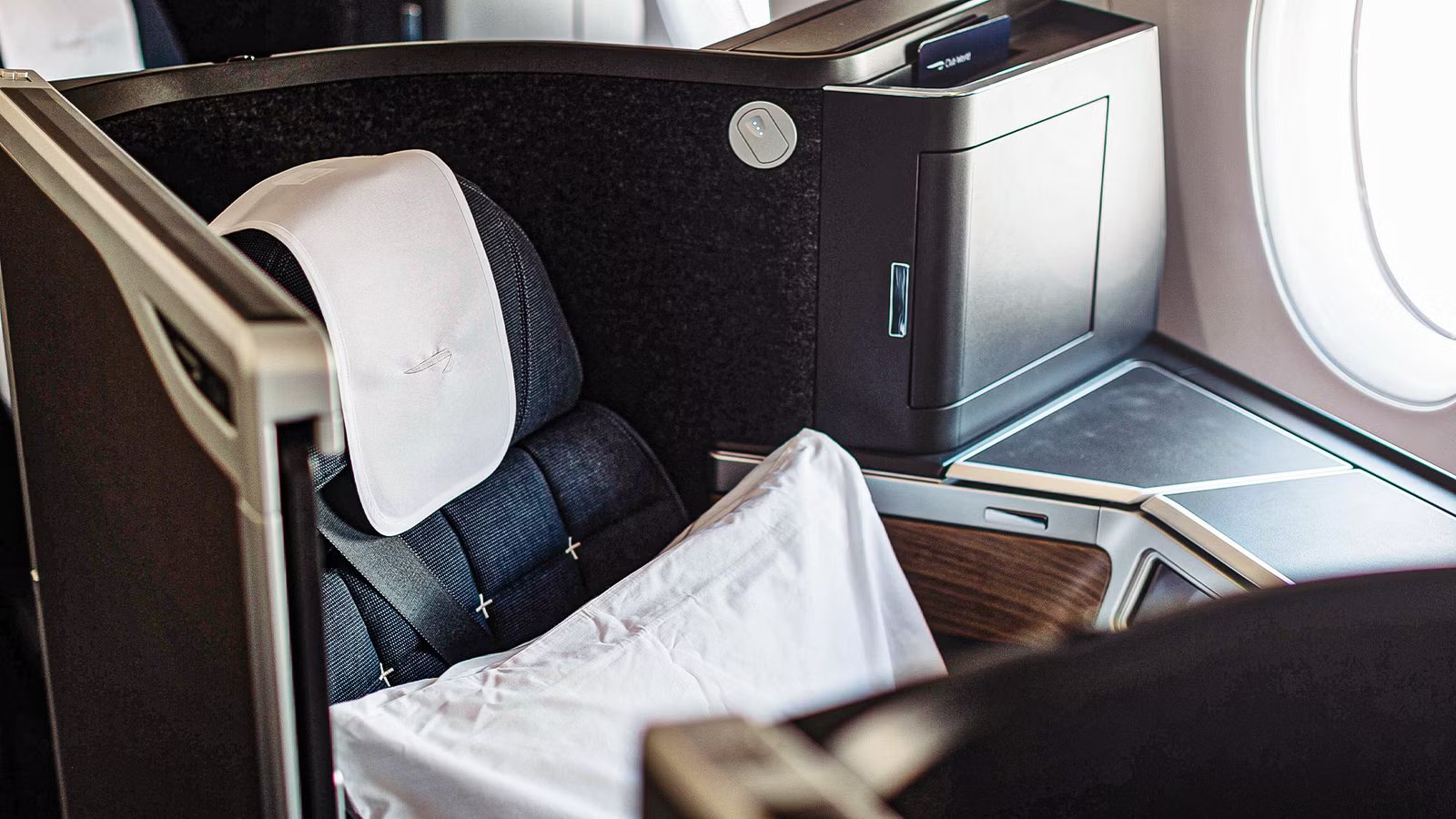
 British Airways is the airline most closely associated with one of the biggest turning points in modern premium travel, given the shift from a reclining business-class seat to a proper bed. In March 2000, British Airways rolled out its new Club World product on routes from London Heathrow Airport (LHR) to John F. Kennedy International Airport (JFK) in New York, and the product that was designed for that specific route by design partner Tangerine is universally seen as the first fully flat bed in business class ever offered in the skies. This mattered because it fundamentally changed what travelers learned to expect from the cabin.
Before that time, business class was mainly about a wider recliner, better food, and faster airport handling across the board. After British Airways’ innovation, the category began moving toward actual sleep, privacy, and a more credible alternative to first class on long-haul routes. The significance of that shift is why British Airways still occupies such an important place in airline product history. Even if the airline has since been overtaken by some rivals in certain areas of seat design and overall privacy, the airline’s role as a catalyst for industry advancement cannot be discussed. British Airways was not simply interested in introducing a new seat but rather redefining the commercial logic and overall passenger expectations of long-haul business class travel for the next quarter-century.
A Brief Overview Of British Airways And Its Operating Model

British Airways remains a classic full-service network airline today, and it is increasingly orienting its operations towards premium travelers. It is the flag carrier of the United Kingdom, and it has been operating for more than a century. The airline describes itself as a global airline connecting Britain with the rest of the world. It is a system anchored above all by  London Heathrow Airport and its operations, where British Airways operates primarily from Terminals 3 and 5, while maintaining services from both London Gatwick Airport (LGW) and London City Airport (LCY).
For business travelers, however, the carrier emphasizes frequent daily flights, centrally located airports, and an own-network reach of more than 140 destinations, supplemented by hundreds more through oneworld partnerships. That gives the carrier a hub-and-spoke structure with strong local London demand and extensive connecting flow of traffic. This requires the airline to invest heavily in its hub at Heathrow, which serves as the cornerstone of its global connecting network, a critical piece of keeping business travelers happy and corporate contracts flowing even when the business cycle turns.
This also means that British Airways is not trying to be an ultra-low-cost point-to-point operator. It is selling extensive schedule utility, network breadth, lounges, loyalty, and premium cabins alongside the flight itself. The scale, however, remains very substantial. IAG highlights that British Airways carried more than 46 million passengers last year and flew more than 100 billion available seat miles. In this model, the North Atlantic is a core piece of the carrier’s network as it is one of the most valuable and premium-heavy airspace corridors in the world. British Airways’ operating logic is frequency, connectivity, and yield, not volume on its own.
Why Do Premium Cabins Matter To British Airways?

Premium cabins are important to British Airways for a few reasons, including the fact that they sit at the center of how the airline turns a sprawling global network into a high-yield business. This is especially true across the North Atlantic, a place which IAG has indicated offers the highest overall returns and best-in-class profit margins. It is for this reason that British Airways has decided to expand premium capacity in this region.
The airline’s financial results highlighted that passengers were increasingly willing to spend a bit extra to move up to premium cabins, something which improved the carrier’s operating performance, even in a world where demand has begun to look weak in many economy-and-leisure segments. This tells us a lot about the airline’s overall business mix, as premium traffic is not just decorative brand positioning but rather a core piece of British Airways profitability today. Another thing that matters is that premium demand now comes from more than a traditional road-warrior corporate travel footing.
British Airways and IAG as a whole are increasingly leaning on affluent vacationers and loyalty programs in order to ensure that premium cabins stay filled. Revenue from elite-tier members is growing more than 15 times faster than revenue from regular British Airways loyalty program members. Premium cabins sell seats, strengthen overall loyalty, support lounge investment, and reinforce British Airways’ wider brand. On long-haul routes, especially overnight transatlantic sectors, flat beds and premium service are not optional extras but rather among the airline’s most important commercial tools.

British Airways Maintains Double Daily Airbus A380 Flights To Johannesburg This Winter
The carrier continues to provide impressive frequency to South Africa from its London hub.
British Airways Introduced Lie-Flat Business

The reason that British Airways is the subject of this story is not that it just improved its business class offerings, but more so that it fundamentally rethought what the class was and what it offered to passengers. In 1998, British Airways gave London-based interior design firm Tangering a brief to put together what was described at the time by analysts as a fundamental reinvention of business class. The challenge was not merely to create a flat bed, but rather to do so without destroying cabin economics, according to Executive Traveller.
Tangerine’s answer was the now-famous yin-yang layout, which alternated between both forward- and rear-facing seats and used cabin width more intelligently. The result was the first fully lie-flat bed to be offered by a carrier in business class, all while British Airways marketed the seat as having a lounge-in-the-sky kind of concept. The product entered service in March 2000 on Boeing 747 flights from London to New York City.
This was a platform where each aircraft could carry 96 business-class passengers. British Airways did not win by making business class more luxurious, but rather it won by proving that a true bed could be offered at scale in a commercially viable manner. In that sense, British Airways innovation was not just design-led, but also strategic, operational, and profoundly influential across the wider airline industry as a whole.
What Business-Class Products Does British Airways Offer Today?

Today, British Airways business-class offering is no longer one single product but rather a large family of products shaped by route length and aircraft type. On short-haul services, British Airways sells Club Europe, which is essentially a European business-class product focused on airport priority, lounge access, service, and extra personal space, all with the middle seat blocked rather than a radically different overall seat structure.
On long-haul flights, the umbrella product is Club World, but British Airways itself says that there are now two distinct seat designs within that cabin. The newer option is Club Suite, which offers direct aisle access from every seat, a privacy door, a massive, fully flat bed, and greater overall storage opportunities. British Airways introduced the type first on the Airbus A350 and later on selected Boeing 777s and Boeing 787-10s. The airline presents it as its flagship long-haul business-class experience.
The older long-haul option remains the legacy Club World seat, which still offers passengers a fully flat bed, although it offers considerably less privacy and a significantly less contemporary layout. The current British Airways story is thus one of transition rather than total uniformity. The airline is still known for the strength of its business-class brand, but product inconsistency is now a notable issue.

5 Most Innovative Widebody Premium Seats You Can Book Today
Step onboard the Emirates A380 Suites, Qatar Airways QSuite, and more in our list of the 5 most innovative widebody premium seats you can book today.
How Did Other Airlines Follow British Airways’ Lead?

Other airlines did not follow British Airways’ lead in stages. The introduction of lie-flat business class in 2000 was certainly disruptive, and it definitely offered the carrier a competitive advantage for some period of time. Many European and Asia-Pacific rivals did not respond with fully flat beds in business class for years. Some carriers attempted to introduce angle-flat products, which improved on recliners but did not offer a horizontal sleeping surface. Virgin Atlantic, however, did move more aggressively as it introduced Upper Class Suites in 2003 with direct-aisle access and flat beds.
Over time, British Airways had established itself as the clear baseline in the long-haul premium travel experience. Business-class innovation later on focused on features like direct aisle access, more privacy, improved storage, and sliding doors, all of which slowly became standards in the market.
Thus, the industry did not simply copy British Airways’ exact yin-yang layout, but rather the core idea that business class cabins were designed to provide a genuine opportunity for passengers to rest. The rest of the industry normalized this idea, refined it, and in some cases even surpassed the initial products that British Airways had brought to the table.
What Is Our Bottom Line?

At the end of the day, UK-based legacy carrier and flag carrier British Airways made the headlines when it introduced what was the first business class seat to offer a lie-flat bed. While we see this as an impressive development for the carrier back in the day, it is not surprising given the airline’s standing within the industry.
British Airways was a global flag carrier, one that primarily generated revenue and built up its margins in premium cabins, where it could significantly upcharge higher-spending business travelers. This remained the case throughout the 1990s and the early 2000s, and it is still somewhat the case today.
The introduction of these lie-flat seats made it much more reasonable for those traveling in business class to feasibly rest on overnight flights from New York to London. These kinds of services have the highest yields of almost any in the industry, and they have some of the thickest supplies of premium long-haul travelers. Airlines like British Airways will need to capture them to turn consistent profits.