dailynewsnblog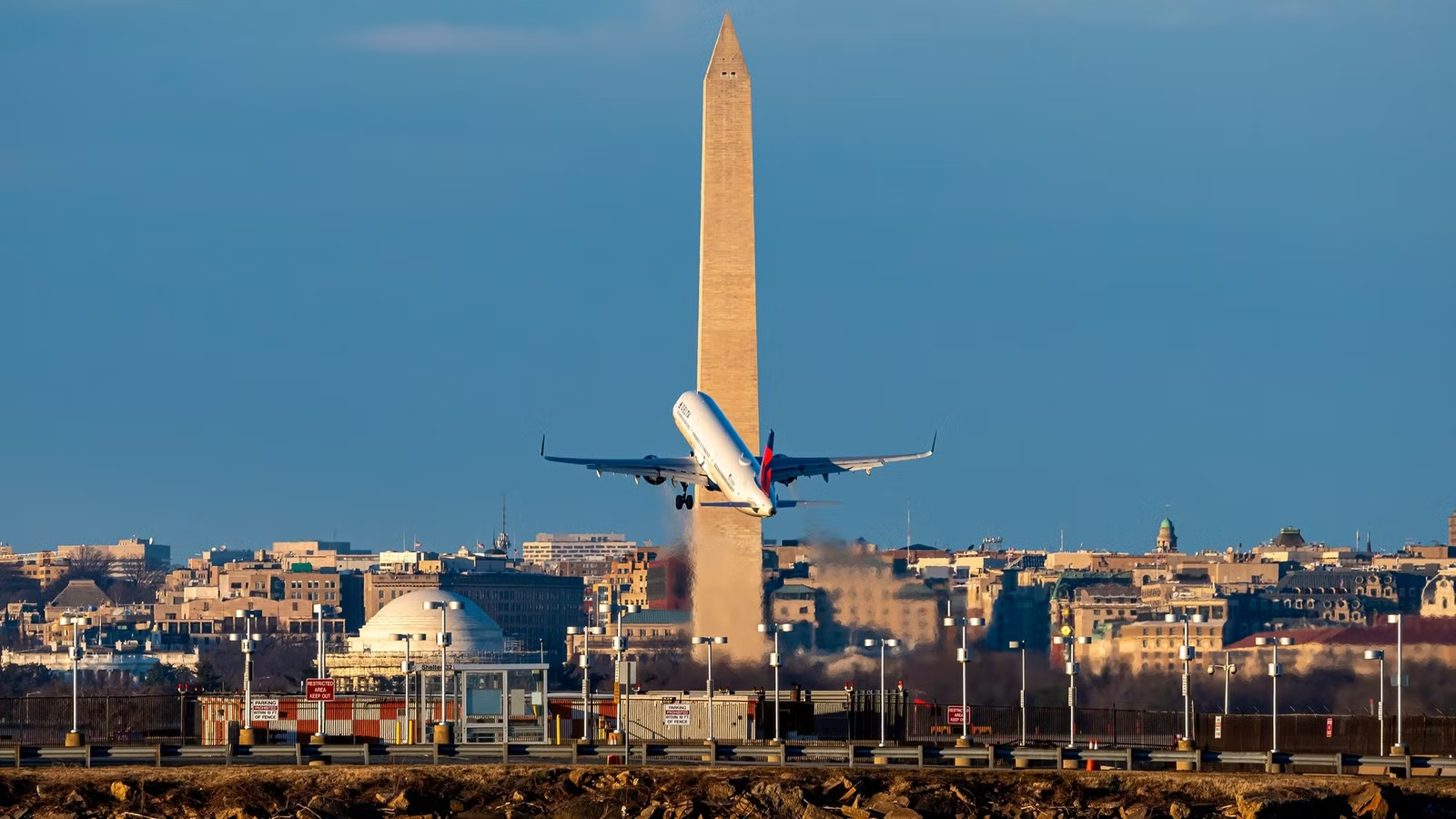
A chemical smell at Potomac TRACON on Friday, March 13, led to a ground stop, causing significant flight delays and cancellations at major airports near the United States capital. The odor, which was traced to an overheated circuit board, affected several air traffic controllers. Following the evacuation, a ground stop was issued so the center could be evacuated and attended to by emergency services.
As a result of the evacuation, a ground stop was placed on Baltimore/Washington International Thurgood Marshall Airport(BWI), Washington Dulles International Airport(IAD),  Ronald Reagan Washington National Airport(DCA), and neighboring airports on Friday at 4:50 pm, and flights were able to resume at around 9:00 pm. Transportation Secretary Sean Duffy confirmed that flights at the three main DC airports saw delays up until past midnight, while Richmond, Virginia, was able to get back on track rather quickly.
Ground Stop Around The Capital

The overheating circuit board at TRACON has since been replaced. Air traffic controllers and other staff have returned to work in the center. Emergency services confirmed there was no danger to occupants, and no injuries or illnesses have been reported.
Travelers at Washington National can expect delays of up to three hours as flight backlogs are cleared, and Baltimore can expect delays of around two hours, according to the FAA. Some passengers on arriving flights at IAD also shared their experiences with the NY Times of being stuck on the plane on the apron for more than an hour before they were able to disembark safely following the ground stop.
Some passengers have noted that due to the unexpected ground stop, flights were cancelled after being completely boarded, while others relayed the long waits at baggage claim for arriving flights.
Airport Updates

All three major DC airports have shared updates on their social media platforms and websites in relation to the ground stop. Dulles noted on X and its website that the airport remained open, but significant delays and cancellations are expected across Friday evening. The major international airport reminded passengers to check with their airline for any specific flight delay or cancellation questions.
Washington National shared on X and its website that flights have now resumed, and travelers should expect delays for the rest of the evening. TSA checkpoints remained open for the delayed departing flights until 9:00 pm, when the south checkpoint closed. Now, anyone needing to pass through security screening will need to do so through the north checkpoint. All airport facilities remained open, and airport concessions will extend hours to accommodate the delayed passengers and other customers.
Baltimore has shared on its Facebook page that all airlines are now resuming all scheduled operations and flights are departing. It can be expected that residual delays will be felt for the rest of the day. BWI thanked travelers for their patience during these unexpected delays.
Richmond International Airport (RIC) shared no delays on its social media accounts, but the departure board on the airport’s website outlines one Frontier Airlines flight to Atlanta was cancelled, while another three flights operated by Delta Air Lines and Breeze Airways were delayed.

Flights Briefly Halted In Newark After JetBlue Airbus A320 Evacuates Due To Cabin Smoke
Passengers evacuated the plane using its emergency slides.
What Is A Ground Stop?

As the airspace above the capital region is controlled by Potomac TRACON, the decision to evacuate the building led to the temporary ground stop for all departing and arriving flights at major airports. A ground stop is a directive from the Federal Aviation Administration (FAA) that halts flights that are still on the ground from traveling to their intended destination.
This safety measure enables airlines to halt operations when the airport could be overwhelmed by equipment outages, severe weather, or other safety incidents. Being the most restrictive tool that can be issued, the length of a ground stop can depend on the situation and can be reviewed frequently to allow extension or lifting of the ground stop early.
The overheating circuit board led to the evacuation of Potomac TRACON. Because on-shift controllers could no longer safely manage the airspace, and since the TRACON handles all flights, the evacuation posed an immediate safety risk that forced a complete halt of air traffic.