dailynewsnblog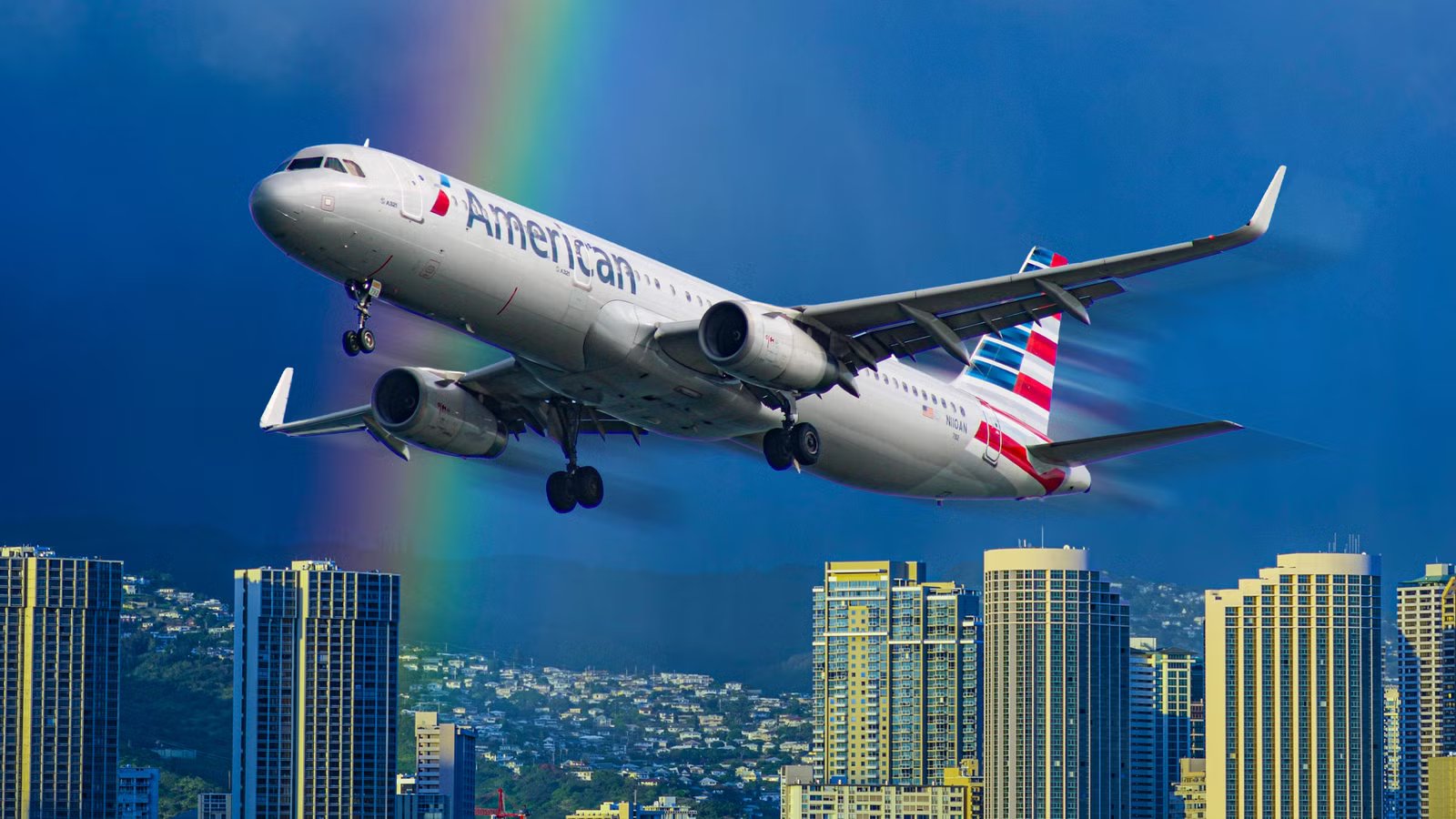
The headline here is not intended to be deceiving.  American Airlines really did, by its own account, send a non-ETOPS-certified Airbus A321 on a long-haul flight from Los Angeles International Airport (LAX) to Daniel K. Inouye International Airport (HNL) in Honolulu in August 2015. That makes the core claim here fundamentally true, but while the aircraft could physically make the trip, flying that far over water requires more than just range.
ETOPS approval exists because twin-engine jets operating far from diversion airports are required to meet specific maintenance, dispatch, and equipment standards. In this instance, American Airlines had a small subfleet of Hawaii-capable Airbus A321 jets, while the aircraft actually used was not one of them. The jet continued safely to Honolulu, but the mistake triggered scrutiny because airlines are not supposed to improvise on a route where certification status is a core component of the overall safety framework and not an administrative footnote.
For an operator like American Airlines, the episode became a revealing case study in the complexity of modern fleet management. On paper, the aircraft looked similar to the carrier’s Hawaii-configured Airbus A321s. In practice, they were not operationally interchangeable at all. That gap is what turned a routine narrowbody service flight into an unmissable headline. We argue that this goes beyond the airline sending the wrong aircraft to Hawaii, but rather that in long over-water flying, certification, configuration, and dispatch control matter just as much as the airplane model painted on the side of the fuselage.
What Is ETOPS, And Why Does It Exist?

ETOPS, which stands for Extended-Range Twin-Engine Operational Performance Standards, is the regulatory framework that allows twin-engine aircraft to fly routes that take them farther than a set threshold time from an adequate diversion airport, measured at the aircraft’s one-engine-inoperative cruising speed. In practical terms, it is what lets aircraft like the Airbus A321 or the Boeing 787 cross oceans or other remote areas without having to stay close to land or a diversion airport of some kind.
Flights are given a certain ETOPS rating, as they are approved for 120, 180, or more minutes, meaning that is how far the aircraft is permitted to fly from a suitable diversion airport. The idea behind this is that this is how far an aircraft can fly if one engine fails or another serious systems problem forces some kind of diversion. Regulators do not treat this as a simple matter of range. ETOPS approval depends on the aircraft-engine combination, the airline’s maintenance program, dispatch procedures, crew training, minimum equipment standards, alternate-airport planning, weather minima, communications capabilities, and the endurance of time-limited systems like cargo fire suppression.
These rules pretty much exist because overwater and remote-area operations leave much less margin for error. After a failure, the aircraft may have only one realistic diversion option, and it may still be hours away. ETOPS is therefore designed to reduce the chance of a diversion and to make sure that, if one happens, the aircraft can reach a safe airport under controlled conditions.
Are All Airbus A321 Jets ETOPS Certified?

For an Airbus A321 to fly ETOPS routes, the process begins well before a specific tail number actually enters service. First, Airbus and the engine manufacturer are required to obtain type-design ETOPS approval for that specific airplane-engine combination, showing regulators that the aircraft’s systems, engine reliability, and failure-management capabilities are suited for extended-diversion operations of all kinds. Having ETOPS approval can be an incredible financial advantage for airlines, as it can offer them the ability to fly both cheaply and efficiently between destinations that would otherwise not be able to be reliably served by a twin-engine aircraft.
This also includes configuration requirements, flight testing, and the approved configuration, maintenance, and procedures baseline for that specific model. Then the airline, not just the aircraft, is required to win operational approval. Under the FAA’s rules, the carrier applies for TOPS authority for that A321-engine combination and is required to show that its maintenance program, crew and dispatcher training, operating manuals, and flight-planning procedures are all up to the extremely strict standards required for an ETOPS certification.
FAA guidance says that the application is for a specific airplane-engine combination and is followed by an in-depth review of the operators’ ETOPS programs. Lastly, the airline may have to complete an FAA-witnessed validation flight in order to demonstrate that it can safely dispatch, support, and, if necessary, divert the aircraft under ETOPS conditions. Once that is successful, the carrier receives ETOPS authority in its operations specifications, and only then can the A321 legally operate those long overwater routes.

When American Airlines Mistakenly Flew A Non-ETOPS Airbus A321 To Hawaii
10 years ago, the carrier accidentally deployed an A321 without the proper certifications to fly to Hawaii.
The Wrong Jet Went All The Way To Hawaii

The aircraft involved in this unfortunate but ultimately unproblematic incident was an American Airlines Airbus A321, a 2015-built model that carried the tail number N137AA. The aircraft is equipped with sharklets and it had only entered the fleet a few months before the incident in question took place. On August 31, 2015, American Airlines used the jet to operate Flight AA31 from Los Angeles to Honolulu just days after launching A321 service on the route itself, according to analysis from Ch-Aviation.
The problem in this situation was that N137AA was an Airbus A321S, a designation used for aircraft of this type that were not certified for long-haul overwater flights under ETOPS. Those models carried the Hawaii-qualified A321H designation. An employee ultimately discovered the mismatch while the flight was already en route over the Pacific, and the airline’s management team notified the Federal Aviation Administration immediately. Rather than turn the aircraft around, American let the flight continue on to Honolulu, where it landed safely.
The return flight was quickly canceled, and the aircraft in question was sent back with only a minimal crew rather than carrying passengers. American Airlines later said that the airplanes were broadly similar in range and layout, but the Hawaii-approved versions carried the extra equipment and certification needed for ETOPS dispatch, which is what made this a real compliance failure instead of just a harmless scheduling error.
Why Did This Mix-Up Really Matter?

What happened next is more important than the flight itself. American Airlines said it revised its software and internal procedures so that dispatch systems would correctly distinguish between standard Airbus A321s and the smaller Hawaii-qualified subfleet that the carrier uses for routes to the islands. Thus, the episode exposed a fleet-management problem. From a passenger’s perspective, the jets looked nearly identical, but operationally, they were not interchangeable at all.
This is why the story made the headlines. It was not evidence in and of itself that the Airbus A321 was incapable of reaching Hawaii, but rather it showed that the specific tail assigned to the flight lacked the proper ETOPS approval package. The aircraft itself was not the story but rather the set of operational complications that led to it being improperly deployed.
American Airlines continued to rely on the Airbus A321 for years to come, with advanced A321neo models entering service in 2019. Many of these jets were used on long overwater routes as part of a broader fleet shift. As for the airframe itself, it remains in service flying ordinary American Airlines routes in March 2026.

Why Aren’t All Southwest Airlines Boeing 737 MAX 8s ETOPS Certified?
Southwest Airlines has just 138 ETOPS-certified aircraft in its fleet of over 800 aircraft.
What American Airlines Jets Are ETOPS-Capable?

American Airlines’ publicly identifiable ETOPS-capable fleet is centered on its long-haul Boeing-built widebody jets, including the 777-200ER, the 777-300ER, the 787-8, and the 787-9, alongside the Airbus A321neo jets, which are currently used as the backbone of the airline’s Hawaii operations. American’s own premium-service pages tie long-haul international and Hawaii Flagship flying to the Boeing 777 and 787 family.
The airline does have changes in store for its ETOPS-capable fleet. In the future, the Airbus A321XLR is being prepared for North Atlantic service, so it is set to become part of American’s extended-operations fleet as those routes launch in the coming years. This could fundamentally alter how the carrier caters to long-haul demand.
The important caveat is that ETOPS is not just a model label stuck on an aircraft type. The FAA treats it as approval for a very specific aircraft-engine combination and the airline’s operating, maintenance, training, and dispatch program, which means not every aircraft within a broader family is automatically interchangeable for ETOPS missions.
What Is Our Bottom Line?

At the end of the day, there are not that many situations in which a narrowbody will need to be certified for long overwater operations, although that number of instances is certainly growing. Therefore, carriers like American Airlines must make sure that their certification priorities are in line.
ETOPS certifications are designed to protect passengers and ensure that, under pretty much any circumstance, they are able to reach their destination safely. Instances like American’s operational mishap on its flight to Hawaii are undoubtedly concerning, and they highlight the continued importance of ensuring that pilots and maintenance teams, as well as route schedulers, know exactly what is going on with each specific kind of aircraft.
American Airlines has certainly learned its lesson, as there have been no recorded instances of a similar situation arising again, something which operators have been quick to highlight. Nonetheless, it is important to remember the situation, why it happened, and what its operational implications were.