dailynewsnblog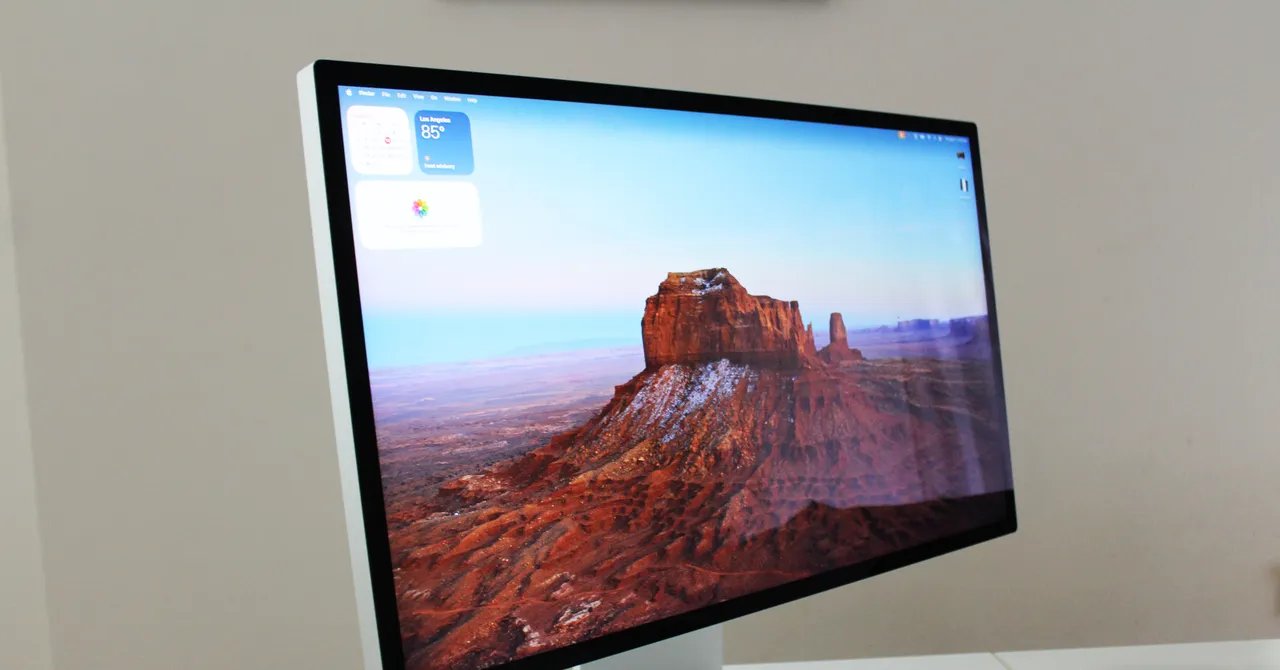
Squeezing in more dimming zones is only half the equation for great HDR. You also need as much brightness and contrast as you can crank out, and the Studio Display XDR delivers on an unprecedented level.
Apple says this can go up to 2000 nits of peak brightness, and when I measured it myself with my colorimeter, it maxed out at 1905 nits in a 25 percent window. That’s really impressive. Meanwhile, it can even do 1701 nits at 49 percent and 948 nits at full screen. This is easily the brightest computer monitor I’ve ever tested. While the contrast and color performance can’t quite compare with OLED, creators working in HDR will get a lot more from the Studio Display XDR. For example, I’ve tested the Dell 32 Plus QD-OLED, which can do HDR quite well, but only maxes out at 946 nits. And that’s only in a 1 percent window.
Most of your use of the Studio Display XDR will be in SDR, not HDR. Here, there are a few tradeoffs. First, I measured the max brightness at 463 nits, though the display can range up to 1000 nits in bright rooms using the ambient light sensor. You can’t just force it to 1000 nits though. According to my SpyderPro colorimeter, I measured an average Delta-E color error of 0.76, which is quite accurate. I will say, performance in the AdobeRGB color space only came up at 88 percent, which is behind what you get in OLED monitors.
Some Warnings
There are some limits with compatibility for the Studio Display XDR. No Intel Macs are supported at all, which shouldn’t be a problem for most people, so long as you didn’t buy a Mac Pro recently. The desktop computer was the very last Intel-powered Mac in the lineup and was only discontinued in 2023. Beyond that, there are some Macs that can’t support the 120-Hz refresh rate. For example, the M1 Pro, Max and Ultra chips only support 60 Hz on the Studio Display XDR. That means even if you bought an M1 Ultra Mac Studio, you’re locked at 60 Hz. That’s a bummer.
This is a smaller thing, but one of the USB-C ports in the back is for power delivery to charge your laptop over a single cable. This is common these days in monitors, but the one included can only deliver 96 watts of power. The 16-inch MacBook Pro comes with a 140-watt power supply. If you’re doing intense tasks on something like the M5 Max, you need all that power, but this means slower charging. There have been some reports that on the 14-inch MacBook Pro with the M5 Max, it couldn’t hold a charge with its own 96-watt power supply during heavy loads like gaming.
Then there’s the price. Like with the Vision Pro, Apple feels confident charging a lot for this very niche use case monitor. However, monitors with true HDR aren’t as much a novelty as they were in 2019. Back then, lots of monitors marketed HDR without the proper backlighting to back it up. But a lot has changed in seven years and the market is now flooded with affordable OLED and Mini-LED monitors that can actually do HDR, largely thanks to the popularity of OLED in PC gaming.
The unique thing about the Studio Display XDR, then, is how strong the HDR effect is. Don’t get me wrong: the complete package is very strong and the HDR performance really is top tier for those that want it. But like the Vision Pro, it won’t be the disruptive force it’s claiming to be, and the majority of us will go back to wishing Apple would make a 32-inch monitor, or maybe something more affordable to pair with the Mac mini or MacBook Air. As of now, neither the Studio Display or Studio Display XDR fit the bill.