dailynewsnblog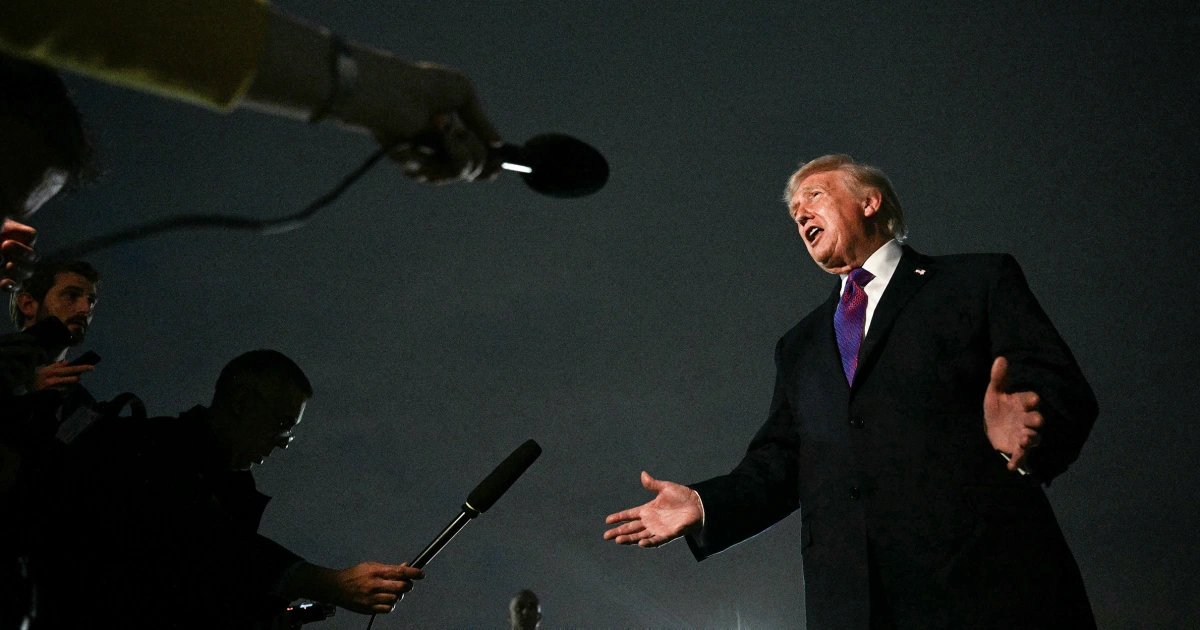
WASHINGTON — Anyone listening to President Donald Trump’s speeches has heard him say it and say it again: Gas prices are dropping on his watch, making life more affordable.
The day before he launched the war against Iran, he appeared in Corpus Christi, Texas, and said that “right here,” gas prices had fallen below $2.30 a gallon.
“I just left Iowa two weeks ago: $1.99. And then I passed another one: $1.85. It’s happening. It’s happening,” he added.
On Thursday, Trump’s message shifted.
He posted on social media that when oil prices rise, as they are now, “we make a lot of money” because of America’s energy dominance.
“The United States is the largest Oil Producer in the World, by far, so when oil prices go up, we make a lot of money,” he wrote.
Who he meant by “we,” he didn’t say. Oil companies are profiting from rising prices triggered by the Iran war, but millions of Americans are facing an unexpected burden at the gas pump.

One day into the U.S. and Israeli attack on Iran, the price of gas stood at $2.94 a gallon, according to GasBuddy. As of Thursday, the price had climbed to $3.61 — an increase of 23%.
One of Trump’s attacks on former President Joe Biden centered on the price of gas. A gallon of regular cost $5 at one point in Biden’s term. It had fallen to $3.09 when Biden left office.
At a rally in Rocky Mount, North Carolina, the week before Christmas, Trump pointed to some of his supporters in the crowd as he touted a drop in gas prices.
“It cost these beautiful friends of mine from North Carolina, it cost them like one-third to get here than it would have cost under Sleepy Joe Biden,” he said.
In his Thursday post, Trump didn’t mention gas prices. Instead, he portrayed the rise in oil prices as a kind of American windfall. Taking the argument a step further, he wrote that the war is worthwhile because it is stopping Iran from developing a nuclear weapon, even without the oil-driven riches now coming America’s way.
He wrote that “of far greater interest and importance to me, as President, is stoping an evil Empire, Iran, from having Nuclear Weapons, and destroying the Middle East and, indeed, the World. I won’t ever let that happen! Thank you for your attention to this matter.”
Trump’s political ascent is rooted in a populist connection to forgotten voters, not a plutocratic alliance with oil executives.
Until the war with Iran, he seized opportunities to remind everyday Americans that gas prices were falling and they were saving money under his policies.
As Trump neared his first full year in office in January, the White House sent out a news release stating that reduced gas prices were producing real savings. Motorists were on track to spend $11 billion less on gas in 2026 compared with the previous year, with the average household saving hundreds of dollars annually, the release said.
A favorite Trump talking point was to spotlight specific parts of the country where gas prices had fallen below $2 a gallon. Fact-checks showed that Trump was exaggerating the price drops, but he has routinely cited gas prices as a measure of his administration’s success. And, indeed, prices nationwide had fallen more than 6% from the start of his new term until he went to war.
In his State of the Union address last month, Trump likened cheaper energy to “another big tax cut.”
“Nobody can believe when they see the kind of numbers — especially energy — when they see energy going down to numbers like that, they cannot believe it,” he said.
Inside the White House, Trump’s advisers are closely watching the public’s reaction to the gas prices, an official speaking on the condition of anonymity to discuss internal strategy said in an interview. A recent NBC News survey showed that a majority of registered voters disapprove of how Trump is handling the conflict with Iran and believe that he shouldn’t have taken military action against the country.
Voters “understand that the president is taking big and bold action to obliterate a regime that has been threatening our country and killing our people for many years,” the official said.
Still, Billy Jean Wright, a truck driver who attended Trump’s appearance at a packaging plant on Wednesday in Hebron, Kentucky, said she didn’t like how the war is unfolding.
“The gas prices are going up,” she said in an interview. “Our food industry is going up. Everything is going up, and we can’t survive over here.”
The Trump administration is taking measures to bring down prices sooner rather than later. With midterm congressional elections coming up, the president can ill-afford to see voters in a sour mood because daily commutes have become more expensive, on top of groceries.
Trump has said he can end the war at any time, which could presumably stabilize oil prices and reduce gas prices from their current heights. Yet Iran is a wildcard. The country’s new supreme leader said Thursday that the Strait of Hormuz, a critical transit point for oil tankers, should be shut down, potentially sparking an energy supply crisis.