dailynewsnblog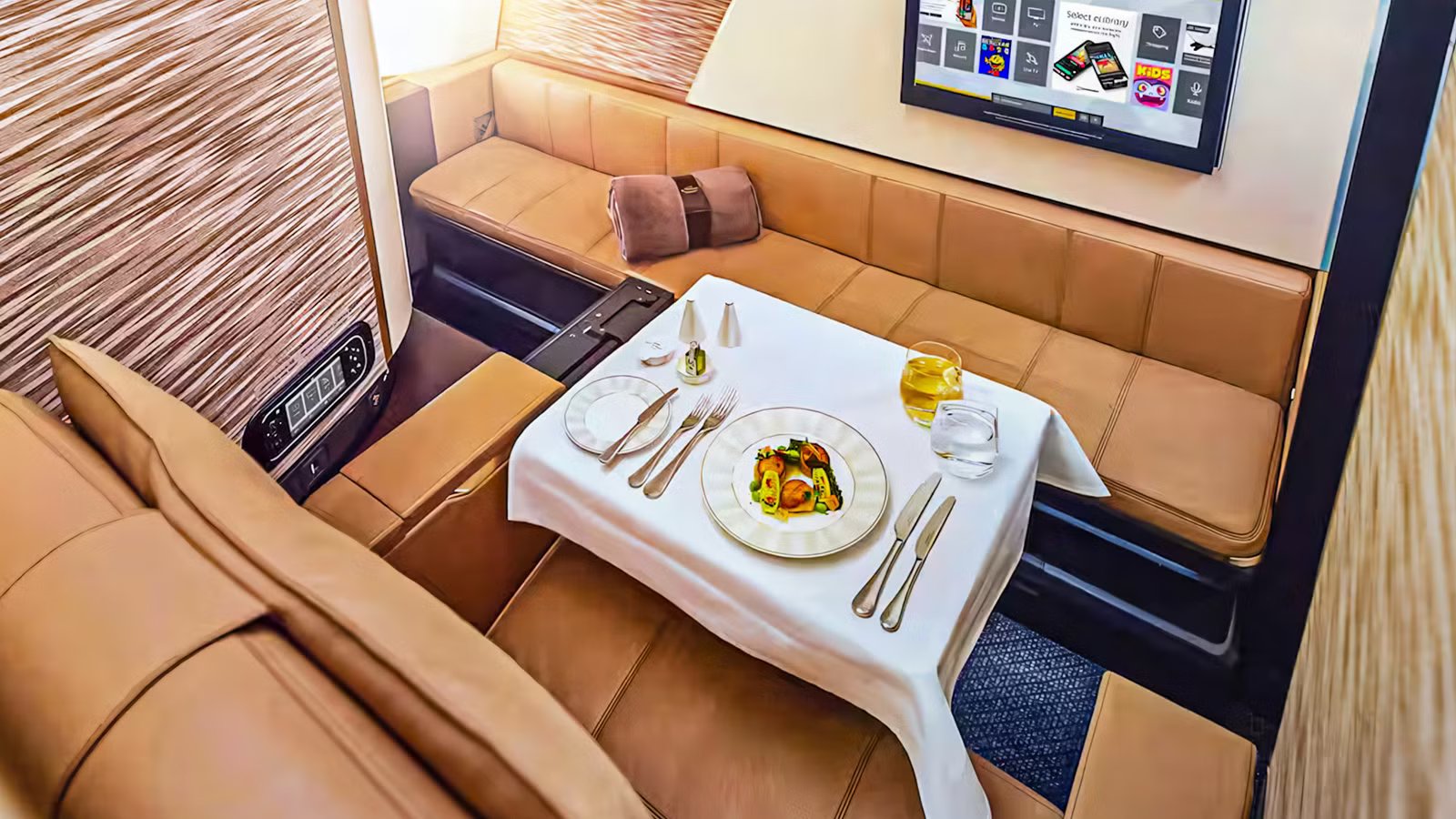
Flying the world’s longest routes often involves spending more than 17 hours inside a single widebody aircraft. As nonstop travel between distant global hubs becomes a standard for international business and leisure, the cost of securing the highest level of luxury remains a point of significant interest. For those facing nearly a full day in the air, the price of a ticket is often viewed as an investment in physical well-being and productivity upon arrival.
This article examines the financial commitment required to fly in a first class cabin on the most grueling commercial routes in operation as of March 2026. While many travelers assume that a first class suite is the baseline for ultra-long-haul travel, the current aviation landscape reveals a more complex reality where cabin availability is often limited to business class. We will explore which carriers still offer a first class product on these marathon flights and what the current market rates are for a seat at the front of the plane.
Over 17 Hours For 5 Figures?

For travelers looking to fly first class on the world’s longest commercial routes, the cost typically ranges between $15,000 and $28,000 for a round-trip ticket. However, the search for these elite tickets is often complicated by the fact that many of the longest flights in the world do not actually offer a first class cabin. Instead, carriers such as  Singapore Airlines and
  Qatar Airways prioritize high-density business class configurations on their ultra-long-range aircraft to manage weight and fuel efficiency.
On routes where first class is available, such as  Emirates‘ flight from
  Dubai to
  Auckland or Qantas‘ service between
  Sydney and
  Dallas, prices reflect the extreme exclusivity of the product. An Emirates first class ticket on the 8,824-mile (14,201 km) journey frequently costs upwards of $20,000, providing passengers with access to onboard showers and private suites. Similarly, Qantas utilizes its Airbus A380 on the 8,578-mile (13,805 km) trek to Texas, with first class fares often exceeding $18,000.
The absence of first class on the very longest routes, like the 9,537-mile (15,348 km) journey from  New York to
  Singapore, is a deliberate strategic choice by airlines. Singapore Airlines operates this route using a specially configured Airbus A350-900ULR, which only features business class and premium economy seats. By removing the heavy first class hardware, the airline can carry more fuel and stay within the weight limits required for a flight that often exceeds 18 hours.
The Balance Of Weight And Luxury

The primary obstacle to offering a first class cabin on a 19-hour flight is not a lack of demand, but the rigid constraints of aeronautical engineering. Every aircraft has a maximum takeoff weight, a fixed limit that includes the weight of the airframe, the crew, the passengers, their luggage, and the fuel required for the journey. On ultra-long-haul routes, the fuel alone can account for nearly a third of the total weight at departure. For example, the Airbus A350-900ULR carries approximately 165,000 liters (43,588 gallons) of fuel to stay airborne for up to 20 hours.
To accommodate this massive fuel load, airlines must make significant sacrifices in payload. A standard first class suite is a heavy piece of hardware, and can weigh over 500 kg (approx 1,102 lbs) due to the motorized components, privacy partitions, and heavy bedding. In contrast, a business class seat typically weighs closer to 80 kg (176 lbs). By eliminating first class and even standard economy seats, Singapore Airlines reduced the total seat count on its A350-900ULR from the standard 253 seats down to just 161. This reduction allows the aircraft to stay within its 280-tonne (617,294-lb) MTOW while carrying enough fuel to reach New York from Singapore.
Weight distribution, or balance, is the second critical factor. Heavily concentrated weight at the front of the aircraft, where first class cabins are located, can shift the center of gravity. This requires pilots to adjust the aircraft’s trim to maintain level flight, which increases aerodynamic drag and, consequently, fuel consumption. On a shorter 8-hour hop, these inefficiencies are negligible, but on an 18-hour sprint, they can be the difference between a profitable flight and one that requires an unscheduled refueling stop.

Why Singapore Airlines Doesn’t Have Economy On Its Airbus A350-900ULRs
The carrier operates these aircraft with only premium seating.
Differing Strategies

Airlines operating the world’s longest routes must decide between focusing on providing a first class product to sacrifice business class seats or vice versa. For industry leaders like Emirates and Qantas, first class is essential, but the reasoning is as much about brand positioning as it is about immediate ticket revenue. Experts often refer to these cabins as halo products because offering a world-class first class experience enables an airline to elevate its entire brand, allowing it to command higher price premiums across its more profitable business class and premium economy cabins.
Qantas CEO Vanessa Hudson has been vocal about the price premium customers are willing to pay for non-stop travel. Speaking on the airline’s ambitious Project Sunrise, which will see the Airbus A350-1000 fly non-stop from Sydney to London and New York starting in late 2026, Hudson noted that there is a dedicated segment of the market that values time and exclusivity above all else. To protect this exclusivity, Qantas recently made headlines by banning its own top executives from using the six limited first-class suites on these upcoming routes, ensuring every seat is available for high-yield, paying passengers.
Similarly, Emirates President Sir Tim Clark has consistently defended the 14-seat first class cabin on the Airbus A380. Clark argues that on popular routes like Dubai to London or Sydney, the demand for first class is so high that the airline often faces a spill rate, where three potential passengers are waiting for every one seat sold. From a revenue management perspective, these flights are not about volume but instead about protecting yield. By keeping supply low and the product ultra-luxurious, airlines can justify the $20,000 price tags that offset the immense fuel and operational costs of ultra-long-haul flying.
Is Business Class Just As Good?

The most prominent alternative to a five-figure first class fare is the modern super-business class, such as the Qatar Airways Qsuite or the Singapore Airlines long-haul business class. These products have evolved to the point where they offer many features previously reserved for first class, including sliding privacy doors, lie-flat beds with high-thread-count linens, and dine on demand services. For many corporate travelers, a price point between $8,000 and $12,000 for business class represents a more logical balance of comfort and fiscal responsibility compared to the extreme cost of a suite.
The drawback of choosing business class on a 17-hour flight is primarily the lack of personalized space and airport ground services. While a business class seat is comfortable, a first class suite often provides nearly 50% more floor space, allowing for a separate chair and bed or a much wider sleeping surface. Furthermore, first class passengers at hubs like Dubai or Doha receive access to exclusive lounges that feature private nap rooms, spa treatments, and fine dining, just some amenities that are often crowded or unavailable to those traveling in business class.
For a passenger who needs to walk off an 18-hour flight directly into a board meeting, the extra $10,000 for a first class suite is an investment in physical readiness. However, for most travelers, even those in the top 1%, the gap between the best business class products and first class has narrowed so significantly that the latter is increasingly becoming a niche luxury rather than a travel necessity.

Why Airlines Don’t Want First Class Anymore
Airlines are making a surprising move that’s leaving some luxury travellers in the lurch. What’s behind this shift?
Not What You Paid For

When aircraft technology simply cannot support the weight of a traditional premium cabin, the quality of the product tends to fall with it. As noted, Singapore Airlines operates the world’s longest flight from New York to Singapore with a two-class Airbus A350-900ULR. In this case, no amount of money can buy a first class seat on the direct route because the cabin does not exist. Travelers who insist on a first class suite for this journey must instead book a one-stop itinerary via Frankfurt or Tokyo, which can add four to six hours to the total travel time.
Airlines like Qantas or Emirates occasionally substitute a Boeing 787-9 or a two-class Boeing 777 onto routes usually served by the Airbus A380. While these aircraft are modern and efficient, they often lack a first class cabin entirely. In these instances, a passenger who paid for a first class suite may be downgraded to business class. While the airline will typically refund the price difference, the loss of the expected comfort and privacy on a 16-hour journey can be a significant disruption.
Some Boeing 777-300ER aircraft still in service for various carriers feature first class seats designed over 10 years ago. These may lack the privacy doors or updated entertainment systems found on newer Airbus A350 or A380 variants. A way to mitigate the potential disappointment after spending so much money would be just to research what configurations are available for specific routes and what the expected product may be, as opposed to seeing what happens on the day.
More Changes Coming

The world’s longest flights represent the pinnacle of commercial aviation, where the limits of fuel, weight, and human endurance meet. For those who can afford the $15,000 to $28,000 price tag, first class on these routes offers a cocoon of privacy that makes a 19-hour journey feel like a stay in a boutique hotel. However, the search for these seats is increasingly difficult as airlines prioritize the efficiency of two-class widebody aircraft like the Airbus A350 and the Boeing 787.
The industry’s outlook suggests that while first class will remain on flagship routes between global financial hubs, it is unlikely to expand. Most carriers are instead focusing on business plus or premium suites that offer first class privacy at a business class weight. This means that while the options for traditional first class may be shrinking, the overall quality of the front of the plane has never been higher.
The arrival of the Boeing 777-9 and Qantas’ Project Sunrise fleet will likely redefine this sector entirely again. These aircraft are designed to bridge the gap, potentially bringing a new generation of lightweight luxury suites to the world’s longest nonstop routes. For now, the ultra-long-haul first class remains a rare and expensive halo experience, reserved for a few specific routes and the airlines bold enough to fly them.