dailynewsnblog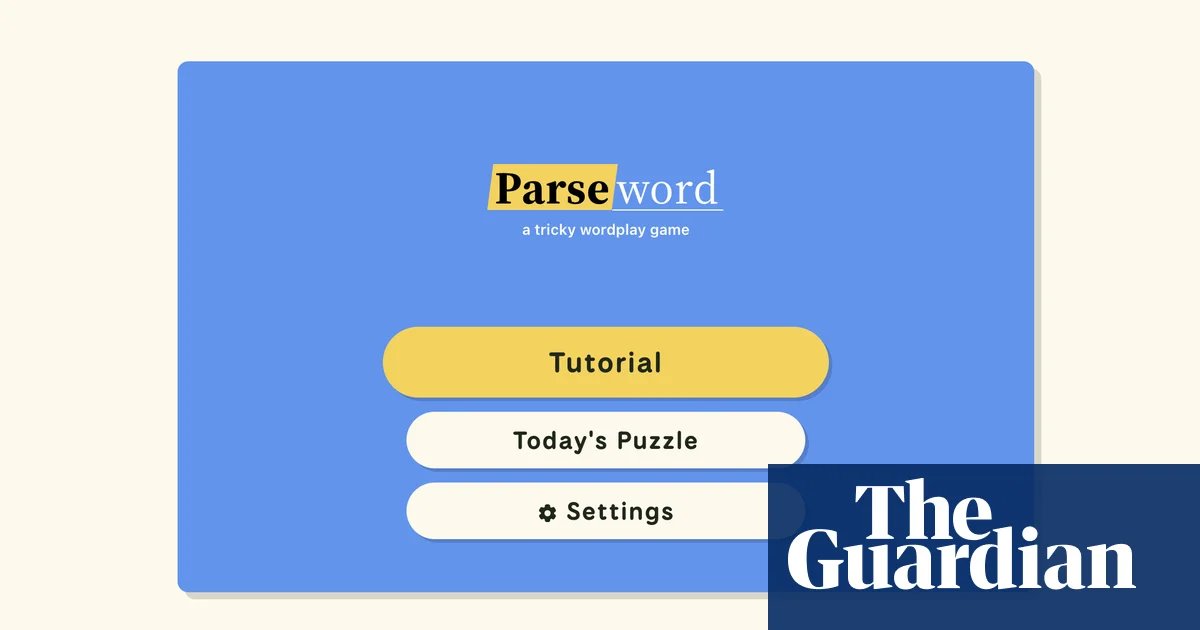
In 2021, Josh Wardle became a household name almost overnight. His digital game, Wordle, turned a simple guessing game into a global morning ritual: six guesses, one word, and a grid of coloured squares shared across social media feeds.
It became a cultural phenomenon; bought within months by the New York Times for a seven-figure sum.
Four years on, Wardle is back. His new game, Parseword, is a digital take on the cryptic crossword; a format built on synonyms, reversals, homophones, letter deletions and hidden fragments that has long been beloved by a dedicated minority – and baffling to almost everyone else.
Which is precisely why, Wardle said, he decided to give the game a digital makeover. “Cryptic crosswords have been around for a long time but they require an immense amount of work upfront before a new player can even begin to solve them,” he said.
That, said Wardle, is a shame. “I’ve found that behind this complex exterior is an incredibly beautiful puzzle format. I’d love for more people to be able to experience them, and I hope my new game is a gradual on-ramp.”
Whether lowering that barrier to entry will translate into the same kind of viral success as Wordle is another question. As the gaming website Engadget put it, Parseword is still “a real chin-scratcher”.
Christian Donlan, features editor at Eurogamer.net, questioned whether that chin-scratching element might prevent Parseword from weaving the same viral magic as Wordle.
“George Fan, the creator of Plants vs Zombies, says the largest number of words you can expect a player to read when it comes to instructions is eight. Eight words!” he said. “Parseword not only has to explain the rich rules of Cryptics but also how it’s reworking them.”
The challenge, he said, is whether the game can teach the rules in a way that feels instinctive rather than instructional.
But there may be another obstacle, Donlan added: the cultural divide between American and British puzzle traditions.
The US has long been resistant to cryptic crosswords: “I guess Parseword is trying to change that – so the really interesting question is what America makes of it,” he said.
Puzzle writer and broadcaster Chris Maslanka, college enigmatist of St Catherine’s College, Oxford, agreed the real puzzle now is whether a global audience embraces the fresh challenge.
“What makes a new game go viral is how convenient and natural it is in a digital environment,” he said. “Whether Parseword is a viral sensation depends on whether it further facilitates old features or adds new tweaks that makes it more infectious than the amazingly durable and well-tested crossword.”
Wardle himself, however, is phlegmatic about whether his new game mirrors the success of his last: “In terms of virality, if my goal had been to make a game that competed with Wordle on that front, I wouldn’t have made Parseword,” he said.
“However, that was never my goal – and, to be fair, it wasn’t my goal with Wordle either,” he added. “I simply think Cryptics are an amazing puzzle format and I’d love it if more people had the chance to experience them.”
If Wordle proved that a simple puzzle could captivate millions, Parseword poses a different question: whether the internet is ready for something a little harder.