dailynewsnblog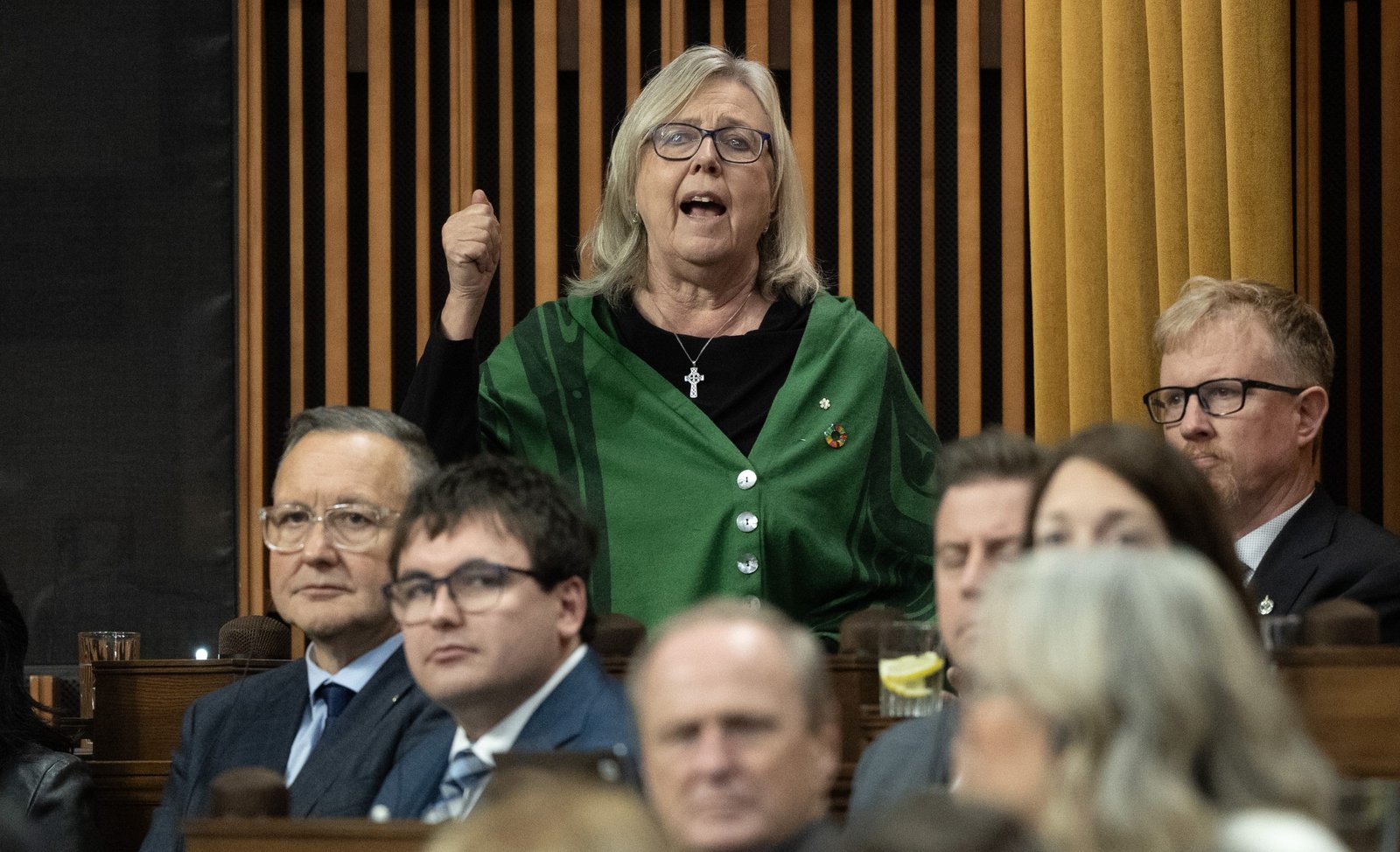
“Bill C-4 is an omnibus bill. It was labeled the affordability act, but it was part four of Bill C-4 that made it omnibus. Part Four of Bill C-4 was amendments to the Elections Act. It had nothing whatsoever to do with affordability.”
Green Leader Elizabeth May says her colleagues in the House of Commons should be “ashamed” for opposing Senate changes to government legislation exempting federal parties from provincial privacy laws.
May was the only MP to voice opposition to a motion from the government on Thursday rejecting an amendment to its landmark affordability legislation, known as Bill C-4. The motion was adopted on division, which indicates that the decision wasn’t unanimous, but was made without a recorded vote.
Most of the bill touches upon changes to tax laws. The legislation slashes the lowest tax rate from 15 to 14 per cent and eliminates the GST on new homes priced up to $1 million for first-time buyers.
But it also includes an unrelated section that would have the effect of exempting political parties from provincial privacy laws and making that exemption retroactive to 2000.
That is likely related to a 2024 decision by B.C.’s Supreme Court that ruled that the federal Liberal party had to comply with the province’s privacy law.
The Senate amendment would create a sunset clause that would repeal the privacy changes in three years time.
May said she supported the Senate efforts to address serious concerns about the bill, commending the Upper Chamber for doing a comprehensive study that the House didn’t bother to do.
“The Senate took some time to study. The house didn’t… study it properly,” she said, noting that most of the bill had nothing to do with privacy issues.
“Bill C-4 is an omnibus bill. It was labeled the affordability act, but it was part four of Bill C-4 that made it omnibus. Part Four of Bill C-4 was amendments to the Elections Act. It had nothing whatsoever to do with affordability.”
Canada’s three major political parties have lined up in support of the bill, defending the changes as a way to exert federal jurisdiction and claiming that political parties are unique entities that should be treated differently than corporations.
They argued C-4 aims to create a single, national privacy regime and clarifies that jurisdiction over federal political parties lands with Parliament and not provincial or territorial legislatures.
Critics have countered that the issue isn’t jurisdiction but instead the lack of a strong federal regime, noting that the bill only requires parties to come up with their own privacy policies and have one annual meeting with the Chief Electoral Officer.
Parties that fail to comply with their own privacy policies could face administrative monetary penalties from the Commissioner of Canadian Elections.
It’s very rare for the Senate to make changes to a government bill on tax or monetary measures. One of the most famous examples came in 1990 when the Upper Chamber initially blocked legislation to implement the GST.
Then-prime minister Brian Mulroney invoked a rarely used section of the Constitution to appoint eight additional senators to pass the bill.
But in a close vote last month, senators approved an amendment from Senator Pierre J. Dalphond that would automatically repeal the privacy changes three years after Bill C-4 becomes law. Twenty-eight senators voted in approval, 24 opposed and eight abstained.
That change would give the government three years to “propose ways to strengthen the privacy national regime for political parties proposed in Bill C-4, failing which the parties will be subject to provincial privacy laws,” Sen. Dalphond told iPolitics in an email.
The bill now returns to the Upper Chamber, where senators will vote on whether to insist on their changes or accept the position of the House.
It’s rare for the Senate to insist on amendments that are rejected by the House.
Bill C-4 was nearly unanimously supported in the House, with only May voicing her opposition.