dailynewsnblog
Air travel plays a crucial role in connecting cities, businesses, and travelers across the United States, and the Midwest relies heavily on major airport hubs to maintain those connections. Among these airports,  Chicago O’Hare International Airport stands out as the busiest in the region. Located in Chicago, the airport serves as a central gateway for both domestic and international flights, linking Midwestern cities with destinations around the world. Its strategic location near the center of the country makes it a key transfer point for airlines operating coast-to-coast and global routes.
Over the years, O’Hare has grown into one of the largest and most active aviation hubs in the world. The airport handles tens of millions of passengers annually and records hundreds of thousands of aircraft takeoffs and landings each year. Thanks to its massive flight network, strong airline presence, and ongoing expansion projects, O’Hare continues to dominate aviation activity in the Midwest while competing with major hubs like Hartsfield–Jackson Atlanta International Airport for national rankings.
O’Hare International Airport: The Midwest’s Busiest Aviation Hub

O’Hare International Airport is widely recognized as the busiest airport in the American Midwest and one of the most important aviation hubs in the world. Situated about 17 miles northwest of downtown Chicago, the airport serves as a key transportation gateway linking the Midwest with destinations across the United States and around the globe. Because Chicago is located near the geographic center of the country, the airport is ideally positioned for connecting flights, making it a major transfer point for travelers moving between the East Coast, West Coast, and international destinations.
The scale of activity at O’Hare is enormous. In 2025, the airport recorded more than 857,000 aircraft movements, which include both takeoffs and landings. This total made it the busiest airport in the United States by aircraft operations, reflecting the constant flow of flights arriving and departing throughout the day. Hundreds of routes operate from the airport, and the presence of major airline hubs, particularly for United Airlines and American Airlines, helps generate numerous daily departures and connections.
O’Hare’s infrastructure is designed to manage this high level of traffic efficiently. The airport includes four passenger terminals, more than 200 gates, and a large multi-runway system that allows aircraft to land and depart simultaneously. This extensive layout enables the airport to handle thousands of passengers and hundreds of flights each day while supporting both passenger travel and cargo operations. As one of the largest aviation facilities in North America, O’Hare continues to play a vital role in connecting the Midwest to the global air transportation network.
Airline Hub Operations And Flight Networks

O’Hare functions as a primary hub for several major airlines, which significantly boosts the number of flights passing through the airport. Because Chicago sits at a crossroads of domestic air routes, airlines use the airport to connect passengers traveling between different regions of the country.
Two major carriers dominate operations at O’Hare:  United Airlines and
  American Airlines. Both companies operate large hub networks from Chicago, offering extensive flight schedules across North America and international markets. Their presence makes the airport one of the most competitive airline hubs in the United States.
During peak travel seasons, United Airlines alone can schedule around 700–750 departures per day from O’Hare. These flights connect travelers to over 200 destinations worldwide, including major cities in Europe, Asia, and Latin America. With two global airlines operating large hubs in the same airport, the number of daily flights increases dramatically.

Why Doesn’t Delta Air Lines Have A Hub In Chicago?
Delta Air Lines has strategically avoided a fight over Chicago O’Hare.
Passenger Traffic And Travel Volume

In addition to leading the nation in aircraft operations, O’Hare International Airport also ranks among the busiest airports in the world for passenger traffic. The airport consistently handles tens of millions of travelers every year, making it one of the most important aviation gateways in North America. Passengers traveling through O’Hare include business travelers, tourists, and international visitors connecting to destinations across the globe. Its vast flight network links Chicago with hundreds of cities, ensuring a steady flow of travelers moving through the airport daily.
Recent statistics highlight the scale of this passenger traffic. In 2024, roughly 80 million passengers traveled through O’Hare, reflecting a strong rebound in aviation demand following pandemic-era declines earlier in the decade. The majority of these travelers were flying within the United States, with about 82% classified as domestic passengers. International travelers accounted for the remaining 18%, arriving from or departing to destinations across Europe, Asia, Latin America, and the Middle East. This combination of domestic and international routes helps maintain the airport’s position as a major global transportation hub.
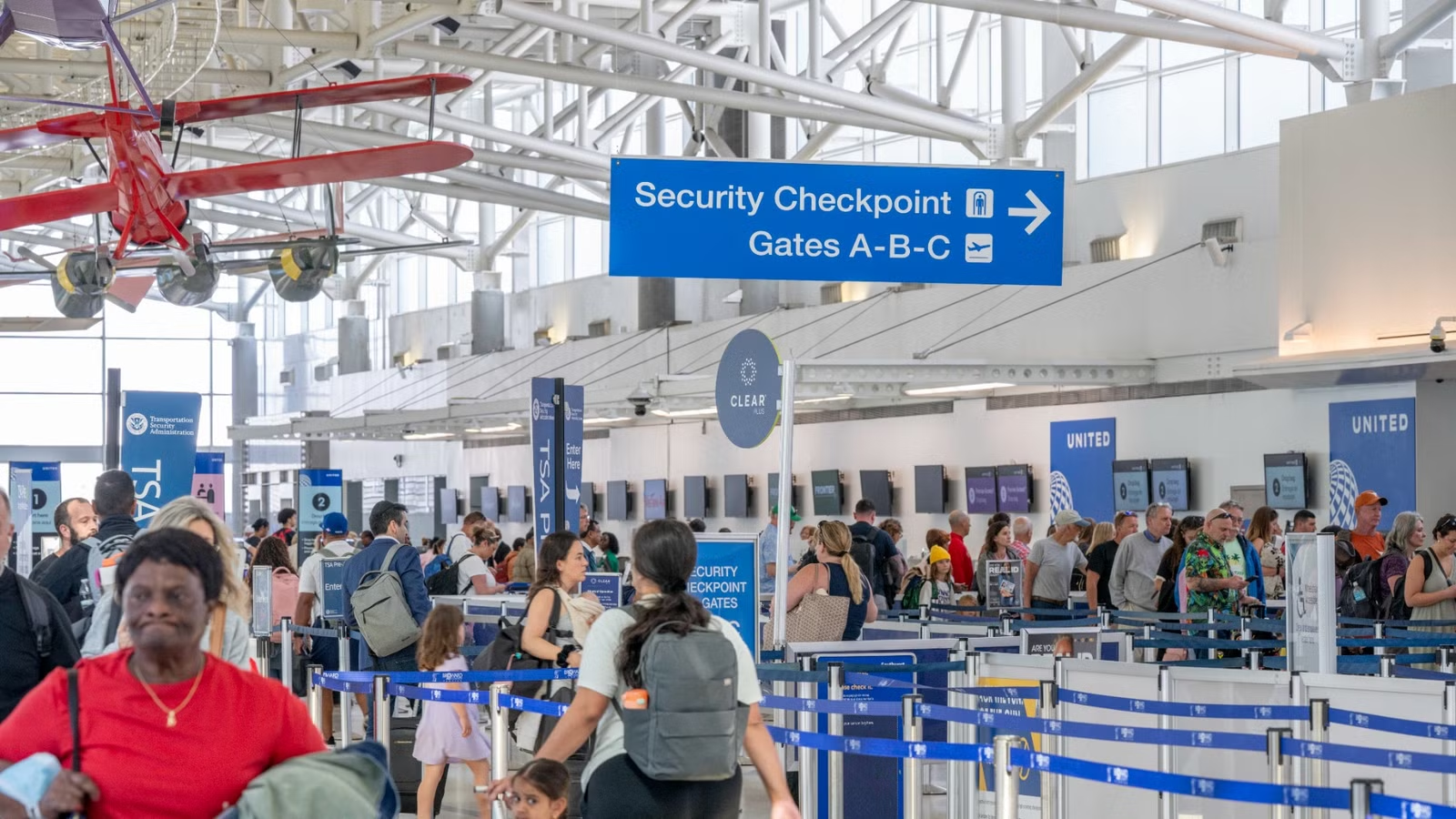
Passenger activity continued rising in 2025 as travel demand remained strong. During the first half of the year alone, more than 40 million travelers passed through O’Hare’s terminals. Peak travel seasons, particularly summer vacations, Thanksgiving, and the winter holidays, can push daily passenger totals well above 100,000 passengers moving through security checkpoints. These surges demonstrate how critical O’Hare is to both domestic travel and international connectivity for the Midwest.
Infrastructure And Airport Capacity

Handling such enormous traffic requires extensive infrastructure. O’Hare is equipped with four main passenger terminals and numerous concourses, allowing multiple airlines to operate simultaneously without overwhelming the airport’s facilities.
The airport also features a large multi-runway layout, which allows aircraft to land and depart at the same time on different runways. This design improves efficiency and helps reduce delays even during busy travel periods. The runway system is one of the most complex in North America.
Beyond passenger flights, O’Hare is also a major cargo hub. Freight shipments passing through the airport support industries throughout the Midwest, including manufacturing, retail, and technology. Large volumes of international cargo help connect American businesses with global markets.

2,442 Daily Movements: Chicago O’Hare Is The World’s Busiest Airport For Flights
Of course, Atlanta ranks first in passengers and seats for sale.
Competition With Other Major US Airports

Although O’Hare International Airport frequently leads the United States in aircraft movements, the title of “busiest airport” can change depending on how aviation activity is measured. Some rankings focus on aircraft operations, which count takeoffs and landings, while others prioritize passenger traffic or total seat capacity. Because different airports specialize in different types of traffic, such as frequent short-haul flights or large long-haul aircraft, the rankings can vary significantly depending on the metric used.
For example,  Hartsfield-Jackson Atlanta International Airport usually holds the top position in the United States when measured by total passengers. The airport handled more than 104 million passengers in 2023 and remained close to that level in 2024. Atlanta’s success largely comes from its massive connecting network, where a significant portion of travelers transfer between flights rather than starting or ending their journey there. The airport also operates over 2,700 flights per day, supported by its role as a major hub for Delta Air Lines.
Airport | 2024 Passenger Traffic | Key Strength |
|---|---|---|
O’Hare International Airport | 80+ million | Aircraft operations leader |
Hartsfield–Jackson Atlanta International Airport | 108+ million | Passenger traffic leader |
Denver International Airport | 82+ million | Fast-growing passenger hub |
Dallas/Fort Worth International Airport | 87+ million | Major global airline hub |
Other major US airports also compete closely in national rankings.  Denver International Airport has seen especially rapid growth, handling over 82 million passengers in 2025, making it one of the fastest-growing large airports in North America. Meanwhile, Dallas/Fort Worth International Airport continues to rank among the world’s busiest aviation centers, processing almost 88 million passengers annually in 2024 and serving as the primary hub for American Airlines. Together, these airports illustrate how different factors, passenger volume, flight frequency, and airline hub operations, can all influence which airport is considered the busiest.
Expansion Plans And Future Development

To accommodate rising travel demand, O’Hare International Airport has launched a major redevelopment and airport expansion program aimed at expanding capacity and modernizing facilities. Often referred to as the O’Hare 21 expansion plan, the initiative is one of the largest airport improvement projects currently underway in North America. Early estimates placed the cost of the program at about $8.5 billion (€7.8 billion), but as the scope expanded to include additional infrastructure upgrades and terminal redesigns, projected costs have increased to roughly $12.1 billion (€11.1 billion). The long-term goal is to prepare the airport for future growth in global air travel while maintaining its role as the Midwest’s primary aviation hub.
One of the most significant parts of the redevelopment involves building a new satellite concourse that will increase the airport’s gate capacity. This facility, known as Concourse D, is expected to cost approximately $1.3 billion (€1.2 billion) and will add around 19 new gates for airlines. The additional gates will allow carriers to expand flight schedules, reduce congestion at existing terminals, and support larger aircraft operating international and high-demand routes.
The broader modernization effort also includes several other large-scale construction projects. Plans call for a new Global Terminal to replace Terminal 2, with an estimated price tag of about $2.2 billion (€2 billion). Other improvements include a $300 million (€275 million) renovation of Terminal 3 and a $1 billion (€920 million) expansion of Terminal 5, which primarily handles international flights. Together, these investments aim to improve passenger flow, upgrade baggage systems, expand security screening areas, and add new restaurants, shops, and lounges, ensuring O’Hare remains one of the most important airports in the United States for decades to come.