dailynewsnblog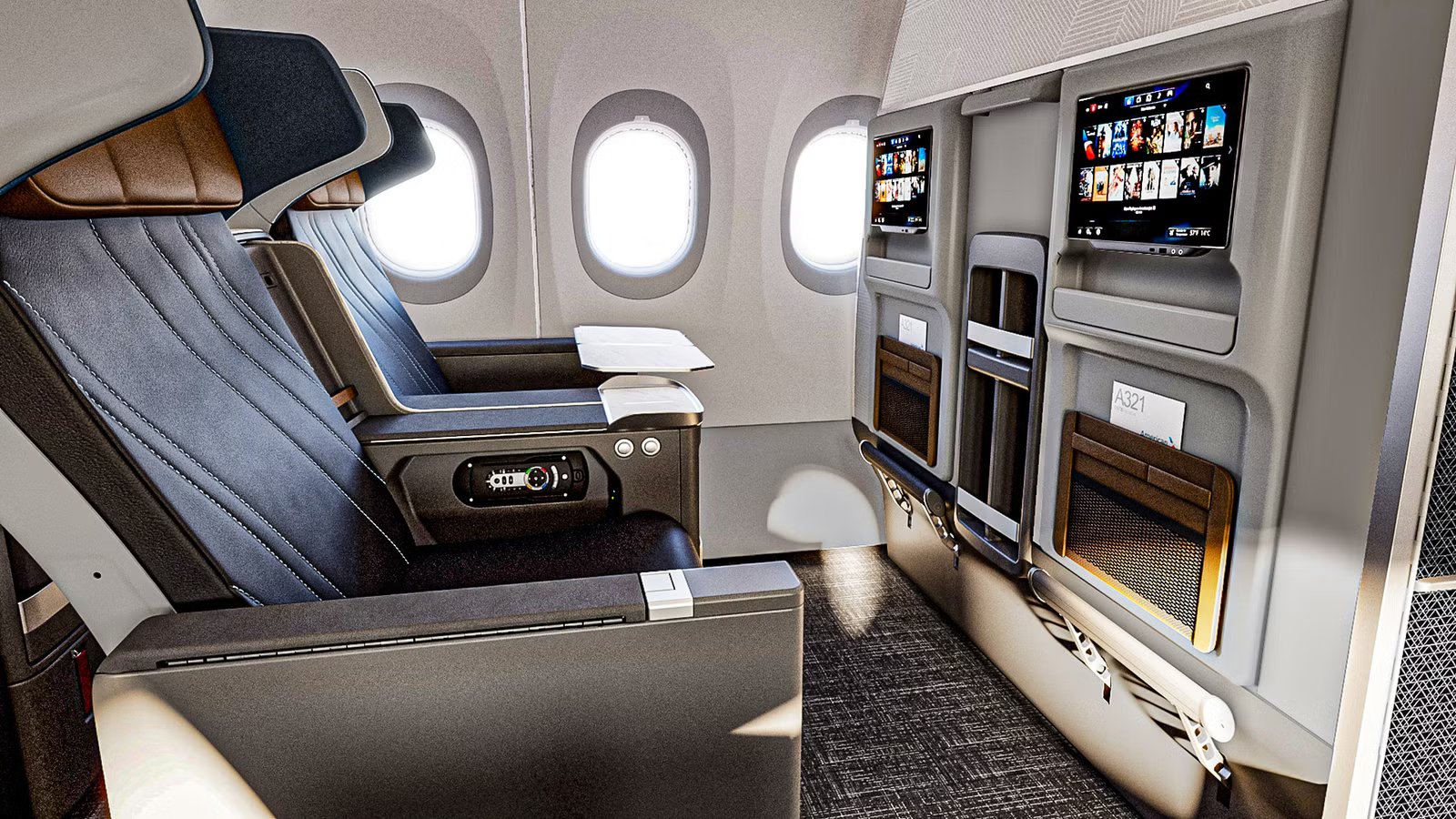
Over this past decade, widebody aircraft featuring premium economy cabins have more than doubled, with the cabin class now installed on around 45% of aircraft. Most premium economy cabins are available in North America and Europe, with North America even having 90% of widebodies featuring a premium economy cabin.  American Airlines announced its premium economy product back in 2015, followed by
  Delta Air Lines in 2016, and
  United Airlines in 2018.
While most large US airlines have introduced a premium economy cabin on their long-haul international flights. Those who fly frequently within the United States may notice that premium economy is not available on most aircraft. So why don’t US airlines install premium economy on every aircraft? The answer largely comes down to aircraft types, route economics, and the unique structure of the US airline market.
Why Don’t Airlines Offer Premium Economy On Domestic Flights?

On long-haul flights, premium economy is typically used to bridge the gap between economy and business class. According to a 2016 study, distance is the most important factor in passengers’ level of willingness to pay for premium economy. On flights lasting 8 to 12 hours, passengers value wider seats, increased legroom, greater recline, and improved meals and service. This is why premium economy is typically installed on widebody aircraft used for intercontinental travel, such as the Boeing 787, Boeing 777, and Airbus A350.
Since most US domestic flights are relatively short, many passengers are less willing to pay significantly more for additional comfort. As a result, one of the key reasons for the absence of premium economy on US domestic flights is that demand simply isn’t there. Besides, the domestic first class product offered by US airlines often provides a comparable or better experience than premium economy on these shorter flights. Because of this, adding a premium economy could create an unnecessary overlap between cabin classes.
Furthermore, instead of installing premium economy, US airlines have created upgraded economy sections that offer more legroom while keeping the same seat design. Examples of this include Delta Air Lines’ Comfort+, United’s Economy Plus, and American’s Main Cabin Extra. The seats on these products typically provide several extra inches of legroom and benefits such as early boarding or complimentary drinks. From an airline perspective, this model is extremely profitable. The seats are almost identical to standard economy seats, meaning they cost little to install, yet passengers regularly pay up to hundreds of dollars extra per flight.
Installing a premium economy is not as simple as adding a few new seats. Even when sufficient demand for premium economy on domestic routes exists, it does not guarantee that airlines would opt to install the cabin class. Domestic routes are typically flown with narrow-body aircraft such as the Boeing 737 and the Airbus A320 family. These aircraft have limited cabin width and space, and installing premium economy would require removing multiple economy seats, which could also reduce revenue. A true premium economy seat requires a larger, more expensive seat, reducing the total number of seats on the aircraft. Combined with a lower willingness to pay on shorter flights, this can result in reduced overall revenue. Lastly, retrofitting an aircraft can cost millions of dollars, meaning upfront, the investment might not yield enough to cover the costs, especially when weighing the opportunity costs of removing or reducing the number of extra-legroom seats.

The Most Spacious Premium Economy Seats In The US Today
All three major airlines in the US offer competitive premium economy products.
Why Has Premium Economy Become So Popular?

In recent years, premium economy cabins have gained popularity among airlines and passengers worldwide. Since the introduction of the first lie-flat business class seat in 2000, business class cabins have become increasingly luxurious, offering sliding privacy doors, lie-flat beds, and excellent dining options. On the other hand, many airlines have reduced service in economy class and continue to opt for increasingly dense configurations. As a result, premium economy has gained popularity among airlines and passengers worldwide, bridging the gap between business class and economy class.
In premium economy, passengers benefit from extra legroom, wider seats, enhanced dining options, and other premium amenities, which improve the long-haul travel experience compared to regular economy class. For airlines, the cabin offers a high-yield product that meets passenger demand for comfort at a lower price than business class. It is a product designed to attract both leisure travelers seeking more comfort and price-conscious business travelers. However, the value-for-money of premium economy is heavily discussed among frequent travelers and depends heavily on the airline and passenger expectations.
An important reason for the increased demand for premium economy cabins is the post-pandemic surge in business-class travel in recent years, which has driven up prices and forced some travelers to seek more affordable alternatives. At the same time, the service quality cuts in regular economy class have created a customer segment willing to pay extra for better service but unwilling to pay for business class. And whether you love or hate premium economy, the cabin class isn’t going anywhere anytime soon. Airlines such as KLM, SWISS, and United Airlines are investing heavily in the cabin class, while others, such as Korean Air, Thai Airways, KLM, and  Alaska Airlines, are preparing to enter the premium economy market.

What Are The Benefits Of Flying In American Airlines’ New Premium Economy?
The refreshed premium economy seats are more comfortable, aesthetically pleasing, and technologically advanced than older seats.
Which US Airline Has The Best Premium Economy Class On Long-Haul Flights

Delta Air Lines‘ Premium Select product is considered to be the leading premium economy cabin in North America and thus also the United States. However, at spot 11, the airline falls outside the top 10 of overall premium economy class airlines in 2025, according to Skytrax. For comparison, United Airlines ended in spot 18, whereas American Airlines did not reach the top 20.
Despite Delta’s premium economy product ranking outside the top 10, it excels in other areas, such as the hard product, with the airline achieving the fifth spot for Best Premium Economy Class seat. The seats in Delta’s premium economy class offer generous recline and foldable foot and leg rests, ensuring enough space to stretch out on a long flight. Each seat has a seat pitch of up to 38 inches (97 cm), a width of 19 inches (48 cm), and a 13.3-inch (33.8 cm) IFE screen. Delta’s Premium Select cabin is configured at six-abreast on the Boeing 767, seven-abreast on the Airbus A330, and eight-abreast on the Airbus A350. Delta has installed 18 Premium Select seats on the 767-300ER, 20 Premium Select seats on the 767-400ER, 21 Premium Select seats on the A330-200 and A330-300, 28 Premium Select seats on the A330-900, and either 40 or 48 Premium Select seats on the A350-900.
Aircraft (Planespotters.net) | Debut Year | DeltaOne | Premium Select | Economy | Total Seats |
|---|---|---|---|---|---|
Airbus A350-900 (359) | 2017 | 32 | 48 | 226 | 306 |
Airbus A330-900 | 2019 | 29 | 28 | 224 | 281 |
Boeing 767-400ER | 2019 | 34 | 20 | 184 | 238 |
Airbus A330-200 | 2021 | 34 | 21 | 168 | 223 |
Airbus A330-300 | 2021 | 34 | 21 | 227 | 282 |
Boeing 767-300ER | 2021 | 26 | 18 | 172 | 216 |
Airbus A350-900 (35H) | 2024 | 40 | 40 | 195 | 275 |
In addition to a great seat, passengers traveling in Delta’s premium economy cabin receive Sky Priority service, including access to special check-in and security lanes, as well as priority boarding, and baggage handling. During the flight, passengers will receive an amenity kit and a hot towel, followed by an elevated inflight meal curated for Delta’s premium economy product. Passengers also receive more comfortable blankets and pillows, as well as noise-canceling headphones to guarantee a good night’s sleep.

American Vs. Delta Vs. United: Which Carrier Has The Best Premium Economy?
These three airlines offer the most prominent premium economy offerings in the domestic aviation market.
When Did The Large US Airlines Introduce Premium Economy?

American Airlines was the first US airline to introduce a premium economy product on its aircraft, with the cabin class being first installed on its factory-new Boeing 787-9 fleet back in 2016. The Boeing 787-8, 777-200ER, and -300ER fleets were later also retrofitted to feature the new cabin class. The airline is also installing its premium economy product on all newly delivered Airbus A321XLR aircraft. However, compared to the two other major US airlines, American has taken a more conservative approach to premium economy, with fewer seats installed across its fleet than, for example, Delta.
Delta quickly followed American with its new premium economy product back in 2016, with the airline first introducing its Premium Select product in late 2017, when it took delivery of the first Airbus A350-900. Following the A350 was the now-retired Boeing 777-200ER and -200LR fleet in 2018, quickly followed by the Airbus A330-900s and Boeing 767-400ER in 2019. Last on the list was the Airbus A330, which the airline started retrofitting in 2021.
The last airline to introduce a premium economy product was United Airlines. Premium Plus, as United’s premium economy is called, was first introduced in 2019 onboard all new Boeing 787-10 aircraft. All other Boeing 787, Boeing 767, and Boeing 777 in the fleet were later also retrofitted with the Premium Plus cabin. Similar to American, United is also slightly more conservative when it comes to the number of seats installed on its aircraft than Delta, with the only exception being the number of seats installed on the Boeing 767.