dailynewsnblog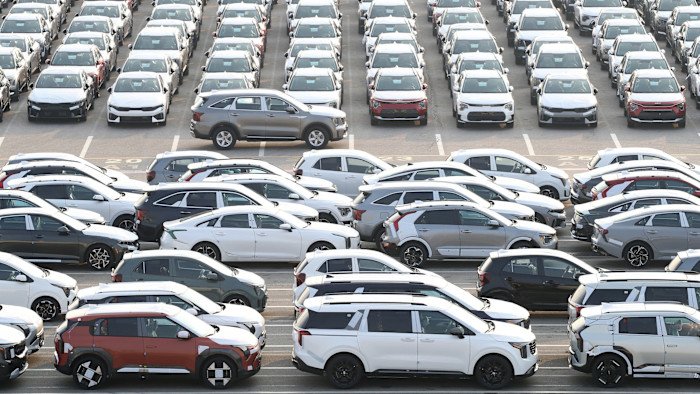
Unlock the White House Watch newsletter for free
Your guide to what Trump’s second term means for Washington, business and the world
South Korea’s parliament has enacted a special bill enabling the country’s $350bn investment in the US as part of a bilateral trade deal aimed at reducing high American tariffs on Asia’s fourth-largest economy.
Seoul has come under growing pressure from Washington to implement the investment deal signed in October. In January, US President Donald Trump threatened to raise tariffs on Korean products, citing the stalled legislation needed to implement the investment package.
As part of the trade deal, South Korea agreed to invest $200bn in cash in US strategic industries including semiconductors, pharmaceuticals, critical minerals, energy, AI and quantum computing.
Annual investments are capped at $20bn, with profits split between the two countries until the initial investment is recouped. The remaining $150bn will be accounted for by a shipbuilding partnership between the countries, as the US strengthens its naval force with the help of Korean shipbuilders.
Under the Special Act on Investment in the US, Seoul will set up a state-run investment vehicle with Won2tn ($1.35bn) in capital and a strategic investment fund. The funding will be secured by issuing special bonds and using return on foreign currency assets.
The law allows US investments without “commercial rationality” to be made if they are needed for national security and supply chain stability, but it requires a relevant parliamentary subcommittee’s approval.
The bill is expected to be implemented in June, following cabinet approval.
The move comes as Washington began a probe into South Korea and other large trading partners, focusing on alleged excess production capacity, in a move to help find grounds for new tariffs after the US Supreme Court struck down Trump’s “reciprocal tariffs” last month.
Korean government officials are concerned that the country’s petrochemical sector, where Washington sees excess industrial capacity, could be hit by new tariffs following the so-called Section 301 investigation.
“With the special legislation, US pressure on South Korea regarding tariffs is likely to ease somewhat,” said Chang Sang-sik, head of research at the Korea International Trade Association.
“But the section 301 investigation can allow Washington to take issue with various trade issues like Korea’s industrial policy, oversupply and subsidies in addition to non-tariff barriers.”
Seoul’s trade minister Yeo Han-koo said on Thursday that the new probe had been expected but the government would consult Washington closely to make sure South Korea would not be at a disadvantage compared with its rivals.
The US accounted for 18 per cent of South Korean exports in 2024, according to OECD figures. Leading exports include cars and auto parts, as well as machinery and goods to supply Korean companies building car, battery and chip manufacturing facilities in the US.
The leaders of big Korean conglomerates including Samsung, Hyundai and Hanwha visited Washington last year to pledge new US investment in advanced manufacturing sectors.