dailynewsnblog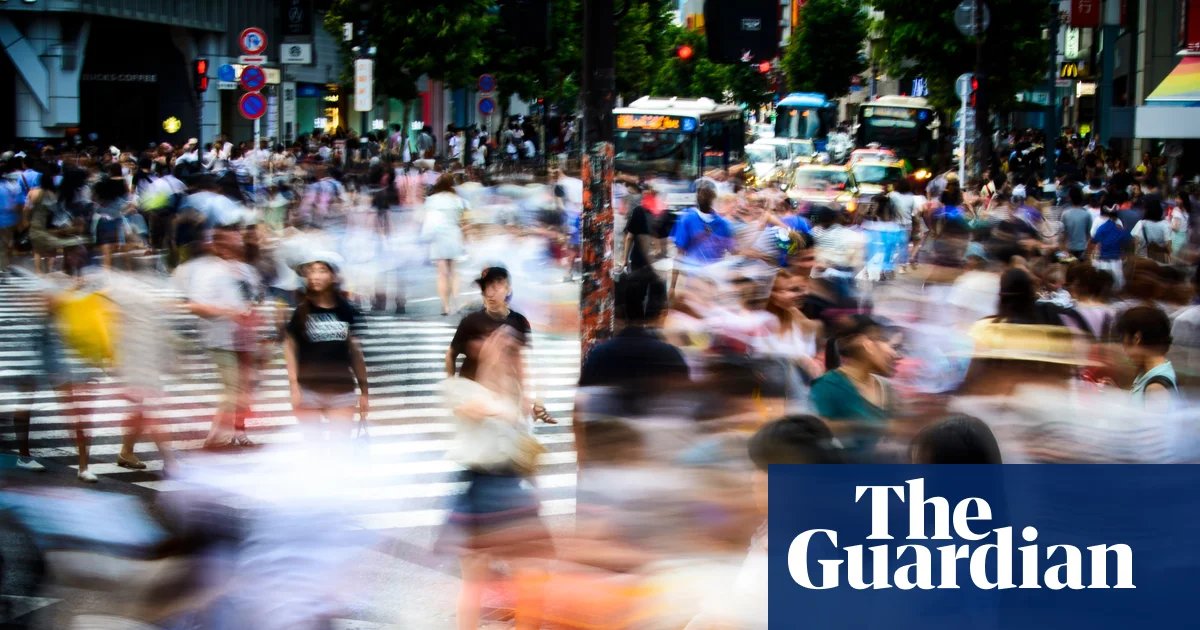
It starts out as a heartwarming clip. A young girl, clearly delighted to be in Tokyo, beams as she makes a peace sign to the camera. Seconds later, she is shoved to the ground from behind by a woman wearing a surgical mask. The assailant doesn’t skip a beat, striding out of shot of the clip filmed by the girl’s mother.
This was no accidental clash of shoulders in a crowded place, but one of the most visible examples of a spate of butsukari otoko – “bumping man” – shoving incidents in Japan that experts attribute to a combination of gender dynamics and the stresses of modern life.
A video of the incident, filmed on 25 February in the middle of the popular “scramble” crossing in Tokyo’s Shibuya neighbourhood, has racked up more than 1m views on Instagram. Most commenters condemned the woman’s actions, while some wondered if it was wise to take photographs in the middle of a packed intersection.
The bumping phenomenon entered the Japanese public consciousness in 2018, when a slightly blurred video appeared of a man deliberately barging into several women at Shinjuku station, the busiest railway station in the world.
Last May, a 59-year-old associate professor was arrested in Fukuoka, on suspicion of assaulting multiple passersby after striking them with his bag as he walked past.
The man faces a prison sentence of up to two years or a maximum fine of ¥300,000 ($1,895). Assaults resulting in injury carry harsher penalties.
Other incidents were reported around Tamachi station in Tokyo, including a woman struck so hard she suffered broken ribs. Commuters must now stay in lanes separated by bollards when they approach and leave the station.
It’s not just men doing the bumping, although anecdotally they are more likely to be perpetrators. Social media posts show people of both sexes purposely striding towards through crowded public spaces in readiness to administer a shoulder barge to unsuspecting victims.
In one widely shared clip, a woman is seen hitting a passerby with her bag, then pausing to pick something up from the ground before returning to berate her victim.
The relative novelty of the crime means no official statistics are kept. In many cases, the alleged assailants take advantage of their surroundings to blend into the crowd. Some victims are also unaware they have been deliberately targeted.
A 2024 survey of 21,000 men and women found that 14% had been the victim of butsukari, while 6% said they had witnessed an assault, with 5% experiencing both.
Experts attribute the phenomenon in part to changing gender politics.
Bumping is a “reflection of modern society,” Kiryu Masayuki, a sociology professor at Toyo University who specialises in criminal psychology, told toyokeizai.net last year. “Old-fashioned ideas, such as the belief that men are superior to women … are still deeply rooted. But in today’s world, where the job market is tough and people are uncertain about the future, traditional ideas of masculinity have been lost.”
Bumping into women was a low-risk means of taking out their frustrations, he said. “They are confident that they won’t be caught by the police.”
Japan’s tourism boom has added another layer to the problem, as hordes of visitors hoping to capture a perfect Instagram moment descend on busy locations in Tokyo, Kyoto and Osaka to pause and film.
After the scramble crossing incident involving the girl, who is from Taiwan, the Chinese embassy in Tokyo warned its citizens to keep a safe distance from others in crowded places and to avoid using their smartphones while walking.
There was nothing, however, to suggest the assailant knew the girl’s nationality. She can be seen elbowing a man and brushing against another child just before pushing the girl to the ground.
The child’s mother said she had inadvertently filmed a “terrifying scene”. “It also made me realise that this kind of situation happens quite often in Japan,” she told the Guardian. She said she had been criticised and insulted online for taking photos of her daughter, who was uninjured, on a pedestrian crossing.
“I admit I may have been careless about the flow of people. But it wasn’t like I was ignoring traffic rules,” she said, adding that she had been following Chinese-language advice provided on Go Tokyo, a website run by the Tokyo Convention and Visitors Bureau, which tells visitors they “can even stand at the intersection and take a picture”.