dailynewsnblog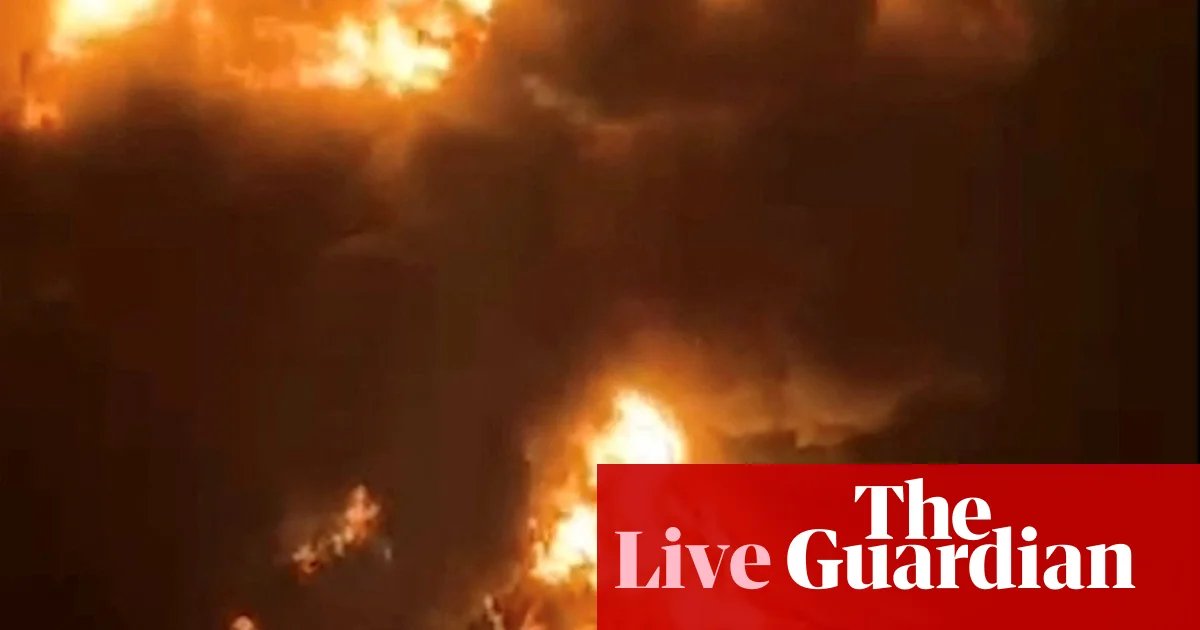
Key events

Tom McIlroy
The Australian government has announced a temporary downgrade in the country’s fuel quality standards, a move designed to put an extra 100m litres a month into the system.
Federal energy minister Chris Bowen told parliament that in order to assist with putting downward pressure on prices, the government would allow a 60-day change to allow higher sulfur levels in fuel.
The petrol supply would be prioritised for regional areas. It would otherwise have been exported to countries overseas.
Bowen said:
While Australian fuel consumption has not changed, this will help relieve pressure on distribution chains disrupted by elevated demand.
The government has been unequivocal – this additional supply must help the people who need it, including farmers, fishers and regional communities.
Bowen has also activated a national coordination mechanism to work with fuel producers and retailers during the growing conflict in the Middle East.
New Zealand mulls car restrictions if fuel supplies run low
Officials in New Zealand say they are considering using decades-old laws restricting vehicle use if fuel supplies dwindle due to the war in the Middle East.
Finance minister Nicola Willis told reporters on Thursday that officials had discussed using legislation introduced to restrict fuel use in the wake of the Iranian revolution in 1979 in response to the crisis.
Under those laws, car owners had to nominate one day per week when they would not use their vehicle and faced hefty fines if caught driving. They also allowed the government to authorise the sale of coupons to restrict fuel use, and restrict the amount that could be sold, Agence France-Presse is reporting.
The so-called “carless days” were in effect from July 1979 to May 1980.
The minister’s comments came as oil prices surged back above $100 a barrel on Thursday.
Iraq halts operations at oil terminals amid widening Iranian attacks on regional energy sites
An attack on Iraq’s Basra port early Thursday killed at least one person and forced authorities to halt operations at all the country’s oil terminals, officials said – as Iran stepped up its attacks on the region’s energy infrastructure.
Farhan al-Fartousi, director general of the General Company for Ports of Iraq, made the announcement in a statement carried by the state-run Iraqi News Agency on Thursday.
He said the attack targeted a ship engaged in a ship-to-ship transfer of oil in the Basra port on the Persian Gulf. He said it remained unclear if the ship was targeted by a flying or seaborne drone or a missile.
Rescuers recovered one dead body and helped 38 others after the attack. Al-Fartousi said commercial ports in Iraq remained open, though the oil terminals had been shut.
Meanwhile, Bahrain told residents to stay home after an Iranian attack on fuel tanks.
The interior ministry told residents in three parts of Muharraq to “remain in their homes, close windows and ventilation openings as precaution against potential effects of smokes from the fire currently being fought”.
And Oman shifted all vessels out of its main oil export terminal at Mina Al Fahal outside the Strait of Hormuz in a precautionary move, Bloomberg News reported.
Welcome summary
Hello and welcome to our continuing live coverage of the US-Israel war on Iran and its impact on the region, and the world.
Iran set ablaze two tankers in Iraqi waters early on Thursday as it stepped up attacks on oil and transport facilities across the Middle East, warning the world should be ready for oil at $200 a barrel – in defiance of President Donald Trump’s claim that the United States had already won the war.
Unleashed with joint US and Israeli airstrikes on Iran almost two weeks ago, the war has so far killed about 2,000 people and thrown global energy markets and transport into chaos.
At a campaign-style rally in Kentucky, Trump said the US had won the war but didn’t want to have to go back every two years.
“We don’t want to leave early do we?” he said on Wednesday. “We’ve got to finish the job.“
Oil prices, which shot up earlier in the week to nearly $120 a barrel before settling back to around $90, rose nearly again on Wednesday and extended gains in Asian trade on Thursday amid renewed fears about supply disruption.
Here are the other latest developments:
-
The US will release 172m barrels of oil from its strategic petroleum reserve in a bid to reduce oil prices that have soared due to supply shocks from war, the US energy secretary has said. Chris Wright said the release was part of a broader release of 400m barrels of oil agreed to by the 32-country International Energy Agency earlier in the day.
-
US intelligence indicates that Iran’s leadership is still largely intact and is not at risk of collapse any time soon, the Reuters news agency reported, citing three sources. A “multitude” of intelligence reports provide “consistent analysis that the regime is not in danger” of collapse and “retains control of the Iranian public”, said one of the three sources familiar with the matter, all of whom were granted anonymity to discuss US intelligence findings.
-
Two foreign tankers carrying Iraqi fuel oil are in flames after being attacked by Iranian boats laden with explosives, killing one foreign crew member, Iraqi port security officials told Reuters on Wednesday.
-
Trump said the US was “not finished yet” when asked about the war in Iran. He boasted that the US has hit Iran “harder than virtually any country in history has been hit”, before adding: “We’re not finished yet.” Earlier he had told Axios that the war would end “soon” since the there was “practically nothing left to target” in Iran.
-
The Israeli military launched a “large-scale wave of strikes” on Beirut’s densely populated suburbs after Hezbollah launched what the IDF said were “dozens” of rockets. The IDF claimed the strikes targeted what it described as “Hezbollah infrastructure” in the Dahieh suburb of southern Beirut. Israel’s renewed bombing campaign across Lebanon and its invasion of border areas with ground troops have killed more than 570 people, according to Lebanese authorities. This includes at least 83 children, according to Unicef. About 750,000 people have been displaced after being forced to flee the violence, sparking a growing humanitarian disaster.
-
The Israeli military said it was prepared to continue its war with Iran for as long as needed. “We as an army are prepared to continue the campaign as long as necessary,” a spokesperson said. Earlier, the Israeli defence minister, Israel Katz, conveyed similar sentiments, saying that the war “will continue without any time limit”.
-
Iran’s UN ambassador said a UN security council resolution demanding that Tehran stop its “egregious” attacks on Gulf nations was an “injustice against my country” – adding that Iran was the “main victim of a clear act of aggression”. “The decision distorts the facts on the ground and ignores the root causes of the current crisis,” Amir Saeid Iravani said. “The attack on us began with the assassination of the supreme leader and officials, which led to the deaths of thousands of victims.”
-
Condemning “heinous crimes and lethal aggression” from the US and Israel, Iravani said more than 1,348 civilians have been killed and more than 17,000 injured since Washington and Tel Aviv launched their joint attack on 28 February. More than 19,000 civilian sites – including 16,191 residential homes, 77 medical facilities and 65 schools – had been damaged, he said.
-
Iran’s president, Masoud Pezeshkian, demanded that reparations and security guarantees be included in any agreement to end the war started by the US and Israel. The Trump administration, meanwhile, has said that Donald Trump will decide when to end the war on Iran, and the US president has demanded Tehran’s “unconditional surrender” before that happens.
-
Trump evaded a question about the bombing of an Iranian girls’ school that killed at least 175 people, most of them children. A preliminary investigation found that the US is to blame for the strike, according to a report from the New York Times. When asked whether he takes responsibility for the attack, Trump replied: “I don’t know about it.” More on that here.
-
Oman’s civil defence is working on containing a fire in fuel tanks at the port in Salalah, Oman’s state news agency reported, after drones struck oil storage facilities there.
-
Qatar, Kuwait and the United Arab Emirates all said they had successfully intercepted Iranian drones and missiles against their territories.