dailynewsnblog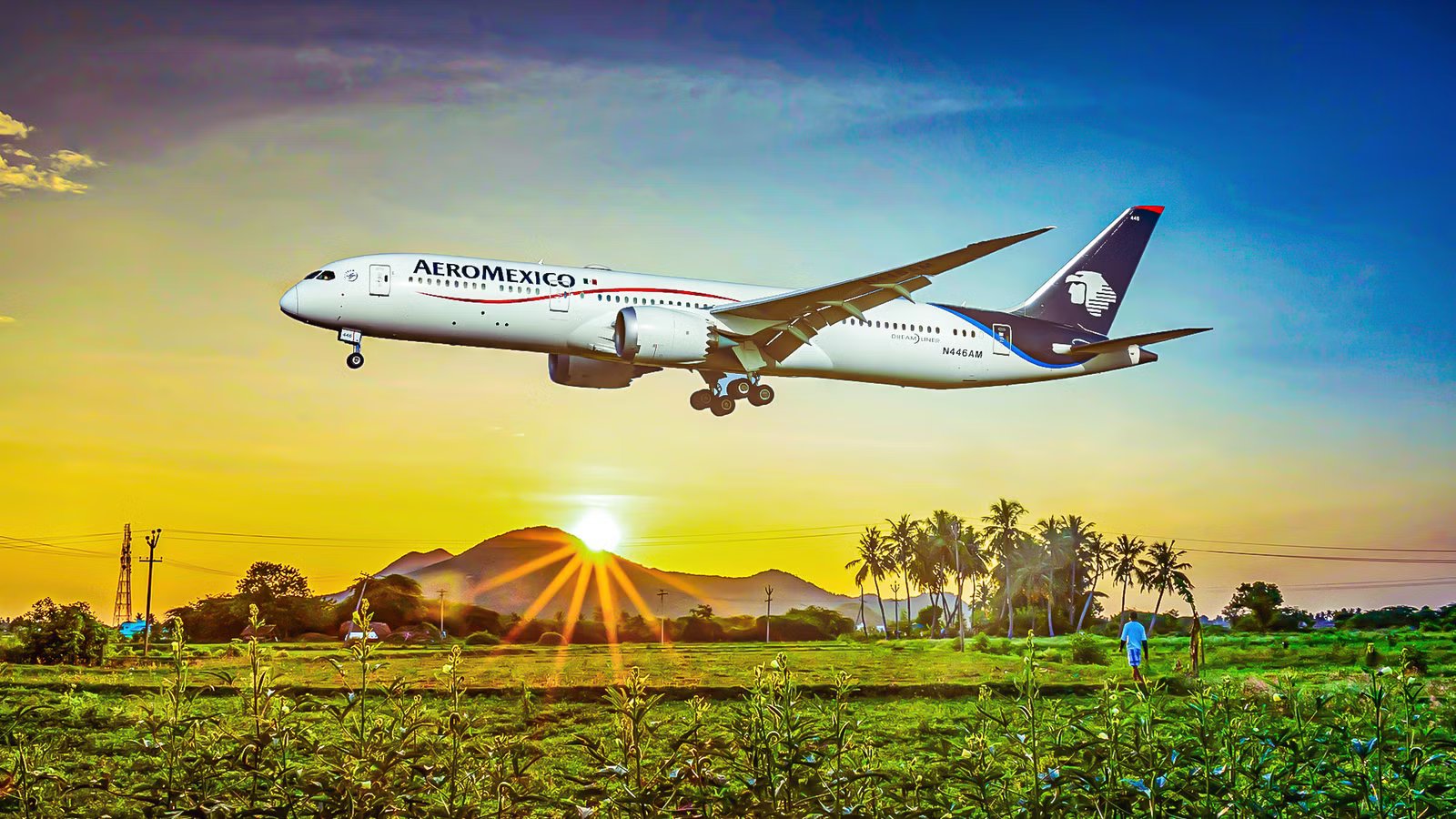
The Boeing 787 Dreamliner is often praised as a game-changer in commercial aviation, offering lower fuel consumption, longer nonstop routes, and greater flexibility for airlines. In an era of rising fuel costs, environmental pressure, and passenger expectations, the 787 stands out as a benchmark. Let’s unpack exactly what design, technology, and operational decisions make the 787 so efficient and versatile, and how that translates into real-world benefits for carriers and travelers.
When Boeing launched the Dreamliner program, its goal wasn’t just to build a newer widebody but to reimagine what a modern, long-range, medium-capacity aircraft could do. The 787 aimed to open previously unprofitable routes, reduce operating costs, and enhance passenger comfort through innovations in materials, aerodynamics, engines, and systems. Since entering service in 2011, the Dreamliner has lived up to many of those promises. Understanding how it achieved this offers valuable lessons about the future of commercial aviation.
Advanced Materials & Structural Innovations

One of the first places  Boeing turned to for efficiency gains was the 787’s structure. Instead of sticking with traditional aluminum-heavy construction, Boeing employed a revolutionary approach, by extensive using composite materials alongside new structural concepts. These decisions fundamentally changed the aircraft’s weight profile, maintenance needs, and operational efficiency. The 787’s fuselage, wings, and tail are built largely from carbon fiber reinforced polymers.
Composites are lighter than aluminum, more resistant to fatigue, and far less prone to corrosion. According to Boeing’s By Design resources, this shift alone contributes to the Dreamliner’s ability to burn up to 25% less fuel than the airplanes it replaces. Over long-haul flights, where every kilogram matters, that weight advantage compounds into huge operational savings. Boeing also incorporated advanced manufacturing and assembly techniques, stringent methods to ensure precision, and to reduce excess tolerances or overlaps.
Studies at Stanford University note that the Dreamliner’s optimized load paths and structural designs allow thinner walls without compromising strength, adding yet another layer of efficiency. Lighter structures also reduce the demands placed on other systems, from landing gear to wing structures and engines. In effect, every kilogram shaved off the fuselage multiplies efficiency across the aircraft. By rethinking not just materials but how they integrate into the entire airframe, Boeing created an aircraft designed for weight and efficiency from the ground up.
Aerodynamics & Engine Efficiency

While composites reduce weight, aerodynamics and propulsion determine how efficiently that weight moves through the air. The 787’s aerodynamic refinements and next-generation engines form another cornerstone of its performance. The Dreamliner’s wings are instantly recognizable as long, flexible, high-aspect-ratio designs with gracefully raked wingtips. These are optimized for cruise efficiency, reducing induced drag at high altitudes where long-haul flights spend most of their time.
Composites made it easier to mold these complex shapes into seamless surfaces, minimizing parasitic drag. Boeing highlights these aerodynamic advantages as a key reason for the aircraft’s outstanding performance. Engines provide the other half of the equation. Depending on the airline’s choice, the 787 is powered by either the Rolls-Royce Trent 1000 or the General Electric GEnx. Both engines feature advanced composite fan blades, improved compressors, and higher thermal efficiency than earlier generations.
Their reduced specific fuel consumption means every pound of thrust costs less fuel, and crucially, these engines retain high efficiency across a wide range of flight conditions. A sleek, drag-minimized fuselage is only effective if paired with engines that convert fuel into thrust efficiently. Likewise, engines must be matched with a wing designed to exploit their performance envelope. The 787 achieves that goal, allowing airlines to fly routes such as Denver–Tokyo nonstop, which was either impossible with older designs or unprofitable, as noted by The Denver Post.

The Story Behind The Boeing 787 Dreamliner’s Impressive Wing Flex
The plane’s wings are engineered to bend upwards by up to 25 feet during flight.
Mission Flexibility Through Variants

Fuel efficiency is valuable, but its real-world impact depends on how flexibly airlines can deploy the aircraft. Boeing designed the 787 family with three variants, the 787-8, 787-9, and 787-10, and each variant balances payload and range differently. The 787-8, the smallest model, seats around 240 passengers in a two-class layout and can fly roughly 7,300 NM (13,500 km). It is ideal for long, thinner routes where demand may not fill a larger aircraft.
The 787-9, which is the most popular variant, stretches capacity to about 290–300 seats while extending range slightly to 7,565 NM (14,010 km). The 787-10 is the largest, with around 330–340 seats, and it is optimized for high-capacity medium to long-haul routes, though its range drops to 6,330 NM (11,730 km). This spread gives airlines a powerful toolkit. A carrier can use the -8 to connect secondary cities with long-range flights, deploy the -9 on flagship ultra-long-hauls, and rely on the -10 for dense transatlantic or Asia–Middle East sectors.
Variant | Typical Two-Class Seating | Range | Estimated Fuel Burn Per Seat vs. Older Widebodies |
|---|---|---|---|
787-8 | 240–250 | 7,300 NM / 13,500 km | 20–22% more efficient per seat than 767-300ER |
787-9 | 290–300 | 7,565 NM / 14,010 km | 23–25% more efficient per seat than the early 777-200 |
787-10 | 330–340 | 6,330 NM / 11,730 km | 25% more efficient per seat than 777-200ER / A330-300 |
This flexibility is central to why airlines worldwide, from  United Airlines and All Nippon Airways to
  Air India and
  Lufthansa, have adopted the Dreamliner family across diverse networks. Whether the mission requires opening a thinner secondary route or maximizing high-density demand, the 787 delivers both efficiency and economics.
System Integration & Operational Efficiency

Efficiency doesn’t end with materials or engines. Indeed, a major factor in the 787’s success is how its entire architecture, from power systems to cabin environment, was designed as a holistic system. Perhaps the most important shift was Boeing’s move to a more-electric architecture. Many systems that were previously mechanical are now run electrically on a fly-by-wire system. This decreases energy losses, simplifies systems, and reduces maintenance needs, and, over thousands of flights, these small savings add up.
Passenger comfort improvements also feed into efficiency. The 787 maintains a lower cabin altitude (6,000 ft vs. 8,000 ft on older jets) and higher humidity. While primarily marketed as comfort features, these reduce stress on the fuselage structure and corrosion on interior systems, extending life and lowering maintenance costs. The University of Washington’s research contributed heavily to this design approach, studying how composites behave under different conditions and stress factors.
Metric | Legacy Widebodies (767-300ER / early 777-200) | Boeing 787 Dreamliner |
|---|---|---|
Fuel burn per seat-mile | Higher (baseline) | 20–25% lower |
Airport & runway fees (weight-related) | Higher (heavier MTOW, more infrastructure cost) | Lower (lighter MTOW, reduced charges) |
Payload–range trade-off on long sectors | More constrained (payload penalties common) | Optimized for long sectors with less penalty |
Ability to open new nonstop routes | Limited (hub reliance) | High (point-to-point viable) |
Operationally, airlines gain even more. Flight planning software can exploit the Dreamliner’s aerodynamic and engine margins to cruise at optimal altitudes, minimize fuel carriage penalties, and adjust for winds. Combined with lighter structural weight, the 787’s systems integration enables airlines to consistently achieve the advertised ~20–25% fuel savings compared to older aircraft.

Interesting: How Composite Carbon Fiber Aircraft Can Help Reduce Jet Lag
Carbon fiber aircraft like the 787 and A350 reduce jet lag by increasing cabin pressure and improving humidity.
Development Journey & Lessons Learned

The 787’s groundbreaking design didn’t appear overnight. Rather, it came from years of experimentation, supplier challenges, and academic partnerships. As Stanford University’s case study on ‘Prototyping and Pivoting’ describes, Boeing took significant risks by outsourcing much of the 787’s production to global partners. Some large composite fuselage parts, for example, were built outside the US and shipped for assembly.
This approach initially caused delays and quality control issues, but it ultimately enabled Boeing to scale composite manufacturing for widebody aircraft. Academia also played a role. As mentioned earlier, the University of Washington supported research into fatigue resistance, environmental exposure, and new testing methods for composite structures. These insights helped Boeing refine cabin pressurization strategies and ensure reliability under real-world conditions.
Even after entering service in 2011, the 787 needed refinements. Early problems with electrical systems and engines required updates. Today, operational data confirms that the Dreamliner’s promised efficiency can be achieved in revenue operations. These lessons not only helped the 787 program but also laid the groundwork for future designs, both at Boeing and across the industry.
Economics, Trade-Offs & The Future

Airlines measure success in operating economics. For the 787, the numbers speak for themselves, as they are evidenced by lower fuel burn, reduced airport fees, and the ability to open profitable nonstop routes. Boeing states that the Dreamliner is about 25% more fuel-efficient compared to older aircraft like the Boeing 767 and early Boeing 777 models. This results in significant savings on fuel costs, which make up a third or more of airline operating expenses.
Many aviation experts also point out that its lighter weight reduces airport fees, while the ability to bypass big and expensive airport hubs saves time and money. For passengers, this means faster, more direct flights. Of course, there are trade-offs. Composite structures cost more to produce and repair than aluminum, and early supply-chain problems caused delays and increased expenses.
Even so, looking forward, the 787 still has room to evolve. New engine technologies, sustainable aviation fuels, and digital optimization could extend its relevance for decades. Already, its foundation is forward-looking enough to integrate such upgrades. As sustainability pressures mount, the Dreamliner remains a central tool for airlines balancing efficiency, passenger comfort, and network flexibility.