dailynewsnblog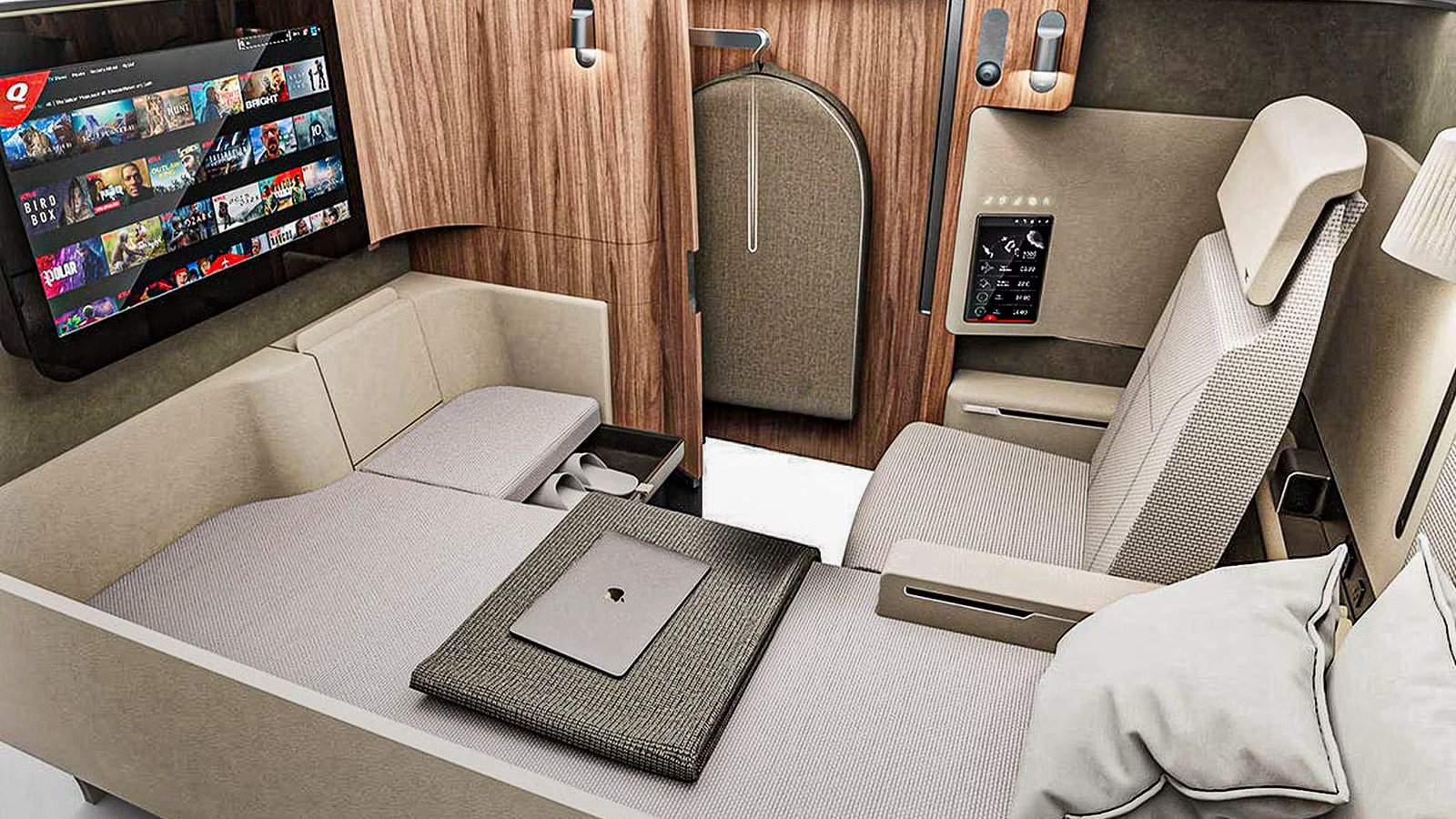
As Qantas prepares to launch the world’s longest nonstop commercial flights, the Australian flag carrier is redesigning what it means to spend so long in the sky, and making it a reality for the world. With Project Sunrise scheduled to connect Sydney to London and New York by 2027, the airline is introducing a suite of cabin innovations specifically engineered to mitigate the physical toll of a 20-hour trip. These additions represent a significant shift from traditional seat-focused upgrades to a more holistic approach to passenger wellness and spatial freedom.
This guide explores the specific inflight features that are generating significant industry buzz and traveler interest. From the world-first wellbeing zone to the ultra-private first class suites, Qantas is utilizing the Airbus A350-1000ULR as a laboratory for the future of long-distance travel. For passengers facing the prospect of 10,000-mile journeys, these additions are essential tools for ensuring productivity and health upon arrival in a different hemisphere.
The Need For Movement

What is easily the most notable and unique addition to the Project Sunrise experience is the dedicated wellbeing zone, a world-first purpose-built space located between the premium economy and economy cabins. Unlike traditional galleys, where passengers often awkwardly stretch near lavatories, this area is specifically designed to encourage movement and hydration during the 20-hour journey. It features sculpted handrails for assisted stretching, an on-screen exercise program led by digital instructors, and a self-service refreshment station stocked with healthy snacks and hydration therapy beverages.
This zone is the result of years of clinical research conducted by Qantas in partnership with the University of Sydney’s Charles Perkins Centre. Data from testbed flights proved that physical movement and specific lighting sequences can significantly reduce the symptoms of jet lag and deep vein thrombosis. By carving out a dedicated physical footprint for wellness, the airline is acknowledging that on a 10,000-mile flight, the ability to leave the seat is a physiological necessity rather than a luxury.
The design of the space utilizes soft, biological lighting and acoustic materials to create a calming environment that feels distinct from the rest of the widebody interior. For those traveling in the back of the aircraft, the wellbeing zone serves as a vital third space, offering a mental and physical break from the confines of a standard seat. This architectural shift marks a turning point in cabin design, where passenger health is integrated directly into the aircraft’s floor plan rather than being treated as an afterthought.
Exceeding In Privacy

For those traveling at the very front of the Airbus A350-1000ULR, Qantas is introducing a first class product that functions more like a boutique hotel room than an airplane seat. The cabin features only 6 suites arranged in a 1-1-1 configuration, ensuring total privacy and direct aisle access for every passenger. Each suite is enclosed by 57-inch high walls and a sliding door, creating a self-contained sanctuary that includes a separate 80-inch fixed bed and a reclining lounge chair. This extra-wide bed is designed so that passengers do not have to convert their seat to sleep, allowing for a seamless transition between working and resting.
The technical integration within these suites is geared toward the specific demands of a 22-hour flight. Beyond the 32-inch 4K touchscreens, each suite includes a personal wardrobe, a vanity drawer, and enough storage to keep all carry-on luggage tucked away, maximizing the floor space of the 3.5-square-meter cabin. To further the focus on health, the suites include specialized circadian lighting systems that can be adjusted by the passenger or synchronized with the aircraft’s mission profile to help the body clock align with the destination timezone before the landing gear even touches the runway.
This level of hardware is a direct response to the ultra-long-haul challenge that many airlines face, where the lack of movement can lead to significant physical discomfort. By providing a fixed bed, Qantas allows passengers to change positions and stretch out fully without the mechanical limitations of a traditional lie-flat seat. The suite also features multiple charging ports, including wireless induction charging, and a dining table large enough for two people, enabling passengers to invite in a colleague or partner traveling in another suite. This focus on space and versatility is what justifies the $20,000-plus price tag expected for these marathon routes.

Sleeping In Economy On A Qantas Long-Haul Flight: Which Seats Should You Pick?
Some of the airline’s economy class seats offer more comfort than others.
What About Other Cabins?

While the first class suites capture the headlines, the real test of Project Sunrise lies in the comfort of the passengers seated in business class, premium economy, and economy. Qantas has opted for a significantly lower seat density on the Airbus A350-1000ULR compared to standard configurations to provide more personal space per traveler. In business class, the airline is debuting the Business Suite, which features a sliding door for privacy, a first for the carrier’s widebody fleet, and a 2-meter (approx. 80-inch) lie-flat bed designed to minimize the cramped feeling often associated with long-haul flying.
For the premium economy cabin, the focus has shifted toward ergonomic support for the lower back and neck, specifically tuned for the 22-hour duration. The new seat features a 40-inch pitch and a unique cradle recline that pivots the seat base as the backrest tilts, preventing the passenger from sliding forward. This mechanical adjustment is critical for maintaining spinal alignment over nearly a full day of travel, reducing the stiffness and travel fatigue typically reported on current 15-hour sectors.
Feature | Qantas Project Sunrise A350-1000 | Standard Airline A350-1000 |
Total Passenger Capacity | 238 Seats | 350 to 410 Seats |
First Class Suites | 6 (1-1-1 Layout) | Usually 0 or 8 |
Business Class Pitch | 80-inch bed | 73 to 75-inch bed |
Premium Economy Pitch | 40 inches | 38 inches |
Economy Seat Pitch | 33 inches | 31 to 32 inches |
Dedicated Wellness Space | Yes (Wellbeing Zone) | No (Standard Galleys) |
Even in the economy cabin, Qantas has increased the seat pitch to 33 inches, an inch more than the industry standard, and redesigned the seat cushions with multi-layered fabrics to improve airflow. These small but cumulative changes are paired with 13-inch 4K entertainment screens and individual storage pockets for personal devices. By prioritizing living space over seat count, the airline is betting that passengers will pay a premium for a cabin environment that respects the physical reality of a 10,000-mile nonstop journey.
Stopovers Exist For A Reason

To make the Airbus A350-1000 capable of the 22-hour Project Sunrise dream, Qantas and Airbus had to install an additional center fuel tank, increasing the aircraft’s fuel capacity by approximately 20,000 liters. However, every liter of fuel added is weight that must be offset. This is why the aircraft will carry only 238 passengers, nearly 100 fewer than a standard configuration. While passengers rave about the extra space, this low density is a mechanical necessity to keep the aircraft light enough to reach Sydney from London without an unscheduled refueling stop.
This engineering choice creates a significant price premium that most passengers will see as unnecessary. Nonstop tickets are expected to cost 20% more than one-stop alternatives that have brought airlines like  Emirates to where they are today. The five-hour time saving may justify the cost, but for the average tourist, the convenience comes with a heavy financial penalty. Critics also argue that no amount of stretching can fully mitigate the physiological impact of being in a pressurized tube for nearly an entire day, meaning that the wellbeing zone could just turn out to be a gimmick.
Aviation health experts note that extended exposure to low humidity and recycled air can lead to extreme dehydration and cognitive fatigue, regardless of the cabin’s luxury. The human body is not naturally evolved for 22-hour shifts across 10 time zones, and so Qantas can only do so much to mitigate this. Ultimately, the decision comes down to the convenience of a nonstop flight against the potential for a longer recovery period once they finally reach the ground.

What Are The Benefits Of Qantas’ Premium Economy?
For some travelers who love the perfect balance of comfort and value with premium economy, Qantas is a great option.
Staying Connected

To distract from the sheer length of a 22-hour flight, Qantas is outfitting its Airbus A350-1000 fleet with the most advanced inflight entertainment system in its history. The airline has selected the Panasonic Astrova system, which features 4K OLED screens across every cabin. These displays offer an infinite contrast ratio, providing a cinema-grade experience that is a significant leap forward from the older LCD screens found on the Boeing 787 or Airbus A380. Passengers in all classes will also benefit from full-cabin Bluetooth connectivity, allowing them to pair their own wireless noise-canceling headphones directly to the seatback rather than relying on provided wired sets.
The digital experience is supported by a partnership with Viasat, bringing fast and free Wi-Fi to every passenger on board. Everyone has experienced notoriously spotty or expensive international Wi-Fi, especially on routes crossing the vastness of the Pacific or Southern Oceans. However, the new satellite network being utilized for Project Sunrise is designed to provide high-speed broadband that is capable of streaming high-definition video even in the most remote corners of the globe. This ensures that business travelers can remain fully synced with their office and leisure travelers can stay connected to social media throughout the duration of the flight.
Cabin Class | Project Sunrise (A350-1000) | Current Qantas Flagship (A380) |
First Class | 32-inch 4K OLED | 18-inch LCD |
Business Class | 18-inch 4K OLED | 16-inch LCD |
Premium Economy | 13.3-inch 4K OLED | 13.3-inch LCD |
Economy | 13.3-inch 4K OLED | 12-inch LCD |
The aircraft also features advanced charging capabilities to handle the power demands of modern travelers. Each seat, including those in economy, is equipped with a USB-C port capable of delivering up to 67W of fast-charging power, enough to keep a laptop or tablet running for the entire journey without draining the battery. In the premium cabins, this is augmented by wireless induction charging and standard AC outlets. For Qantas, the goal is to create a digital environment that mirrors the connectivity and visual quality of a home office or living room, making the 10,000-mile gap feel a little less daunting.
The Groundbreaker

The launch of Project Sunrise in early 2027 is a critical test case for the future of point-to-point global travel. By bypassing traditional megahubs like Dubai or Singapore, the airline is challenging the dominant hub-and-spoke model that has defined international aviation for decades. If successful, this shift could encourage other carriers, such as  Turkish Airlines, which is already rumored to be eyeing the Airbus A350-1000ULR for its own Istanbul to Sydney ambitions. The result would be a more fragmented but direct global map, where distance is no longer the primary barrier to entry for secondary markets.
The technological feat of the A350-1000 is undeniable, but the economic sustainability of flying such low-density aircraft depends entirely on a consistent stream of passengers willing to pay the estimated 20% price premium. As sustainability regulations tighten globally, the higher fuel burn per seat required to carry 20,000 liters of extra fuel may also face increasing scrutiny from environmental regulators. Qantas is banking on the tyranny of distance being a strong enough motivator to overcome these financial and ecological hurdles.
The true legacy of these new inflight additions will be measured by how they influence standard cabin design across the rest of the industry. Features like the wellbeing zone and circadian lighting are already beginning to appear on shorter long-haul routes as airlines realize that passenger comfort is a key differentiator in a crowded market. Keep an eye out for what is yet to come because the innovations pioneered for Project Sunrise are setting a new baseline for what we expect from a seat in the sky.