dailynewsnblog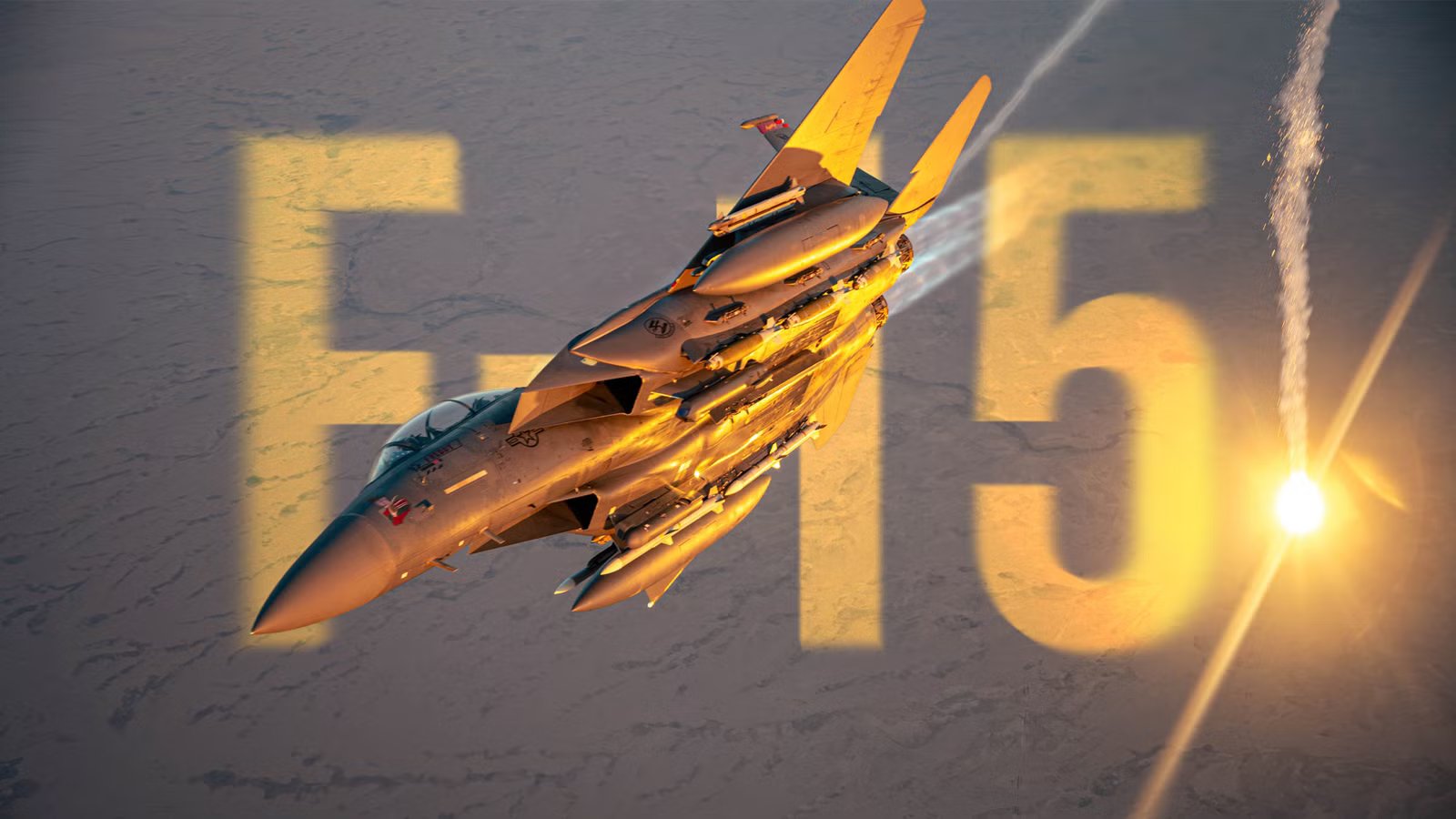
The McDonnell Douglas F-15 has been the US Air Force’s primary strike fighter since the end of the Cold War and has been deployed to combat zones in Iraq, Afghanistan, Syria, and Libya. As the ‘backbone’ of the Air Force’s fighter fleet, the newest Eagle is expected to remain in USAF service for years to come, replacing older jets like the A-10 Thunderbolt II, aka ‘Warthog.’
A number of US allies also operate the Eagle II or very similar variants under different designations, including Japan, Israel, Qatar, and Saudi Arabia. In 2026, the US Air Force has a total combat-coded inventory of 202 F-15 aircraft. The 133-strong fleet of F-15E Strike Eagles remains the backbone of the USAF strike fighter fleet, though divestments are planned to reduce this number to 78 by 2028.
Originally slated for full retirement by 2026, the USAF extended the life of 42 F-15C/D ‘Platinum Eagles’ to maintain homeland defense until 2030, according to Air & Space Forces Magazine. To date, only 27 examples have been delivered of the latest and greatest F-15EX Eagle II from  Boeing, but the USAF recently increased its order total to 129 airframes.
Three Sides Of The Same Jet

While all three variants still in active service with the US Air Force sharing the same iconic silhouette, they serve definitively different roles ranging from air superiority to multi-role strike capabilities. Originally developed in the 1970s with the mantra ‘not a pound for air-to-ground,’ the F-15C/D variant is a pure dogfighter. The oldest model, only a handful of the best-condition airframes are being retained.
Introduced in the late 1980s, the F-15E transformed the Eagle into a deep-strike platform capable of hitting ground targets at night and in all weather conditions. It is distinguished by its darker gunship gray paint and Conformal Fuel Tanks hugged against the fuselage, which increase range and weapons capacity without the drag of wing tanks. As these aircraft age out, they are being steadily retired to make way for the newest and most advanced examples of the F-15.
|
Model |
Active Airframes |
|---|---|
|
F-15C/D Eagle |
42 |
|
F-15E Strike Eagle |
133 |
|
F-15EX Eagle II |
27 |
The F-15EX lacks the stealth of its fifth-generation counterparts, the F-22 Raptor and F-35 Lightning II, but it more than makes up for that in terms of raw performance and sheer payload. The cutting-edge Eagle II levels up the F-15 series with more advanced avionics, radar, sensors, and electronic warfare capability than ever before.
No Stealth, No Problem

In 1981, the US Air Force began the Advanced Tactical Fighter program and produced the groundbreaking Lockheed Martin F-22. It was intended to replace the F-15 and F-16 Fighting Falcons, but the end of the Cold War and the dissolution of the Soviet Union in 1991 dealt a significant blow to F-22 financing. The Department of Defense’s reduced needs caused it to be repeatedly delayed and prolonged, reinforcing the importance of the F-15 and F-16.
Thanks to its supercruise capability, the F-22 can intercept targets that aircraft relying on afterburner power would not be able to reach due to higher fuel consumption rates. However, the Raptor’s strategic efficiency and stealthy aerodynamics prevent it from reaching the F-15EX’s stunning top speed. The F-22’s design allows for regular combat speeds of Mach 1.5 at 50,000 feet, which is estimated to give air-to-air missiles a 50% greater employment range, making it the better interceptor, but the Eagle holds the crown for air-to-ground strikes.
The higher top speed and greater payload capacity make the F-15 a perfect quick-reaction close air support asset to support troops on the front line. The Eagle can also be a QRA backup platform to provide additional air-to-air firepower when fifth-generation fighters detect threats first. As a ‘missile truck,’ the F-15 takes off with a huge number of weapons and support stealth fighters that do not want to give away their position or save their ammunition for other hostiles coming down the line.
The Enduring Eagle

Boeing’s St Louis division developed the F-15EX, a variant of the F-15 Advanced Eagle, in response to the 2018 USAF drive to recapitalize and modernize the USAF’s existing tactical force. Originally developed for export as the Advanced Eagle, the jet is a development of the F-15E design.
It was designed to take the place of the USAF’s and the Air National Guard’s surviving F-15C/D variants for homeland and air defense duties. The Advanced Eagle, often known as the F-15EX, is the new benchmark for F-15 manufacturing. Following the F-15SA (Saudi Advanced) in 2013 and the F-15QA (Qatari Advanced) in 2020, the F-15EX made its first flight in 2021.
In terms of air superiority operations, the F-15EX is not expected to be as durable against fifth-generation air defenses as the F-35 or F-22, relegating it to support roles. It will complement the F-22 and F-35 by deploying massive standoff weaponry to protect stealth jets on the front lines. It can also defend airbases, impose no-fly zones against less sophisticated enemies, and give air-to-ground assistance to soldiers in battle.

Why Does The US Air Force Still Fly The F-15?
Discover how the Eagle remains vital in modern warfare and why the new F-15EX will keep it flying for decades!
The Fastest Jet In The USAF

Despite newer fighter models coming along, the latest and greatest version of the iconic F-15 series remains the fastest jet in active service with the USAF. According to Aviation Week, the latest iteration of the fighter jet engine can fly at speeds nearing Mach 3 when in clean configuration. The Eagle II can easily achieve Mach 2.5, and when stripped down, it has been recorded flying close to Mach 3. Boeing’s F-15EX Chief Pilot Matthew Giese told Forbes that:
“It was a clean airplane right off the production line in green primer [paint]. I did a maximum-afterburner takeoff, pointing the jet straight up and wound up at 40,000 feet going Mach 2.5 (1650 mph). That’s a hell of a first flight.”
This alone makes it one of the most powerful air superiority fighters in the skies, even without stealth characteristics. The 5th-gen F-22 and F-35 may be newer, stealthier aircraft that represent the future of air warfare, but the F-15EX is far from irrelevant. The F-15EX is capable of carrying such an immense payload and munitions variety that it remains a dominant force on the battlefield.

America’s 7 Most Expensive Fighter Jets Of All Time
Explore the US’ most high-priced fighter jets, from the F-86 Sabre to the F-22 Raptor.
The Eagle Is Born

In the 1960s, American fighter pilots in the Air Force and Navy had just recently engaged in their first jet-era combat, and the Cold War was fueling an epic arms race. While the Vietnam War was raging at a fever pitch, the United States and the United Nations had drawn down forces in Korea.
North American Aviation was previously one of the leading aerospace businesses in the United States, helping to usher in the jet age. North American even built one of the fastest and largest jets ever flown off an aircraft carrier, so the maker threw its hat in the ring and entered its own design in the F-X competition against McDonnell Douglas’s F-15.
Around the same time that the F-X program began to take off, however, NAA would also merge with Rockwell. The new conglomerate would eventually make the supersonic, swing-wing B-1 Lancer bomber, which is still in service today. The company’s F-X contender, the NA-335, is speculated to have been neglected and ultimately failed as a result of the investment in the B-1.
Ultimately, the NA-335 never made it past the drawing board, and the F-15 took home the prize despite its promise of greater performance and superior capability from NAA. With the exception of design risk, the jet seemed to outperform the F-15 in almost every technical comparison, but events unfolded in favor of the Eagle. The F-15 has since become the most combat-victorious dogfighter in the modern era, with over 100 aerial kills and no combat losses (although three were lost in a recent friendly fire incident).

This Is The Oldest Fighter Jet In The US Air Force Still Flying
We are now in the final chapter of an iconic aircraft as it prepares for retirement from active duty.
Making The F-15

This element of institutional inertia helped the F-15 program beat out the competition as well. McDonnell and Douglas merged in 1967, and the combined company’s catalog included a long list of highly successful commercial and military aircraft, as well as spacecraft. The perceived strength of the planemaker instilled much more confidence in the USAF than it did in NAA to deliver such an ambitious fighter jet design.
Despite some disappointing results in combat with maneuverability and weaponry, the McDonnell F-4 Phantom was already being flown as a common airframe in all the service branches of the US military at the time of the F-X program as well. This gave the maker another advantage over NAA, which at the time only offered niche-role aircraft.
In terms of performance and other features, the F-15 was comparable to the NA-335, though the North American proposal outperformed it slightly in many areas. As a safeguard against program risk, the Air Force eventually settled on the Eagle for its maker’s reputation for quality and dependability. On December 23, 1969, the F-15 was officially declared the winner of the F-X program, and the rest is history.