dailynewsnblog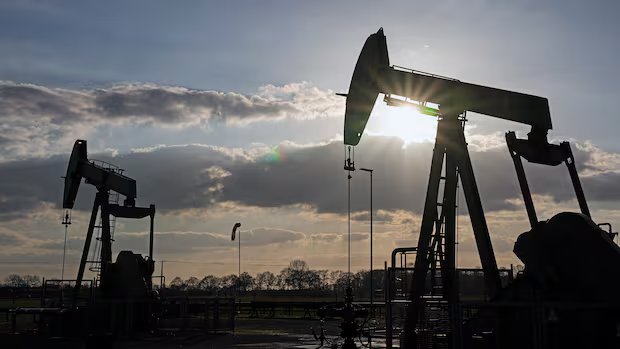

Listen to this article
Estimated 5 minutes
The audio version of this article is generated by AI-based technology. Mispronunciations can occur. We are working with our partners to continually review and improve the results.
Wall Street pointed toward modest gains in pre-market trading Wednesday as energy prices stabilized somewhat on optimism that a major release of oil reserves was imminent.
Futures for the S&P 500, Dow Jones Industrial Average and Nasdaq were all up around 0.1 per cent before the opening bell.
Oil prices have remained sharply below their peaks near $120 US a barrel hit on Monday over fears that the war with Iran would be protracted. Such spikes have been rocking financial markets worldwide because of worries that the war could block the global flow of oil and natural gas for an extended period.
Early Wednesday, U.S. benchmark crude oil was up 2.8 per cent at $85.76 per barrel. Brent crude, the international standard, rose 2.6 per cent to $89.99 a barrel. Both had been up more than five per cent earlier.
The U.S. said it took out more than a dozen mine-laying Iranian vessels Tuesday, as Tehran vowed to block the region’s oil exports, saying it would not allow “even a single litre” to be shipped to its enemies.
“With Iran continuing to threaten vessels passing through the Strait of Hormuz, the focus will be on how the U.S. and other major economies will ensure the flowing of crude oil via this narrow passage and alternative routes to help stabilize prices,” Fawad Razaqzada of Forex.com wrote in a market report.
A major release of emergency oil reserves will only buy time, he said. “The real issue is the disruption to supply flows, and the longer that continues unresolved, the higher oil prices are likely to go if the Iran war continues.”
Germany to release some reserves
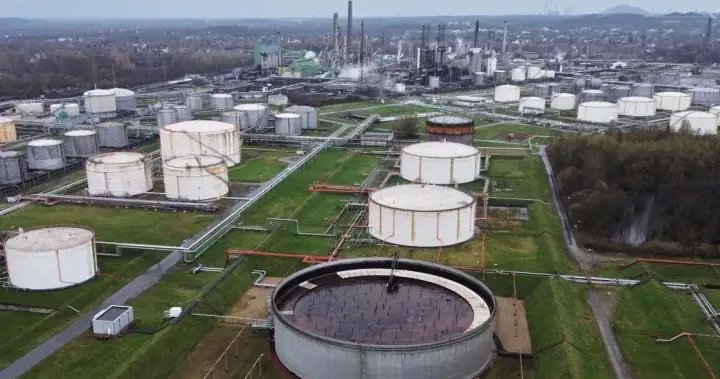
Germany’s economy minister said Wednesday the country would release parts of its oil reserves after the International Energy Agency asked member states to release reserves totalling about 400 million barrels.
Economy Minister Katharina Reiche said after Germany triggers the release it would take a couple of days until the “delivery of the first quantities.”
U.S. President Donald Trump has remained clear about his desire to keep the Strait of Hormuz open. The war has effectively blocked the waterway off Iran’s coast, where a fifth of the world’s oil sails on a typical day.

Stock markets have a history of bouncing back relatively quickly from military conflicts, as long as oil prices don’t stay too high for too long. Uncertainty about whether that may happen this time around has led to stunning swings up and down for markets worldwide, often hour to hour.
If oil prices do stay high for long, household budgets already stretched by high inflation could snap under the pressure. Companies would see their own bills jump for fuel and to stock items on their store shelves. It all raises the possibility of a worst-case scenario for the global economy — “stagflation,” where growth stagnates and inflation remains high.
U.S. inflation numbers to come
Washington’s latest consumer prices report is due on Wednesday and is expected to show that inflation rose again last month.
It is widely expected that the inflation fighters at the Federal Reserve will leave their benchmark interest rate alone when they meet next week. And if the report shows another spike in prices — along with the likelihood that gas prices will remain elevated as long as the conflict in the Middle East drags on — it would virtually guarantee that Fed officials will pass on an interest rate cut this time around.
In equities trading, Oracle’s shares on the Nasdaq surged close to 10 per cent in pre-market trading early Wednesday after the company reported its earnings and revenue jumped 20 per cent in the last quarter, much better than analysts had forecast.
Elsewhere, in Europe at midday, Germany’s DAX slipped 0.8 per cent, while the CAC 40 in Paris fell 0.3 per cent. Britain’s FTSE 100 also shed 0.8 per cent.
Markets were mixed in Asia, where Tokyo’s Nikkei 225 gained 1.4 per cent to 55,025.37.
South Korea’s Kospi picked up 1.4 per cent to 5,609.95 after gaining more than three per cent earlier in the day.
In Hong Kong, the Hang Seng fell back, slipping 0.2 per cent to 25,898.76, while the Shanghai Composite index climbed 0.3 per cent to 4,133.43.
Australia’s S&P/ASX 200 rose 0.6 per cent to $8,743.50.
Taiwan’s benchmark climbed 4.1 per cent and the Sensex in India fell 1.8 per cent. In Thailand, where worries over oil and gas supplies have prompted the government to order energy-saving measures, Bangkok’s SET gained 0.1 per cent.