dailynewsnblog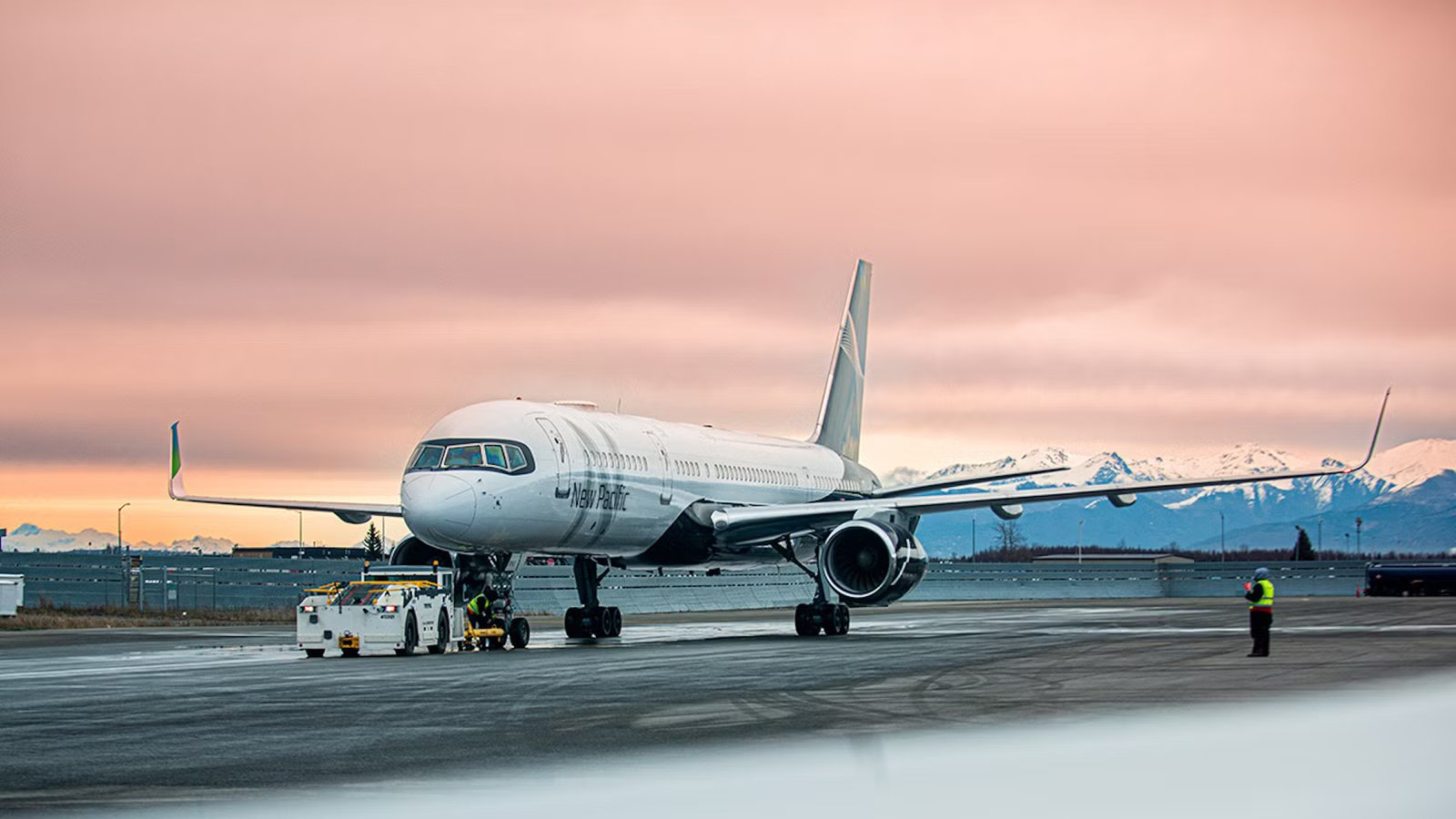
New Pacific’s liquidation is a story about three very different kinds of assets all being sold under a single label in a single auction. A pair of still-useful  Boeing 757-200s will be sold, alongside an engineless airframe and a Part 121 operating certificate that, due to the operating structures and regulatory requirements for new airlines, may be worth as much strategically as the aircraft that are up for grabs themselves.
The sale is happening after FLOAT Alaska’s Chapter 11 filing and the abrupt shutdown of New Pacific in late 2025. Because the Boeing 757 is no longer attractive to most mainstream passenger airlines, the real question is not whether these jets will fly again in scheduled service, but whether they will be reborn as a charter lift, cargo feedstock, or spare-parts mine. There is also a discussion about whether there will be a split outcome or one buyer taking everything.
An Auction Set For Later This Month

The auction is set to take place on March 18, with bidders required to qualify by March 16 after signing a non-disclosure agreement to partake. The package includes three Mojave-stored Boeing 747-200s, spare parts, tools, and New Pacific’s FAA Part 121 certificate. Two complete and functional airframes, the N627NP and N628NP, are being offered with Rolls-Royce RB211-535E4 engines, while the N629NP is being sold without engines, according to Aerospace Global News.
Airframes without engines are still valuable as they can be cannibalized in order to support other aircraft. Just as important, qualified bidders can pursue either the whole package or individual assets on their own. That overall flexibility matters, as it opens the door to one buyer taking the certificate, another taking the flyable aircraft, and a third valuing the stripped jet primarily for teardown or inventory support.
A Look At The Broader Boeing 757 Second-Hand Market

The used Boeing 757 market is no longer a normal airline replacement market but rather an aftermarket, cargo, and specialist-mission market. Analysts have projected Boeing 757 retirements over the next decade equal to the size of the entire 2025 in-service fleet, indicating just how decisively the type is quickly aging out of passenger service.
It is important to keep in mind that, on its own, it does not imply that the aircraft is worthless. Boeing expects North American air cargo to keep growing over the long term, and IATA anticipates that cargo volumes will continue to rise in 2026. Against this backdrop, it is not surprising to see why the Boeing 757 has successfully found itself a reasonable life as an aftermarket freighter. An industrial product like the Boeing 757 certainly still provides some value, especially if it comes along with a skeleton support airframe and an operator certificate that, as we have noticed, is likely more valuable than the aircraft themselves.
That supports continued interest in narrowbody freighter aircraft and in the parts that keep them flying. Boeing 757s have already been repeatedly bought for conversion or teardown, with RB211-powered 757s already explicitly being used to support the rapidly growing cargo market. Thus, the Boeing 757’s passenger afterlife may be fading, but its freight-and-parts afterlife remains extremely real in its own right.

Why In The World Does Delta Still Fly The Boeing 757?
The aircraft is a key piece of the airline’s fleet.
Who Are The Likely Buyers Going To Be?

There are three different kinds of buyers for this jet. First are cargo and aftermarket specialists like AerSale, AAR, or other similar investors, primarily because the two engine-equipped aircraft still have utility as freighters, and the stripped-down N629NP has obvious parts value. Charter-focused operators and brokers who are interested in the large-group VIP niche might also have an interest in acquiring these airframes.
This is where groups like Elevate Aviation and Private Jet Services stand out, especially as they have already partnered with New Pacific to use these 78-seat business-class-only jets on many kinds of routes. Demand was especially strong from sports teams, entertainment groups, corporate shuttles, and luxury travel programs.
Finally, it is also important to consider that any investor-backed startup that values the Part 121 certificate more than the airframes could be an interested party. The same could also hold for any kind of strategic investor that may be interested in buying some or all of these assets for the purpose of reselling them at a higher price.