dailynewsnblog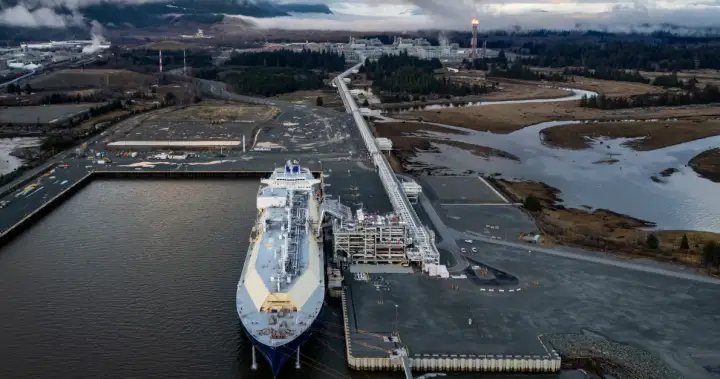
LNG Canada, a Shell-led venture, has ramped up production and exports to Asia this month, LSEG data shows, as the Iran war threatens Asian natural gas supplies which are particularly vulnerable to global disruptions.

The LNG project in Kitimat, British Columbia, which began operations in June 2025, has exported five cargoes in the first 11 days of March, already exceeding half its total February volume, the data shows. A sixth shipment is due to depart on Tuesday.
All cargoes have been sent to Asia, with two heading to Japan, two to South Korea and one to the Philippines. The plant appears to be operating close to its full capacity of 14 million metric tons per year, according to the LSEG data.
An LNG Canada spokesperson did not comment on the facility’s current production volumes but said the company continues to advance early operations at the site safely and responsibly.
“A 58th cargo is scheduled to depart in the coming days,” the spokesperson said in an email.
The venture can export just under 1.2 million metric tons per month. In the first one-third of this month it has loaded more than 400,000 tons, the data showed.

Get daily National news
Get daily Canada news delivered to your inbox so you’ll never miss the day’s top stories.
Global markets have rushed to adapt after Qatar, which supplies about 20% of globally traded LNG, was forced to halt production and declare force majeure when the conflict blocked tankers from transiting the Strait of Hormuz.

“They are further ramping up activity to push toward full capacity, as well as trying to make a quick surge in LNG output to get more LNG on the water to Asia and take advantage of higher prices in the region,” said Martin King, an analyst with RBN Energy.
LNG Canada is the first large-scale Canadian LNG facility to start production and the first major North American plant with direct access to the Pacific, shortening sailing time to Asian buyers compared with U.S. Gulf Coast exporters.
The plant has faced operational challenges since startup but has gradually increased output since January, LSEG data shows.
Canadian natural gas producers had stepped up production significantly in anticipation of LNG Canada’s startup last summer, but then faced a slump in domestic prices when the project did not draw down supplies as quickly as the markets had expected.
“It seems like they are pretty close, for the last two weeks, to capacity,” said Mike Belenkie, CEO of Advantage Energy, which was one of several companies that temporarily curtailed production in September when Western Canadian natural gas prices temporarily went negative.
Daily spot prices at the Alberta Energy Company (AECO) storage hub hovered close to $2 per million British thermal units on Tuesday, a $1.25 discount to the U.S. Henry Hub benchmark.