dailynewsnblog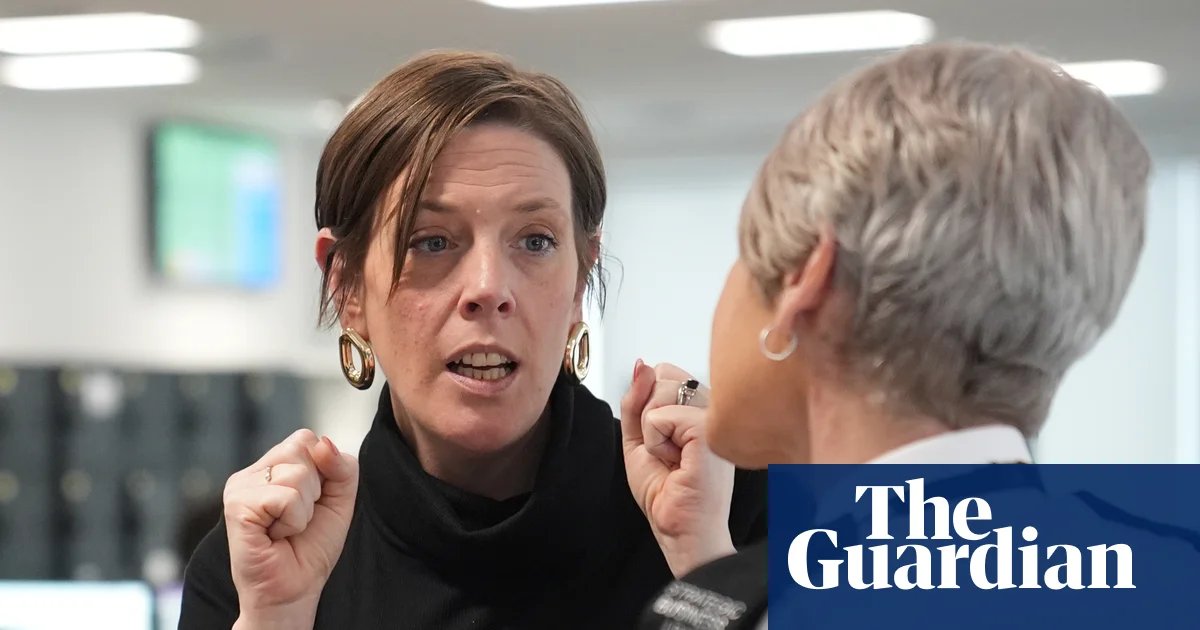
A man accused of breaching a restraining order related to Jess Phillips will not have his case heard in the crown court until 2028, the Labour minister has revealed, as MPs voted in favour of controversial plans to scrap some jury trials.
During an emotive day in the House of Commons, the Labour MP for Warrington North, Charlotte Nichols, said she had been raped after an event she attended as a member of parliament but did not support the bill and felt that ministers had weaponised victims.
Her statement came after hours of debate during which concerns were raised about an “attack” on a fundamental principle of the justice system in England and Wales.
MPs voted 304 to 203 in favour of the courts and tribunals bill, which passed its second reading in the Commons. It includes measures to scrap some jury trials, remove the automatic right of appeal from magistrates courts and introduce a new criminal court.
Ten Labour MPs voted against and 90 MPs abstained or did not vote. The Labour MPs who voted against were Apsana Begum, Richard Burgon, Ian Byrne, Imran Hussain, Kim Johnson, Ian Lavery, John McDonnell, Bell Ribeiro-Addy, Jon Trickett and Nadia Whittome.
Ministers insist the measures are necessary to prevent the growth of a record backlog of nearly 80,000 cases in the criminal courts and speed up justice, including for victims of rape, some of whom have waited five years for their case to get to court.
Several MPs spoke about their own experiences in the Commons on Tuesday, some as victims, others as barristers.
Nichols said she opposed the bill and wanted to tell her story because “experiences like mine feel like they’ve been weaponised and are being used for rhetorical misdirection”.
She accused the justice secretary, David Lammy, of using rape victims as a “cudgel” to drive through changes to jury trials and said the government should focus on introducing specialist courts to try rape cases. She argued that the transition away from jury trials in certain cases could take up time in “an already overstretched system”.
“It is because I have endured every indignity that our broken criminal justice system could mete out that I care reform will actually deliver justice for survivors and victims of crime more widely,” she said.
Speaking before the debate, Phillips said the bill had her 100% support because personal experience had showed the “broken” court system was used to delay trials and exert control by those who were violent against women.
“I am a victim of the backlog, and I know what it feels like to be a victim of crime,” Phillips told the Guardian. “I see the court system used to control victims all the time. It is a tactic that is well known among those who study stalking, and it has to change.”
Phillips said she believed the alleged breach of the order should have been dealt with at a magistrates court, and did not know why it had been sent to crown court.
“It’s OK for me. I’ve got extra security, I’ve got other safeguards,” she said. “But imagine that was a breach of an order against a violent ex-husband, and it’s going to be heard in more than two years’ time. Are you joking? That’s absolutely mental.”
Describing a different case, she said she had been “genuinely flabbergasted” that a man who had been found guilty of crimes against her “could control” her, after he appealed against the decision in the crown court. “This is a man who has wished me dead who gets to say ‘you can’t go to work today’,” she said. “That felt like a horrible power over me.”
The Labour MP for Bolsover, Natalie Fleet, who was groomed and raped, told MPs that victims’ voices had been lost, noting that when she spoke – about two hours into the debate – more barristers had spoken than women. “I can tell you from personal experience, you know what’s worse than being raped? Facing years of waiting to see if people believe you,” she said.
“You’ll hear that this is a class issue, and yes, it is. This is the victims versus the establishment that we are hearing far too much from today.”
A group of 40 female Labour MPs, including the former minister for women and equalities Anneliese Dodds, wrote to Lammy on Monday, urging him to “remain steadfast” over the changes and calling the waits victims of gender-related crimes face intolerable.
Despite the progress of the bill, which will now move to committee stage, where MPs are expected to push for significant amendments and it will be scrutinised line by line, many remain concerned about scrapping the right to jury trials and its impact on defendants from ethnic minorities.
The Conservatives, Liberal Democrats, Reform and the Greens opposed the bill.
After the vote, the shadow justice secretary, Nick Timothy, said Lammy had “struck the first blow against our ancient legal right to trial by jury”.
The government has also faced fierce opposition outside Westminster. Thousands of lawyers wrote to the prime minister calling the limiting of jury trials “unpopular, untested and poorly evidenced”.
Jo Hamilton, one of the former post office operators wrongly convicted in the Horizon IT scandal, told Keir Starmer his plans would “further erode trust in the establishment”.
The Labour MP for Kingston upon Hull East, Karl Turner, who has led a rebellion against the measures, earlier declared his intention to abstain and urged others to do the same, saying work could be done to “get rid of the bits of this bill which are completely unworkable, unpopular, unjust and unnecessary”.
The Labour MP for Penistone and Stocksbridge, Dr Marie Tidball, said she could not support the bill because it would make racial bias in the criminal justice system worse.
“Removing juries means removing one of the few spaces where ordinary people and some real diversity exists,” she said.