dailynewsnblog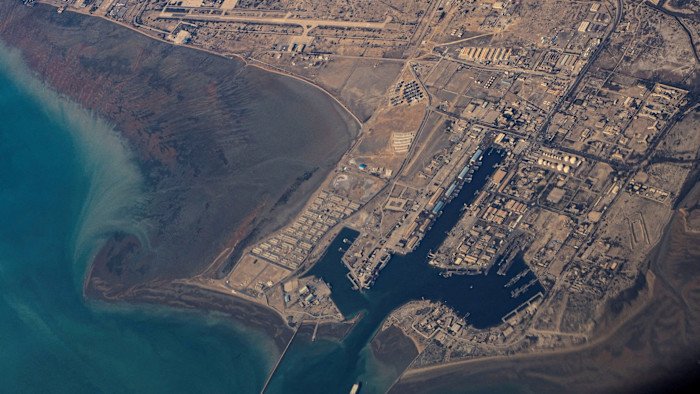
Unlock the White House Watch newsletter for free
Your guide to what Trump’s second term means for Washington, business and the world
The writer is director of market intelligence and co-founder at Energy Aspects
After the wild swings in oil markets since the start of the Iran war, US President Donald Trump’s suggestion that the conflict will end soon has reignited hopes of more normal conditions in the not-too-distant future.
That seems far-fetched. We are in the midst of one of the biggest supply disruptions in the history of the energy market — an event the industry has feared for 40 years. And yet, now that it is here, no one seems prepared.
Even after accounting for diversions by Saudi Arabia and the United Arab Emirates, the flow of oil through the Strait of Hormuz has been reduced by at least 10mn barrels a day, according to our estimates. That’s nearly 2.5 times more than the Russian crude exports that were assessed to be at risk during the initial stages of the Ukraine war before Russian supply was directed to China and India instead of Europe. The flow of oil products and liquefied petroleum gas through the Strait of Hormuz has also been reduced by 5mn b/d and liquefied natural gas stuck at nearly the equivalent of nearly 85mn tonnes per annum, almost 20 per cent of global supply.
Oil price volatility has skyrocketed. On Monday, the Brent crude benchmark swung around in a $35 range, rising to nearly $120 per barrel on fears the Strait would remain closed for a while and then falling on assumptions that the war would end imminently based on Trump’s comments. Yet the G7 continues to discuss releases from strategic petroleum reserves and Asian economies are implementing energy conservation policies. If the impact of the war was truly going to be brief, why would such emergency policy actions be needed?
The market is right to fixate on the signals from the US and other governments. Ultimately, with every day that the Strait of Hormuz is effectively shut, the volume of energy lost climbs higher and higher. Volatility will remain elevated and we see crude prices continuing to rally until the point demand is curtailed given the volume of rising production cuts, which are north of 7mn b/d.
Indeed, even if large releases from emergency oil stockpiles manage to quell price increases in the near term, they would not fully make up for the more than 10mb/d of lost flow, meaning the market will keep testing the resolve of the US administration. Finite stocks can rarely replace lost flows unless it is clear when the supply disruption will end, especially when the losses are of this magnitude. There is also no equivalent strategic gas stockpile to buffer large disruptions.
The biggest question for us is what the new normal will look like, whenever it comes. Clearly, it won’t look like the old status quo. Indeed, it may be wrong to assume that now that Iran has carried out its longstanding threat to disrupt the Strait of Hormuz, the status quo ante for regional trade will be easy to restore.
Flows may resume fairly if the conflict ends with a ceasefire agreed by all sides but the risk calculations will be different going forward. It is far from clear that if the US achieves its stated objectives of degrading Iran’s ballistic missile and drone programmes and militarily weakening the Islamic Revolutionary Guards Corps, the Middle East will be more stable than before the war. This is particularly the case if the Iranian regime remains in power but feels threatened on all sides, or if a power vacuum emerges in Tehran.
This scenario has major repercussions for Asian buyers of Gulf energy. The conflict is clearly showing that the region, which is also home to all of oil’s spare capacity, remains vulnerable. China, India, Japan and South Korea together receive almost 70 per cent of Middle Eastern crude flows through the Strait of Hormuz, meeting nearly half their combined crude requirements via this route. The imperative for Asian powers to safeguard their energy lifelines is therefore becoming ever more urgent.
This is especially important for China. Beijing has taken various steps to reduce these risks, including diversifying its imports with a goal to import no more than 20 per cent of total oil imports from any one source, as well as building up substantial domestic oil stockpiles.
But the limits of this strategy are tested when almost 50 per cent of Chinese crude imports originate from the Middle East. In the meantime, China’s leadership has urged local refineries to halt exports of gasoline, diesel and jet fuel. We understand the Indian government is also asking state-owned refiners to prioritise domestic product supplies, similar to the approach taken by Thailand.
Security of supply will be forced back to the top of the agenda for governments in the new world order, much as it was after Russia invaded Ukraine in 2022. That will continue to reshape oil markets for a long time to come.