dailynewsnblog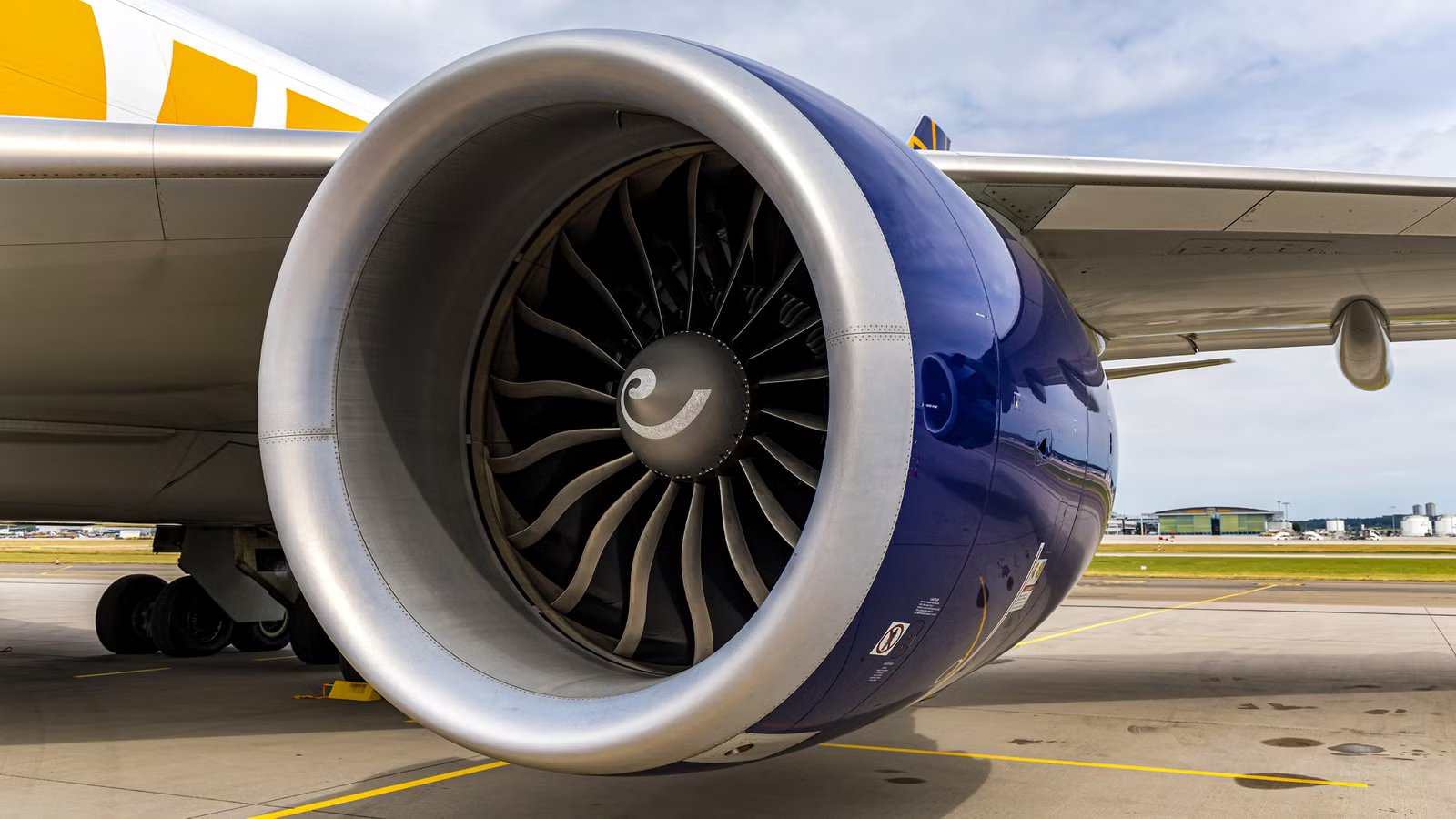
The cost of a Boeing 747 engine is one of the most significant financial considerations for any operator of this iconic aircraft. As the 747 has transitioned from a passenger mainstay to a specialist cargo favorite, the market for its powerplants has split into two distinct tiers: the legacy engines for the -400 series and the cutting-edge units for the 747-8. This article breaks down the multi-million dollar price tags associated with these massive turbofans, explaining why the engine often represents the single most expensive component of the entire aircraft.
Whether an airline is purchasing a factory-new GEnx-2B or sourcing a midlife CF6 on the secondary market, the price is dictated by more than just raw materials. Maintenance status, remaining flight cycles, and technical reliability all play a role in determining whether an engine is a $2-million or a $25-million asset. So what needs to be done to navigate the complex pricing of Boeing’s most iconic quad-jet engines?
A Costly Purchase

Currently, a new GEnx-2B engine for the 747-8 carries a list price of approximately $25 million to $30 million per unit. For the older 747-400, a used but airworthy CF6 or PW4000 engine can range from $2 million to $8 million on the secondary market, depending on its remaining life. Such a massive difference between the two demonstrates exactly why many smaller cargo operators around the world still stick with the older model, despite the benefits of operating the longer, newer 747.
These figures reflect a bifurcated market where the latest technology commands a massive premium for fuel efficiency. An operator purchasing a full set of four new engines for a 747-8 is looking at an investment of over $100 million, often nearly a quarter of the aircraft’s total value. For many 747-400 freighters still in service, the cost of a major engine overhaul can actually exceed the market value of the airframe itself.
In the past, engine costs have outpaced inflation due to the use of exotic materials like carbon fiber and 3D-printed alloys. In the 1970s, a JT9D engine for the original 747-100 cost roughly $1 million, which is approximately 7 million in today’s currency. The fact that modern engines now cost four times that amount in real terms highlights the immense leap in complexity and performance required by today’s environmental and operational standards.
How The Costs Are Handled

The final invoice for a 747 engine contains a vast number of different variables that can drastically change the outcome cost. The most dominant factor is time since overhaul and the remaining cycles on life-limited parts. Every time an engine starts and shuts down, it completes a cycle, and once those cycles are exhausted, the engine requires a total teardown that can cost upwards of $5 million. This is something that must be factored in when choosing not only an engine type but also an aircraft type.
Technical specifications also play a role in the valuation. Engines certified for higher thrust ratings to support heavy cargo operations command higher prices than those with lower limits. Additionally, the shift toward sustainable aviation in 2026 has increased the value of the GEnx-2B, as its 15% fuel efficiency advantage over legacy models helps operators stay within new carbon emission boundaries. These more modern engines allow operators to plan ahead without having to overhaul entire fleets to stay on top of regulations.
Engine Model | Primary 747 Variant | Condition | Estimated Price (USD) |
GEnx-2B67 | 747-8 | New (List Price) | 25M – 30M |
GEnx-2B67 | 747-8 | Used (Mid-Life) | 12M – 18M |
CF6-80C2 | 747-400 | Used (Airworthy) | 3M – 8M |
PW4056 | 747-400 | Used (High Cycle) | 1M – 2.5M |
RB211-524 | 747-400 | Used (Limited Supply) | 4M – 6M |
The power by the hour model has also changed how these costs are handled. Instead of a large upfront payment, many operators pay a fixed fee, often between $250 and $450 per engine flight hour, to the manufacturer. This setup moves the risk of a sudden, multi-million dollar repair onto the engine maker, providing the airline with more stable monthly expenses. In the cargo industry, this predictability is often more important than a lower purchase price.

How Much Does A Boeing 747 Cost In 2025?
With the production of the jumbo jet having now ceased, those looking to buy a 747 will have to do so on the second-hand market.
Lack Of Parts

Industry experts and airline executives often view the engine as the heart of the asset rather than just a component. For a cargo carrier like Atlas Air, which operates the world’s largest 747 fleet, the decision to invest in the 747-8 was driven by the long-term reliability of the GEnx engine. Executives have noted that while the initial cost is high, the reduction in unscheduled maintenance events and the better fuel burn make it a more predictable financial tool than the older 747-400 powerplants.
Maintenance specialists at facilities like Lufthansa Technik or GE Aerospace highlight that the secondary market for 747-400 engines is becoming increasingly part-out driven. Instead of overhauling an engine for $6 million, many airlines choose to buy a used engine with green time remaining for $4 million and then scrap their old unit for parts. This strategy has become the dominant way to keep the aging 747-400 fleet economically viable going forward.
This disposable approach to older engines contrasts sharply with the way the 747-8 is managed. It’s important to remember that the GEnx-2B is still a front-line technology with a long future; every maintenance decision is focused on extending the life of the engine core. As the supply of high-quality, used CF6 engines dwindles, the operational cost of the 747-400 will eventually hit a cliff where the price of an engine change can no longer be justified by the aircraft’s revenue potential.
Not At The Top Of The Leaderboard

When considering the cost of a 747 engine, it is helpful to compare it against the engines found on modern twin-engine jets like the upcoming Boeing 777X or the Airbus A350. A single GE9X engine for the 777X can cost $45 million, making it significantly more expensive than even the most advanced 747-8 engine. While the 747 requires four engines, a twin-jet operator pays a much higher premium for a single, massive powerplant that must be capable of carrying the entire aircraft’s weight in an emergency.
Another alternative for 747 operators is exchanging engines. Instead of buying a new or used engine outright, an airline can swap its timed-out engine for one that has been freshly overhauled by a third-party provider. While this avoids the $25 million new price tag, the exchange fee and the core charge can still total $8 to $12 million. For many smaller cargo airlines, this is often the only way to stay operational without the massive capital required for a direct purchase.
This comparison highlights that while the 747 is expensive to maintain because it has four engines, it does not actually use the most expensive engines in the world. The GEnx-2B is effectively a slightly de-rated version of the engine found on the 787, which keeps its individual cost lower than the record-breaking powerplants found on the newest long-haul twins. For an airline, the decision often comes down to whether they want to pay for four cheaper high-tech engines or two ultra-expensive ones.

Why 4 Engine Aircraft Could Go Back Into Production
Are quadjets coming back?
3 Engine Flights?

The prices for 747 engines are relatively standardized, but sometimes certain black swan events can cause costs to skyrocket. One of the primary risks for 747-8 operators is the borescope plug issue, which was highlighted by a high-profile Atlas Air engine fire in late 2024. If a third-party maintenance contractor fails to properly secure a single plug during a routine inspection, it can result in an uncontained engine fire that effectively destroys a $25 million asset in seconds. These maintenance-induced risks are why top-tier airlines often pay a premium to use only factory-authorized repair centers.
As the global fleet shrinks, the supply of specialized parts, such as high-pressure turbine blades, is beginning to dry up. If a carrier encounters a sudden engine failure and cannot find a suitable green-time replacement on the secondary market, they may be forced to retire the entire aircraft. This makes the real cost of an engine failure much higher than just the price of the metal, as it can represent the total loss of the aircraft’s remaining revenue potential.
For the cargo operator, the biggest risk is aircraft on the ground. While a 747 can technically be ferry-flown on three engines to a maintenance base, the logistical cost of grounded cargo and the leasing of a replacement engine can cost an airline upwards of $50,000 per day. This is why many 747 operators keep at least one spare engine in their inventory, even though it means tying up millions of dollars in capital that isn’t actively generating revenue.
The Endgame

The cost of a 747 engine can vary by tens of millions of dollars depending on the generation of the aircraft. For the 747-8, the $25 million to $30 million investment per engine buys world-class efficiency and a long operational future. For the 747-400, the 2 million to 8 million dollar used market represents a race against time, where the next major engine fault could be the financial trigger for the aircraft’s retirement.
The airframe provides the capacity, but it is the turbofans that dictate the fuel bill and the maintenance schedule. As we see more of these iconic quad-jets repurposed for heavy lifting and specialized cargo, the market for their engines will continue to be a hazardous environment where a single maintenance error or a shift in fuel prices can change an airline’s bottom line by millions.
As the industry looks toward 2030, the 747 engine market serves as a blueprint for the endgame phase of legacy aviation. We are seeing a shift where the secondary market is no longer about longevity, but about extracting the final remaining value from a legendary airframe. Regardless of whether it is a brand-new GEnx or a green-time CF6, the price of a 747 engine remains the most powerful indicator of how much longer this historic aircraft will stay in our skies.