dailynewsnblog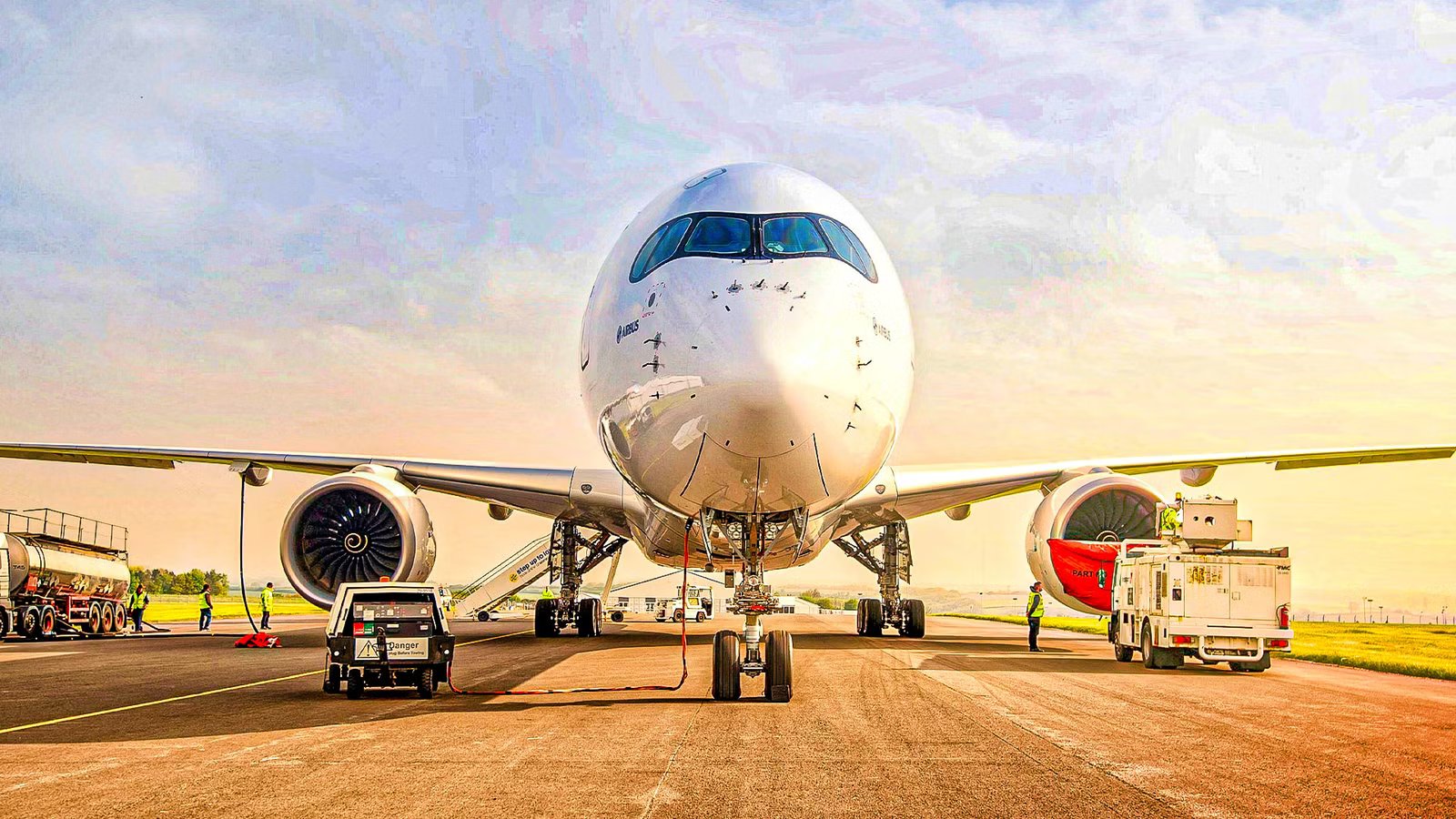
For years, there’s been chatter on a new variant of the Airbus A350, with rumors circulating again in recent months. It’s been given the unofficial name of the A350-1100, A350-2000, or A350-8000, and it’s a stretched variant of the Airbus A350 to slot above the A350-1000, currently the largest aircraft that Airbus manufactures. It’s meant to be a direct competitor to the Boeing 777-9, and it’s been reported that Airbus is receiving heavy interest from airlines to develop the hypothetical A350-2000, though this is far from a confirmation.
Right now, the Airbus A350 is being sold as the smaller A350-900, comparable in size to the Boeing 777-200LR, the larger A350-1000, sized identically to the Boeing 777-300ER, and the A350F, a cargo version sized between the two. It’s a winning sales combination, but the Boeing 777-9 is also becoming increasingly popular. Notably, the plane is significantly larger than the A350-1000 as it’s largely the same size as the Boeing 747-8, with similar capacity as a 747-400 (due to the lack of an upper deck). The A350-2000 is meant to erase this advantage.
Where Is The A350-2000 Talk Coming From?

A stretch of the A350-1000 is hardly a figment of the imagination. Indeed, (now former) Airbus Commercial CEO Christian Scherer confirmed that the company is actively studying stretching the A350-1000, and that interest is high from customers. This is far from a confirmation that the program will move forward, but it does show that it’s a realistic concept, and such discussions do precede firm development. Airbus had long studied an A321neo variant with more range before launching the A321XLR, but it’s also studied an A380neo, which never launched.
But as for what it could look like, Scherer has suggested possibly adding four to five rows, or about 45 seats, in the A350’s nine-abreast economy layout. Given that the A350-1000 typically seats between 300 and 340 passengers in a full-service layout, you’re looking at an aircraft that could seat close to 400 passengers in a denser layout. This is a large aircraft, but it is also roughly the same size as the Boeing 777-9, which is becoming increasingly popular despite still not receiving certification.
Ultimately, money talks, so Airbus will launch the aircraft if customers vote with their dollars, and if they’re unwilling to commit, then the A350-2000 will remain a concept. It would be a relatively inexpensive project for Airbus to add length to the A350-1000, but the company is already selling A350s in high numbers with little difficulty. Airbus doesn’t need an A350-2000 to boost sales for the A350, so the question will purely become, is the number of potential A350-2000 orders high enough to invest in the program?
What Could An Airbus A350-2000 Look Like?

Beyond a longer fuselage, the Airbus A350-1000 also features significant design differences compared to the A350-900. The A350-1000’s Rolls-Royce Trent XWB-97 engines are significantly more powerful than the Trent XWB-84 engines on the A350-900, and the two planes have different main landing gears. In addition, the A350-1000 has a larger wing and a stronger structure to support a higher Maximum Takeoff Weight (MTOW). The A350-1000 isn’t just larger than the A350-900, but it’s also more capable.
You can think of the differences between the two as being similar to the Boeing 777-200ER and the 777-300ER, or the Boeing 787-8 versus the 787-9. The A350-1000 is a very different aircraft, designed this way to add capability. While this may have cost the A350-1000 orders in some contests, as its engines are more stressed and the plane is less efficient than if it were a single stretch, this has also won it orders in other contests. Qantas, for instance, ordered 12 A350-1000ULRs for Project Sunrise and then ordered another 12 standard A350-1000s.
|
Simple Stretch Examples |
Stretches With Significant Differences |
Shrink Examples |
|---|---|---|
|
Boeing 737-800 -> 737-900 |
Boeing 737-700 -> 737-800 |
Boeing 737 MAX 8 -> 737 MAX 7 |
|
Boeing 777-200ER -> 777-300 |
Airbus A350-900 -> A350-1000 |
Airbus A330-300 -> A330-200 |
|
Boeing 787-9 -> 787-10 |
Boeing 787-8 -> Boeing 787-9 |
Boeing 777-300ER -> 777-200LR |
The Rolls-Royce Trent XWB is essentially maxed out in power with the 97 variant, and Scherer has suggested that an A350-2000 would instead be a simple stretch of the A350-1000. It would retain the A350-1000’s wings, engines, and landing gear, with the only main difference being the length. This would drop the aircraft’s range significantly, but it would still have a range of roughly 7,500 NM (13,890 km). Essentially, it would be an A350 with largely the same range and capacity as the Boeing 777-9.

Is A Boeing 777X Bigger Than An Airbus A380?
The size of the Boeing 777X explained, and what it means for the “minijumbo’s” future.
Who Would Buy The Airbus A350-2000?

The Boeing 777-300ER was the most popular variant of the Boeing 777, with over 800 deliveries, and many 777-300ERs are relatively young. This is largely why orders for the similarly sized Airbus A350-1000 have been relatively slow, as the 777-300ER replacement market has yet to fully begin. The A350-1000 can seat almost as many passengers as the 777-300ER, but if you’re an airline looking to add capacity, a plane the same size as the one you’re replacing may be restrictive.
Air France, for instance, has 43 777-300ERs in service, and a larger A350-2000 variant would be an effective replacement option for some of these planes. EVA Air flies 32 777-300ERs and has ordered 24 A350-1000s to partially replace these planes. The A350-2000 could serve to replace the rest of this fleet, especially considering that rival China Airlines has ordered both the A350-1000 and 777-9 for this purpose. Air Canada flies 19 777-300ERs in a high-density layout and has ordered A350-1000s specifically to displace Boeing 787s on ultra-long-haul routes. An A350-2000 would be more than welcome to replace the 777s.
|
Aircraft |
Orders |
|---|---|
|
Airbus A350-1000 |
367 |
|
Boeing 777-300ER |
833 |
|
Boeing 777-9 |
521 |
There are several other instances where an A350-2000 could slot in to serve an airline’s largest routes. Qantas has yet to confirm its replacement for the Airbus A380 and is currently an A350-1000 customer, as another example. While the A350-1000’s sales have typically lagged behind those of the A350-900, Airbus recorded more orders for the A350-1000 in 2025 versus the A350-900, and the market is heating up for large widebodies. The Boeing 777-9 also had a fantastic year in 2025, and an A350-2000 would boost Airbus’s competitiveness against the popular 777X.
The GE9X-Powered Problem From The US

While several potential A350 customers would be prime targets for an A350-2000, Airbus has already lost what was possibly the biggest prospective A350-2000 customer: Emirates. Airbus confirmed studies of the A350-2000 in November 2025, with Emirates a clear prospect that was also rumored to be ordering 30 A350-1000s at the 2025 Dubai Airshow. Instead, Emirates ordered 65 additional 777-9s, got Boeing to begin studying an even larger 777-10, and although Emirates president Sir Tim Clark has confirmed that his company would consider an A350-2000, Emirates has already voted with its money.
There exists a market for an aircraft larger than the Boeing 777-300ER/Airbus A350-1000, but the largest customers for this type of aircraft (  Emirates and
  Qatar Airways) have already collectively ordered hundreds of Boeing 777-9s. Boeing has the Middle Eastern market cornered with the 777-9, and elsewhere in the world, the 777-9 has also snatched up much of the potential market. British Airways, Lufthansa, Air India, Singapore Airlines, and many others have already selected the Boeing 777X.
The A350-2000 and 777-9 would be largely the same aircraft, but the 777-9 is already established in this market. The A350-2000 and 777-9 would be two big fish sharing a little pond. The A350-2000 would be a low-cost investment by Airbus, but with Boeing having already snatched up so much market share, it’s questionable if the potential orders would be enough to make Airbus money, as the remaining market share is small. Launching an aircraft simply to win market share, even if the program makes little money, is a poor strategy.

Here’s How Much More The Airbus A350-1000 Costs Compared To The A350-900
The price difference between the two variants.
The Impact Of The Boeing 777-10

At the Dubai Airshow, Emirates and Boeing confirmed that the US planemaker would begin a feasibility study for another stretch of the 777X to create the 777-10. This aircraft would be close to 262 feet (80 meters) in length, and would feature a boosted MTOW of 365 tons to give it a similar range as the 777-9, currently rated at 351 tons. This would be targeted as a replacement for the Airbus A380, and it’s therefore not surprising that Emirates, the world’s largest operator of the A380, is showing interest.
The 777-10 would be guaranteed to receive at least 100 orders, but likely more, from Emirates alone, and Qatar Airways would also be sure to order the type. Outside of the Middle East, however, demand appears low for an even larger 777, as the 777-9 has been ordered by comparatively small numbers by other customers. It would be a cheap project for Boeing, and Emirates’ potential orders are enticing enough to justify a serious look.
Only one Airbus A380 operator (Qantas) has not ordered the Boeing 777-9, and the 777-10 would have essentially no competition. However, it also likely wouldn’t bring in new customers for the 777X, which makes it of little concern to an A350-2000. The A350-2000, meanwhile, would compete against the 777-9, resulting in heavier pricing pressure and therefore lower margins than what a 777-10 would deliver to  Boeing. Therefore, while the 777-10 is a strong possibility, an A350-2000, at least with the current generation of engines, is further from reality.