dailynewsnblog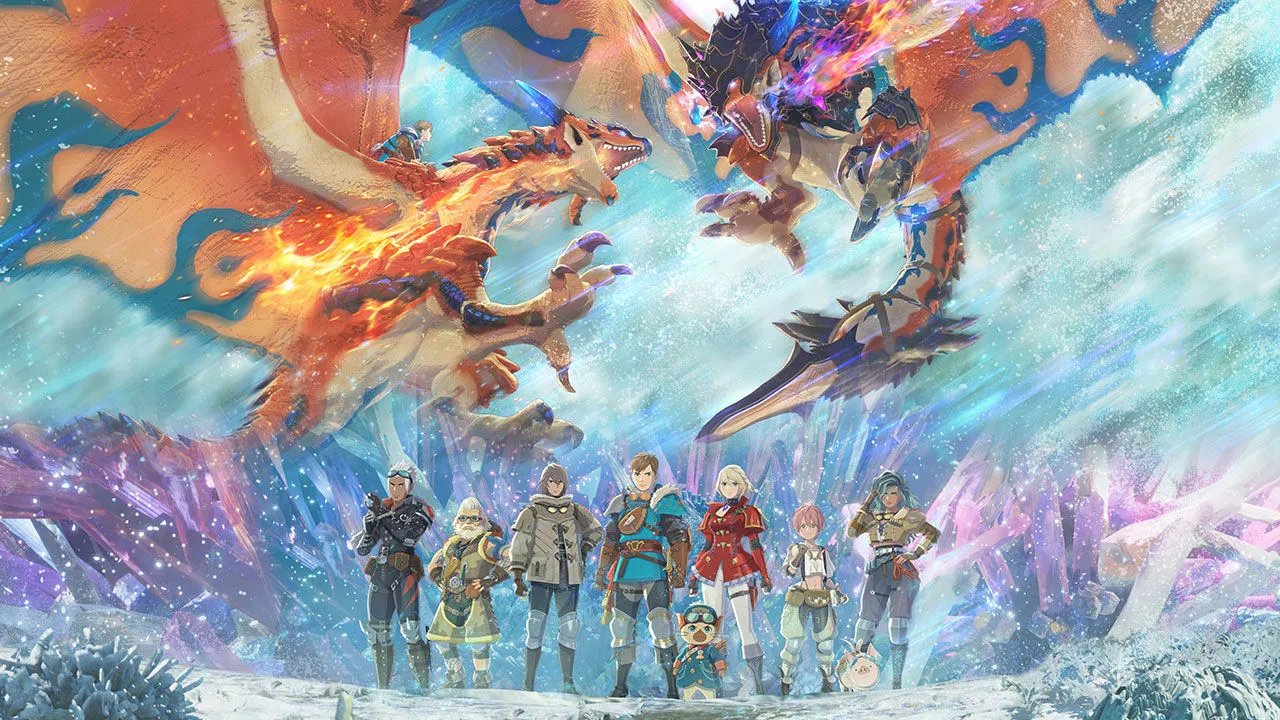
It’s hard to even know where to start with an RPG as deep as Monster Hunter Stories 3: Twisted Reflection. I reviewed both Monster Hunter Stories in 2017 and Monster Hunter Stories 2: Wings of Ruin in 2021 and, maybe unsurprisingly, so much of what I said about the first two carry over into my thoughts on the third. Monster Hunter Stories 3 has so much to do, all of it is rewarding, and I adored the every one of the 75 hours I happily sunk into it. Smart changes have also made it easier than ever to dig into all its different systems without watering them down in the process, making for a beautiful package that feels like a logical evolution of an already great series.
Twisted Reflection is another turn-based monster collecting RPG spin off of the long-standing, beloved (to me, for the last 22 years and counting) Monster Hunter series. Rather than only hunting monsters to turn their parts into cool outfits and weapons, here you’ll hunt them with other monsters by your side called Monsties (monsters who are your besties, of course). Like Pokemon, you can have up to six Monsties in your party and switch between them in battle, but unlike Pokemon, you fight alongside them using the weapons and armor that are iconic to the Monster Hunter series. Twisted Reflection hasn’t innovated on this particular formula much, but it’s a fun enough one that it really didn’t need to.
The most immediate changes are to your main character. First, you play as an adult rather than a child this time, which shifts the overall tone towards being somewhat more mature. Second, the protagonist has their own personality and dialogue – that’s right, for the first time in the series, your Felyne side-kick isn’t doing the talking for you. I know the Stories series is generally geared towards a younger audience, but Navirou’s over-the-top comedic puns and one-liners fit for a children’s show were always just a little too much in the first two games. Your new Palico, Rudy, is much more sensible and helpful, and he’s still humorous without acting like an over-the-top cartoon mascot. (Sorry Navirou.)
Your hero isn’t just some nobody, either. They’re a full-fledged ace Rider and captain of the Rangers – basically an environmentalist group that focuses on research and protecting the ecosystems in the kingdom of Azuria. This premise works so well with the actual gameplay mechanics, which have you taking out Invasive Species and reintroducing Endangered Species to the ecosystem. Oh, and you are also the princess/prince of your kingdom.
As someone who is already expert in their field, your character wouldn’t need someone to show them the ropes. But what about you as a new player? To get around this dilemma, Twisted Reflection handles its tutorial cleverly by making you the one who is teaching a newbie to the rangers, Thea, which is done seamlessly, painlessly, and quickly – though I do question if it’s enough for completely new players. It doesn’t waste much time before getting you to the real action, too – if you don’t get too distracted when the first map opens up for you to explore, of course, which happens very quickly. (At least unlock the Rite of Channeling before going off script, that’s my advice.)
All of these differences were so welcome and refreshing. Though the previous Stories games absolutely touched on emotional topics, the tone feels like it has shifted from a goofy Saturday morning cartoon to one more like Avatar: The Last Airbender. That said, the story itself isn’t as profound as that comparison. It tells another slight twist on what I’ve come to expect from Monster Hunter: Something bad (this time, the Crystal Encroachment) is causing monsters to run amok, you must face the affected monsters (this time, Feral Monsters) and save the region from whatever is causing it. There’s at least a more apparent impact on regular people and some bigger-picture political turmoil that’s interesting, but I wish Twisted Reflection had spent a bit more time fleshing that part out.
And while it’s not groundbreaking, I still enjoyed the story. There are moments here and there that caught me by surprise, made me tear up, and even rewarded me for being a long-time fan with references and cameos from the predecessors without shoving them in my face. I won’t spoil anything, but some of those even had me shouting enthusiastically as I played.
Exploring the Vast World
Another benefit of being an ace Rider from the very beginning is that you start with a fully-grown Rathalos as your partner, which means you immediately have the ability to fly around Twisted Reflection’s semi-open world. “Flying” is more like “gliding,” but it works well thanks to a generous number of updrafts around the map and certain high places you can fast travel to whenever you want.
Riding your Monsties around is just plain fun in general, and switching between them while riding is completely seamless. Each monster can have multiple Riding Actions, too, including the aforementioned Flying and things like Swimming or Climbing. There are also less movement-oriented options like Roaring, which stuns monsters in the overworld so you can ride right by them, and Breath Attacks, which can knock monsters over or out of the air! Having multiple Riding Actions per monster made it much easier to put together a team so I could explore fully, even early on. It’s a big improvement over Stories 2, where I felt pigeonholed into picking monsters based primarily on Riding Actions.
Variable Battles, Fluid Tactics
The battle system in Twisted Reflection is much more intricate than a lot of other turn-based RPGs I’ve played. Monsters have three attack types – Power, Speed, and Technical – that work like rock-paper-scissors, plus elemental weaknesses and resistances on top of that. Your Rider then also has three weapon damage types across six weapons to choose from, all of which have different mechanics. Monster parts can be targeted individually and are weak to specific weapon damage types, and you can switch freely between three weapons in battle in order to best exploit those weaknesses. It sounds like a lot, but the variety I knew I’d encounter encouraged me to always have a spread of upgraded weapons on hand, which kept battles fresh throughout.
This is all very similar to Stories 2’s battle system, but it’s been expanded upon. For example, you just about always have a whole crew of allies and their Monsties to choose from when deciding who will accompany you, each of whom has different strategies and items at their disposal. Your Kinship Gauge is now separate from your Stamina, so you can use skills without taking away from your “ultimate attack”– an amazing change, especially as someone who likes to rock the stamina-eating Hunting Horn. Enemy monsters now also have a Wyvernsoul Gauge – weapons and attacks have different damage values for Wyvernsoul, and depleting it will stun and then stagger the opponent, essentially skipping their turn. That smartly adds another layer of strategy beyond just choosing the best part to attack with the best weapon for the job, as sometimes targeting Wyvernsoul instead is the strategy that ensures your party will survive.
It’s a lot to think about, but it means the battles don’t ever become a simple race to spam your basic attacks. Though they take a while to get through, fights rarely felt too long for me, especially since you can double the battle animation speed. And just when battles began to feel like a little bit of a chore, I was able to start one-shotting weaker monsters in the overworld, which still granted materials and experience points without having to play through an overly easy fight. The fact that I never felt like I needed to grind for the sake of grinding helped a lot in keeping me from getting tired of combat. Instead, doing missions, tackling some optional tasks, and following my natural curiosity to fight every new monster at least once kept me leveled appropriately.
The Perfect Ouroboros
Twisted Reflection’s story and exploration are the driving forces that introduce mechanics and locations to you, but the loop of den diving, hunting, and upgrading is where it really shines. The various systems are all interconnected perfectly to create an ouroboros of a gameplay loop that feeds into itself, with micro-dopamine hits every single step of the way. I spent nearly 20 hours in the first area alone because I wanted to do everything I could before moving on, and just about everything I was really into was technically optional. But maybe that’s why it was so easy to get engrossed – nothing was spoon-fed to me or forced down my throat. Instead it simply introduced me to how things worked and then said, “Go forth.” And go forth I did.
If you don’t know Monster Hunter Stories, it works a bit differently than most traditional creature collectors. Instead of finding a monster in the overworld or in a random encounter, and then having to catch it or make it drop something, you instead search inside dens for eggs. There are multiple layers of “gacha” in this Stories system, with den spawns, eggs inside those dens, and the skills Monsties hatch all being somewhat randomized, but it all works incredibly well rather than feeling obnoxious.
Each microclimate across the large, open maps is inhabited by specific monsters, which are the species you can then find inside the eggs there. There are three rarity levels of dens to find in the overworld, which lead to three rarity levels of eggs. The eggs you “pull” from the nests inside the dens have patterns to identify the species, but hatching them into Monsties is the only way to learn what genes they have, which determine their active and passive skills. The rarer the egg, the better the three-by-three gene board that Monstie will be born with is.
Tally that all up and you have four different moments of randomized excitement. It’s an incredibly well-implemented variable reward system, which is a concept fittingly used in actual animal training as well (and to keep people doomscrolling on certain social media apps. Oops.) It might sound like that much randomization would be annoying – what if you only want one specific Monstie? But in my experience, I never had to spend very long to find what I was looking for, and the other things I picked up along the way made it feel like I never wasted my time.
Importantly, you’re getting much more than just those hits of excitement out of this cycle, too, even if some are only tangentially related. For example, it’s satisfying to pick up materials while exploring on the way to a den, which both grant my party experience points and can be used for crafting. I’m also likely casually hunting some monsters as I go, which will drop materials for weapons and armor. And if I defeat a new monster, that’s new equipment to look forward to!
Once you hatch an egg, you’re not only getting a Monstie for your collection or party, you’re also unlocking its gene skills for every Monstie you have. Genes can be freely moved between Monsties and rearranged as many times as you like using the Rite of Channeling at any camp. The ability to rearrange is important because if you match three of the same color or type of genes on the board, you’ll trigger a “bingo” bonus that buffs your Monstie in different ways. This process is a big change from Stories 2, which would consume your host monster upon transferring a single gene. You also couldn’t rearrange genes – with so many layers of commitment, and as someone who’s chronically indecisive, that system was practically torture. Twisted Reflection instead welcomes you to experiment as much as you want.
Those old gene restrictions would have also been at odds with the new system of Habitat Restoration, which has you reintroducing extra Monsties to the wild. First you must dispose of a Feral Monster in the area so you can set up a camp there, which are both relatively challenging and quite rewarding to beat. Each camp you unlock also increases the stat bonus a Monstie gets when it’s hatched from an egg from that map. And once camp is set up, you can release monsters back into that specific area – the more of a species you release there, the higher their ecosystem rank will rise, up to S-Rank.
To add even more complexity to your team building, S-Rank Monsties hatch with all three of a given map’s Environment Skills, which are especially advantageous as they don’t take up space on the gene board. Alternatively, you can send existing Monsties on an “Excursion” to different locations and they’ll come back with that region’s Environment Skills if its species is S-rank there, not to mention it will swap to that region’s stat increases regardless of its rank. That even applies to Ratha, the Rathalos permanently stuck in your party, who can gain the S-Rank environment boons even if there are no Rathalos to be found in a certain location. Hatching high rank monsties is also the only way to gain access to some powerful genes, noted as Egg Skills – yet another welcome carrot that encouraged me to engage with the Habitat Restoration system.
I became pretty obsessed with getting Monsties up to S-Rank both for the above mentioned boons, and also because a Monstie at at least A-Rank gets an additional element dictated by the area–changing its color. This system was scrapped in Stories 2, and I’m so happy it’s made its way back to the series. It’s like being able to create your own personal shiny Pokemon. This method to change a Monstie’s color is also much less convoluted than it was in the original Monster Hunter Stories, and is seemingly more advantageous as it keeps both the original and new element. I love this idea even more when I think about just how different everyone’s teams will be. I find it so common for people to end up with such similar parties in RPGs based on strength alone, but this system encourages more experimentation.
But wait, there’s more! A handful of Invasive Species have posted up in what were once Endangered Species nests tucked away in semi-hidden locations. If you repel them, you can get your hands on an Endangered Species Egg, reintroduce it to a habitat of your choice, and then meet certain requirements to get one or two more mutated species out of it.
Repelling an Invasive Species is easier said than done, though. The setup requires you to sneak around its territory to collect clues that might help you figure out how to make it run. The tutorial Invasive Yian Garuga needed me to topple it by breaking its legs, for example, to make it retreat. That’s probably the simplest of the Invasive Species mechanics. They’re all a different puzzle to solve, requiring you to figure out and execute a solution before the Invasive Species can one-shot your whole crew enough times to wipe you out.
I loved both searching for these hard-to-find monsters and challenging them, but I must admit I had to resort to taking screenshots of the tips as I found them. To my knowledge, there’s nowhere to check these clues after you pick them up for the first time. I also made the mistake of fighting these battles at 2x speed at times, causing me to miss important cues, like how the color around an Invasive Seregios temporarily changes when its roaring. Luckily, failing gifts you with a hint, but these weren’t nearly as detailed as the clues found in the den or your companions’ commentary.
The “Endgame”
After repelling an Invasive Species, you can try to actually slay it inside the Endangered Species den, but that’s very clearly meant to be an endgame activity – that’s made apparent by the fact that they’re level 50 when repelling them and level 75 when trying to slay them. The Calamitous Elder Dragons – at least the Namielle in Azuria – are also level 75. I was only level 65 when I completed the story, so that should give you a sense of how challenging these are meant to be. It’s also neat that they show up so early on. The Invasive Species arrive whenever you happen to find them, which can be as soon as you enter a new map, and the Elder Dragons have a random chance to spawn after battling at night.
Like during the rest of Twisted Reflection, none of my time felt wasted even if I spent 15 minutes getting absolutely bodied by an Elder Dragon. If I did well enough, I could repel it, meaning the next time it’ll come around pre-weakened. And even if I didn’t leave a scratch on it, those fights still rewarded me with a single Elder Dragon material. You only need three of these to make the first level of an Elder Dragon’s armor or weapon! That’s a very nice boon to rock in the early and mid game, and it’s cool to have these challenges motivating you to get stronger. And when I finally did slay an Elder Dragon, I felt truly accomplished – just like in regular Monster Hunter. It even makes it so Monsties hatched in the slayed Elder Dragon’s region get a stat increase!
However, these late-game monsters – and, of course, completing the Monsterpedia by hatching and mutating all of those endangered species – are the only endgame to speak of. I was a bit disappointed that nothing changes at all after the credits roll. While the previous Monster Hunter Stories had PvP, and even multiplayer dungeons in Stories 2, there’s nothing like that in Twisted Reflection. At least, not yet – I’m assuming (hoping) we’ll get a free title update at some point. But even if there isn’t, it still took me a good 65 hours to finish Twisted Reflection’s story, and I’ve spent 10 more hours so far happily finishing up side content after that – and I’ve enjoyed it that entire time, though I have one final Elder Dragon still waiting to be slain, a handful of Invasive Species to put to rest, and more than half the side quests left.