dailynewsnblog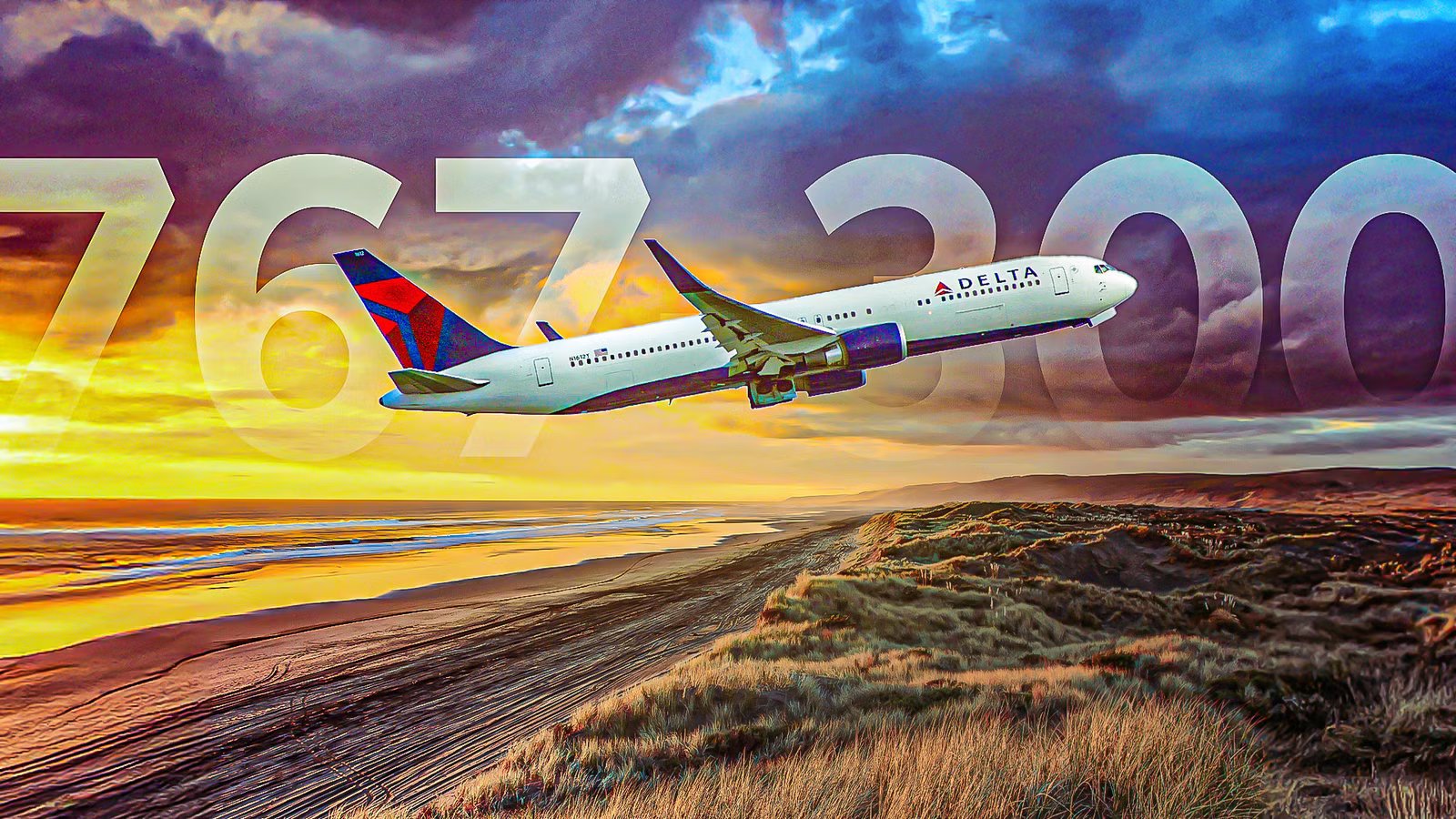
 Delta Air Lines has officially committed to retiring its Boeing 767-300ER fleet by 2030, with international long-haul 767-300ER service ending by 2028. This decision marks a major shift in Delta’s Widebody fleet strategy. In this article, we will explore the reasoning behind the retirement, what will remain in service, what replacements are already on order, and what alternatives Delta may turn to down the road.
The Boeing 767 has been a workhorse for Delta for decades, especially on international and transcontinental routes. However, with fuel efficiency, maintenance costs, and newer aircraft technologies all pressing upon operators, Delta’s decision reflects broader trends in the airline industry. Let’s look at the technical, financial, and operational pressures, the alternatives Delta has chosen so far, and what might come next.
The 767’s Legacy & Retirement Plan

Delta has a long history with the Boeing 767. The airline began operating the original 767-200s in the early 1980s and continued until 2006. The 767 design was revolutionary back in the 80s, thanks to an ETOPS that allowed many airlines to phase out tri- and quadjets on transatlantic routes. Boeing 767-200 was a very successful aircraft, so Delta also introduced the stretched Boeing 767-300 (and later the 767-300ER) for medium to long-haul routes in the late 80s and early 90s.
Some of the 767-300s delivered between 1990 and 2000 are still in service. Delta has also been operating the largest Boeing 767-400ER since 2000. Over time, the 767-300ERs have become relatively old within Delta’s fleet, leading to the decision to retire them. The 767 family entered service with Delta in 1982 with the -200, then moved to the -300 in the mid-1980s, and then introduced the extended-range -300ER version around 1990.
According to the Delta Museum, the 767-400ER was the latest addition in 2000, and was acquired to serve higher-volume, longer domestic and international routes. As of 2026, Delta operates 37 767-300ERs and 21 767-400ERs, according to Planespotters.net In the Q4 2023 earnings call, Delta’s President Glen Hauenstein stated that the 767-300ERs will be removed from international long-haul service by 2028 and fully retired by 2030, as described by ch-aviation.
The type has an average age nearing 30 years, particularly the -300ERs, making them increasingly expensive to maintain and less efficient and less comfortable compared to modern alternatives. Meanwhile, the 767-400ERs are slightly younger (25.2 years on average) and will continue operating beyond 2030.
Factors Behind The Retirement

The retirement of the 767-300ERs isn’t solely due to their age. Several factors are influencing Delta’s move toward newer aircraft, including fuel efficiency, environmental regulations, passenger expectations, cabin upgrades, maintenance and reliability, and operational costs. Fuel burn per seat is a major driver. New widebody aircraft (such as the Airbus A350 and the newer Airbus A330neo family) offer materially better fuel efficiency and lower emissions per seat.
Since fuel is a large component of operating cost, especially on long-haul routes, the savings can be significant. Furthermore, environmental regulatory pressure concerning carbon emissions and noise is pushing airlines to modernize their fleets or suffer higher costs (or lose access to some regulatory regimes or landing slots). In addition, maintenance costs for older airframes tend to increase non-linearly with age, with more inspections, more parts replaced, and less favorable parts support.
Customer expectations are also playing an increasing role. Passengers now expect lie-flat business seats, improved premium cabins, better in-flight entertainment, quieter and more comfortable cabins, and faster WiFi. These upgrades are more difficult and costly to retrofit fully into older aircraft. Additionally, as Delta modernizes its cabin products, such as Delta One Suites, it becomes less practical to invest heavily in older 767-300ERs that are already designated for retirement.
There’s also the issue of fleet commonality: maintaining a variety of aircraft types adds complexity to training, spare parts, and crew scheduling. Replacing older 767s with more efficient, modern widebodies helps achieve better standardization and reduces overall costs.
What’s Replacing The 767-300ERs: Planned Acquisitions

Delta isn’t retiring its 767-300ERs before the replacement aircraft are ready. The airline has placed orders for newer widebody aircraft and begun deploying more efficient aircraft on many long-haul routes. In January 2024, Delta announced an order for 20 Airbus A350-1000 aircraft, with options for 20 more. These are intended for use beginning in 2026 and are part of Delta’s strategy to refresh and streamline its widebody fleet, and, per Delta, the A350-1000s are over 20 % more fuel efficient compared to the 767-series aircraft being replaced.
Meanwhile, Delta already operates 40 A350-900s as well. Delta is also using more Airbus A330-900neo aircraft to replace 767 deployments on certain long-haul flights. Routes are being reassigned to A330-900s as the 767s are phased out of international service. For example, several transatlantic routes from Boston and New York JFK are being upgraded to A330-900 service. These new widebodies allow Delta to upgrade some routes, carry more passengers at a lower cost per seat mile, and retire older, less efficient aircraft.
Other Aircraft That May Replace Boeing 767

Beyond what is already ordered, what other aircraft might replace the once very popular 767-300ERs or even the 767-400ERs in the future? Which models make sense, given Delta’s network, capacity requirements, and cost pressures? As seen above, the Boeing 787 family (especially the 787-8 or 787-9) could be a good fit. These are modern twin-aisle, long-range widebodies with good fuel efficiency, though the 787-8 is on the smaller side.
It has already ordered the larger 787-10, but, if Delta wanted to maintain some of the capacity footprint of the 767-300ER while improving fuel burn and passenger comfort, a mix of smaller 787s could make sense. In fact, this is a strategy already adopted by  United Airlines. Elsewhere, increasing the number of Airbus A330-900s in Delta’s fleet is also a logical path. The A330neo boasts a good range, sufficient capacity in its segment, and modern systems to reduce operating costs.
Specifications | Boeing 767-300ER | Boeing 767-400ER | Airbus A350-900 | Airbus A350-1000 |
|---|---|---|---|---|
Typical 3-class passenger capacity | ~ 218 | ~ 245 | ~ 314-325 | ~ 375-400 |
Maximum (high-density) capacity | ~ 269 (2-class), up to ~ 351 (all-economy) | ~ 304 (2-class) / ~ 375 (all-economy) | up to ~ 440 | up to ~ 480 |
Length | 180 feet, 3 inches (~ 54.94 meters) | 201 feet, 4 inches (~ 61.37 meters) | 219 feet, 2 inches (~ 66.80 meters) | 242 feet, 1 inch (~ 73.78 meters) |
Wingspan | 170 feet, 4 inches (~ 51.92 meters) | same (~ 51.9 meters) | 212, feet 5 inches (~ 64.75 meters) | same (~ 64.75 meters) |
Height (overall) | ~ 55 feet, 1 inch (~ 16.80 meters) | ~ 55 feet, 4 inches (~ 16.9 meters) | ~ 55 feet, 11 inches (~ 17.05 meters) | ~ 56 feet, 0.7 inches (~ 17.08 meters) |
Operating Empty / Typical Empty Weight (OEW/Empty) | ~ 198,440 lb (~ 90,010 kg) | ~ 227,400-229,000 lb (~ 103,150-103,870 kg) | ~ 314,000-315,000 lb (~ 142,400 kg) | ~ 341,700-342,000 lb (~ 155,000 kg) |
Maximum Take-Off Weight (MTOW) | ~ 412,000 lb (~ 186,880 kg) | ~ 450,000 lb (~ 204,120 kg) | ~ 624,000-626,000 lb (~ 283,000-284,000 kg) | ~ 709,900-710,000 lb (~ 322,000 kg) |
Range (maximum/long-haul typical) | ~ 5,980 nm (~ 11,070 km) | ~ 5,600-5,625 nm (~ 10,400-10,415 km) | ~ 8,500 nm (~ 15,742 km) (-900) | ~ 9,000 nm (~ 16,700 km) |
Fuel Capacity | 24,140 US gal (~ 91,400 L) | ~ 25,192 US gal (~ 95,300 L) | ~ 166,000-166,000+ L (~ 43,800 US gal) | ~ 168,300 L (~ 44,450 US gal) |
Cruise Speed | Mach ~ 0.80 | Mach ~ 0.80 (~ 845 km/h) | Mach ~ 0.85 (~ 903-910 km/h) | Mach ~ 0.85 |
Meanwhile, if demand and financials allow, the airline could exercise options or add more A350-1000s. This is especially useful on high-demand international routes, where growing capacity is crucial. The market may also see further improvements in efficiency (new engine tech, lighter materials), or even new widebody types. If there are any credible aircraft development programmes (for example, any ‘neo’ or re-engined variants, or new maker entrants), Delta might look at those.
Delta has made clear that the A350-1000 isn’t a perfect one-for-one replacement in all cases. In its order announcement, it said that the new A350-1000s will complement its fleet strategy rather than directly replace every 767. Also, demand profiles matter: routes vary in distance, traffic, and profitability. Network planners will have to balance frequency vs capacity vs cost per seat mile.

Why In The World Does Delta Air Lines Fly The Airbus A350 And Not The Boeing 787?
Delta chose the A350 over the Boeing 787 as it had better confidence in Airbus, a strained relationship with Boeing, and more.
What It Means For Delta, And What To Watch

The phasing‐out of the 767-300ER fleet by 2030 has several implications for Delta’s operational strategy, its environmental profile, its competitive positioning, and for passengers who fly its long-haul network. Operationally, replacing older aircraft with newer models reduces operating costs, enhances reliability, and decreases maintenance downtime. Environmentally, lower CO₂ emissions per seat, reduced fuel consumption, and improved noise and emissions compliance will support Delta amid regulatory pressure.
From a competitive perspective, airlines that upgrade their long-haul fleets tend to gain an advantage in terms of customer satisfaction, such as premium cabins, comfort, and newer amenities, and in bidding for route rights or slots. For passengers, this should mean newer, more comfortable aircraft on more long-haul routes, possibly with increased frequency or upgraded service levels as older, low-yield uses of 767s are phased out.
How many A350-1000s Delta ultimately takes, whether additional orders are placed, how quickly the A330-900neo fleet expands, and whether any new aircraft programs (or re-engined or retrofit projects) emerge that might disrupt current planning will be key things to keep an eye on. Additionally, external factors such as fuel price trends, carbon regulations, airport infrastructure constraints, and geopolitical/trade issues (which can impact aircraft supply chains) will influence timing and specific replacement choices.
The Bottom Line

Delta’s decision to retire its 767-300ERs by 2030 reflects a mix of necessity and opportunity. The aircraft are old, fuel-inefficient, and maintenance-intensive, and no longer ideal for meeting evolving passenger expectations or environmental demands. Although the 767-400ERs will continue beyond that date, Delta has already placed substantial orders for newer widebody aircraft (A350 and A330neo) to modernize its fleet.
For those tracking aviation or planning travel, this is good news: we can expect increasingly efficient, comfortable, and capable aircraft on long-haul routes. For fleet watchers, the question remains: what mix of aircraft will Delta settle on to fully replace the 767-300ER footprint, especially for less dense or thinner routes? Only time will tell.