dailynewsnblog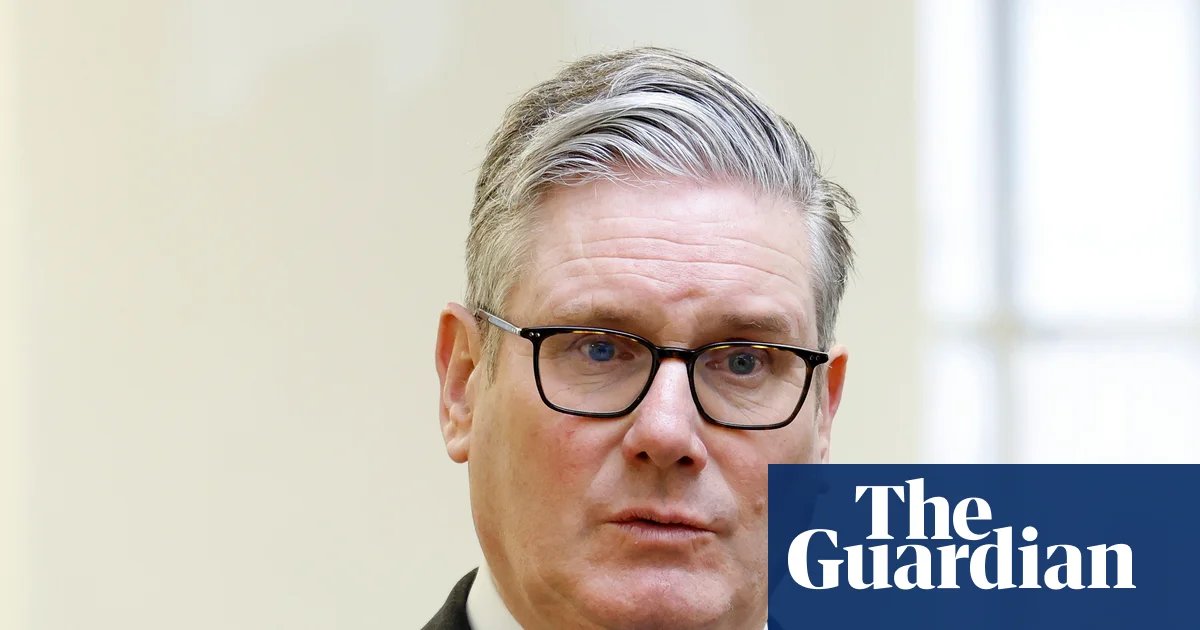
Keir Starmer has said that a long-term US-Iran war would affect the “lives and households of everybody”, as the head of the AA advised motorists against making “non-essential” journeys.
On Monday, oil prices surged past $100 (£75) a barrel for the first time since 2022, which will feed through to higher costs at petrol stations, and consumers will also be hit if energy costs push up inflation.
Ministers are understood to be looking at ways to potentially mitigate the rising costs on energy bills – and are likely to come under pressure to cancel a planned 5p rise in fuel duty this autumn.
Speaking as he launched the government’s community cohesion plan, Starmer said: “The job of government is obviously to get ahead, to look around the corner, to work with others, and the chancellor speaks to the governor of the Bank of England on a daily basis … assessing the risks, monitoring and talking to our international partners as well about what more we can do together to reduce the likely impact on people here and businesses here, of course.
“But it is important to acknowledge that work is needed, because people will sense … that the longer this goes on, the more likely the potential for an impact on our economy, impact into the lives and households of everybody and every business.
“And our job is to get ahead of that, to look around the corner, assess the risk, monitor the risks, and work with others in relation to that.”
Edmund King, the president of the AA, said drivers should “not change their refuelling habits” but could “consider cutting out some non-essential journeys and changing their driving style to conserve fuel”.
Simon Williams, the RAC’s head of policy, said pump prices had “rocketed” in the last week. “Petrol is up 5p to 137.5p and diesel up 9p to 151p a litre since the current crisis began,” he said. “Unleaded is almost certainly going to reach an average of 140p in the next week or so while diesel looks highly likely to climb to at least 160p a litre.”
Most UK households will be protected in the short term by the energy price cap, but the UK’s reliance on gas from the Middle East makes it especially vulnerable to an effective blockade of the strait of Hormuz, through which about 20% of the world’s liquid natural gas is transported.
Starmer said the UK economy was in a stronger place than in 2022 when the war in Ukraine contributed to a surge in energy prices and overall inflation.
He said: “We’ve done a lot of work in the last 18 months to put some resilience in and make sure that we’ve got some headroom, which is basically some insurance within the economy, but also inflation is 3% and going down, so in that sense there’s more resilience.”
The prime minister’s statement followed a senior minister insisting that there was no immediate threat to energy supplies in the UK despite rising oil prices.
The impact of US-Israeli airstrikes in Iran, and retaliatory attacks from Tehran elsewhere in the region, was “clearly very concerning”, said Steve Reed, the communities secretary. “The government will be keeping a very close eye on the situation with oil prices. We’re monitoring that regularly. I don’t think that there is cause for undue alarm yet.”
There were, he added, sufficient supplies remaining of oil and gas. Government sources dismissed as incorrect a report in Monday’s Times claiming the UK had only two days of gas supplies.
Starmer also defended his decision, which had enraged Washington, not to allow the US to use British military bases to launch attacks on Iran alongside Israel, but the bases can now be used for defensive strikes against Iran’s retaliatory attacks against Gulf and Middle East countries.
Starmer said: “Decisions about what’s in Britain’s best interests are decisions for the prime minister of Britain, and that’s how I’ve approached all of the questions and all the decisions that I’ve had to make.
“I do understand the anxiety now, at nine days into this conflict, where a number of people will be saying ‘well, now is the situation going to get worse, and how’s it going to impact me and my family?’ At the moment, what we’re doing is monitoring the risk, working with others to mitigate the risk.”