dailynewsnblog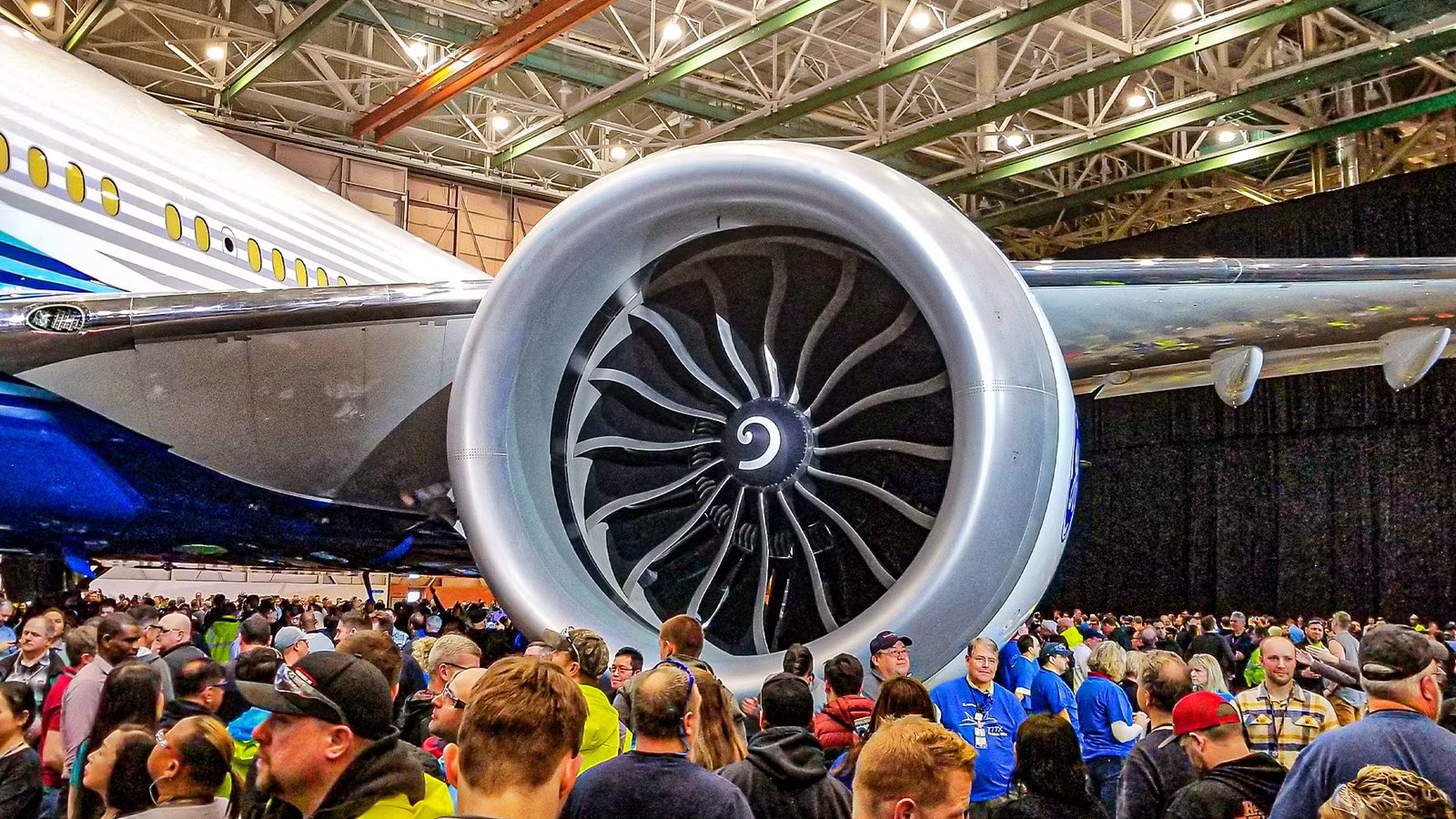
Why would the development of the world’s largest commercial engine, a 3.55-meter giant known as the Rolls-RoyceUltraFan, have a titan like Airbus looking over its shoulder? In an industry where a 2% increase in fuel efficiency can shift billions of dollars in market share, the UltraFan’s promised 10% to 25% efficiency leap is actually a potential competitive threat.
The UltraFan represents a complete architectural overhaul, moving away from the traditional turbofan design to a geared system capable of handling 64 megawatts of power. While Rolls-Royce has historically been the sole engine provider for the Airbus A350, this new technology is designed to be scalable, meaning it can be shrunk down to power smaller planes. This article will explore the technical magic behind the UltraFan, the strategic implications of Rolls-Royce becoming a free agent, and why the sheer scale of this engine is forcing Airbus to rethink its long-term product roadmap.
Scalable Technology

The UltraFan provides  Boeing with the missing piece it needs to build a next-generation aircraft that could leapfrog the Airbus A321neo. Over recent years, Rolls-Royce has become far more focused on Airbus widebody aircraft, but the UltraFan is a scalable technology that Rolls-Royce is now actively pitching to both manufacturers. If Boeing adopts this 140-inch monster, or at least a scaled-down version of it, Airbus loses its primary engine advantage and faces a competitor that is significantly more fuel-efficient and quieter than anything currently in the Airbus stable.
Supporting this worry is the fact that the UltraFan has already successfully completed full-power tests, proving that its massive power gearbox can handle the stresses of flight. Rolls-Royce data suggests the engine is 10% more efficient than the Trent XWB, which is already the world’s most efficient large aero-engine in service. For Airbus, the nightmare scenario is Rolls-Royce taking this $3-billion-plus investment and handing the keys to Seattle, allowing Boeing to erase Airbus’s current lead in aircraft orders.
The UltraFan marks the first time Rolls-Royce has utilized a geared architecture for a large engine, a move that allows the front fan to rotate slowly while the internal turbine spins at high speed. This is the same principle that made the Pratt & Whitney GTF a success, but Rolls-Royce has managed to scale it up to a record-breaking 3.55-meter diameter. Now that airlines are desperate for net-zero-compatible tech, the UltraFan becomes a massive piece of leverage for Rolls-Royce to rewrite the rules of airframer loyalty.
Breaking More Records

The technical gravity of the UltraFan is what forces Airbus to pay attention. In an industry where a 1% or 2% gain is usually celebrated, the UltraFan represents a leap that is almost generational. The factors influencing why this engine is viewed as a threat or a salvation come down to the convergence of unprecedented scale, revolutionary torque management, and a materials’ breakthrough that allows the engine to run hotter and lighter than any of its predecessors.
The primary variable is the record-breaking 140-inch fan diameter, which enables a bypass ratio of 14:1. This architecture allows the engine to move a massive volume of air slowly, which is the holy grail of propulsive efficiency. To manage the physical forces involved, Rolls-Royce engineered a power gearbox capable of handling 64 megawatts, the equivalent of about 500 family cars, allowing the front fan and the internal turbine to each spin at their own optimal speed. This is coupled with the extensive use of ceramic matrix composites and 3D-printed parts, which reduce weight and allow the engine core to operate at temperatures that would melt traditional metal alloys.
Feature | Trent XWB (A350) | UltraFan 80 (Technology Demonstrator) |
Fan Diameter | 118 inches | 140 inches (3.55 meters) |
Bypass Ratio | 9.3:1 | 14:1 |
Efficiency Gain | Baseline | +10% over Trent XWB |
Architecture | Direct Drive | Geared Turbofan |
Primary Material | Carbon Fiber / Titanium | 4th-Gen Composite / CMCs |
The real strategic factor, however, is the UltraFan 30 program. While the physical demonstrator is a giant, the architecture is designed to be scaled down into a 30,000-lb thrust class specifically for the narrowbody market. This is the exact territory currently occupied by the Airbus A320neo family. By seeking approximately £3 billion in funding to mature this smaller variant, Rolls-Royce is showing it is no longer content with being just the widebody partner. They are building a tool that could theoretically power a future Boeing narrowbody, breaking the current Airbus monopoly on European engine loyalty.

Rolls-Royce Is Plotting A Surprise Return To Narrowbody Engines
The engine manufacturer will combine its UltraFan technology with strategic partnerships.
Healthy Competition

The reaction from the aerospace community in 2026 is a mix of anticipation and cautious pragmatism. For airlines, the prospect of a third player entering the narrowbody engine market, currently a duopoly between CFM International and Pratt & Whitney, is a welcome development as increased competition typically drives down costs and forces faster innovation. Rolls-Royce CEO Tufan Erginbilgiç recently intensified this narrative, stating in February 2026 that both Airbus and Boeing are actually keen to see Rolls-Royce return to the single-aisle segment, as the UltraFan architecture offers a credible path to the 20% fuel-burn improvements required for the next generation of flight.
However, the worry for Airbus is compounded by the political and financial maneuvering behind the scenes. Rolls-Royce is currently seeking approximately £200 million in initial support from the UK government, as part of a broader £3-billion program to industrialize the UltraFan 30. Erginbilgiç has been blunt, suggesting that not supporting the project would be strange given its potential to support 40,000 jobs.
With ground testing of the smaller 30,000-lb thrust demonstrator planned for 2028, the industry is beginning to treat Rolls-Royce as a legitimate free agent. For Airbus, the challenge is to ensure that its longtime partner doesn’t become the catalyst for a Boeing comeback. As Airbus ramps up production of the A321neo, the looming shadow of an UltraFan-powered competitor is forcing the European giant to accelerate its own clean-sheet designs for the 2030s.
What Are The Competitors Doing?

When held up against its primary rivals in 2026, the UltraFan occupies an interesting position. It is more radical than GE Aerospace’s traditional designs, yet more conventional than the open fan future proposed by CFM International. While General Electric’s GE9X is the current leader in widebody thrust, it relies on a direct drive architecture that is reaching its physical efficiency limits. The CFM RISE program aims for a staggering 20% efficiency gain by removing the engine casing entirely, an open fan design that presents significant noise and airport integration challenges.
The drawback to the UltraFan is its sheer physical footprint. At 140 inches, it is 6 inches wider than the GE9X, making it a clearance nightmare for aircraft designers. While the CFM RISE engine is currently undergoing airport trials in Singapore to prove its open-air safety, Rolls-Royce’s ducted design is far easier to certify under existing regulations. However, compared to the Pratt & Whitney GTF, which pioneered geared technology, Rolls-Royce is entering the market later but with a much more robust Phase 2 gearbox, aiming to avoid the high-pressure turbine durability issues that plagued Pratt’s early models.
Feature | Rolls-Royce UltraFan 80 | CFM RISE (GE/Safran) | GE9X (777X) |
Architecture | Geared Turbofan (Ducted) | Open Fan (Unducted) | Direct Drive (Traditional) |
Efficiency Goal | +10% over Trent XWB | +20% over LEAP | +10% over GE90 |
Bypass Ratio | 14:1 | ~11:1 to 20:1+ | 10:1 |
Current Status | Ground Testing (Build 2) | Airport Trials (Singapore) | In Production / Certification |
Primary Risk | Physical size/clearance | Noise & Safety Certification | Traditional tech limits |
Ultimately, the UltraFan wins the comparison by being a scalable bridge. Unlike the GE9X, which is essentially locked into the massive 777X frame, the UltraFan technology is currently being shrunk into the UltraFan 30 demonstrator. This allows Rolls-Royce to offer a single, unified technology suite that can power everything from a mid-size Boeing jet to an ultra-long-haul Airbus. By opting for a geared-ducted design, Rolls-Royce is betting that airlines will prefer the safety and familiarity of a traditional-looking engine that still delivers open-fan levels of fuel savings.

Why This Monster Jet Engine Is Crushing Boeing’s Mounting Competition From Airbus
The Rolls-Royce UltraFan could be the powerplant of choice for next-generation aircraft.
Trust To Regain

The development has not been without its turbulence. For Airbus and potential airlines, the primary exception to the UltraFan’s brilliance is the long shadow cast by the Trent 1000. The durability issues, specifically the turbine-corrosion and blade-cracking problems that grounded 787 fleets in 2017, cost Rolls-Royce billions and led many carriers, including All Nippon Airways and  British Airways, to diversify their fleets with GE engines.
The second major drawback is a physical clearance nightmare. A 140-inch fan diameter requires significant ground clearance, which often translates to taller, heavier landing gear and modified wing pylons. This adds weight and drag, potentially eating into the very fuel savings the engine provides. While Airbus is currently testing nacelle and pylon integration for high-bypass engines, the sheer scale of the UltraFan 80 might be too large for a drop-in replacement on existing airframes. This creates a timing risk, as if the engine is ready before a clean-sheet aircraft is designed to accommodate it, it remains a brilliant technology without a home.
Finally, there is the industrial-geopolitical risk. Rolls-Royce CEO Tufan Erginbilgiç has suggested that without the £200 million in initial UK government funding, production could shift to Germany or even the United States. For Airbus, a major European employer, having its primary engine partner’s supply chain in a state of flux is a significant strategic headache.
Time To Start Innovating

The Rolls-Royce UltraFan marks a major pivotal point for the global aerospace hierarchy. While its 140-inch diameter makes it the world’s largest commercial engine, its true power lies in its scalability. By proving that a geared architecture can deliver a 10% efficiency jump over today’s best engines, Rolls-Royce has transformed itself from an Airbus-exclusive widebody partner into a high-value free agent. This shift is precisely what has Airbus worried, the realization that the technology currently powering their A350 fleet is about to be evolved and potentially handed to Boeing to fuel a clean-sheet narrowbody revolution in the 2030s.
The industry’s focus will likely shift from the massive 140-inch demonstrator to the compact UltraFan 30. This smaller variant represents the most significant threat to the status quo, as it targets the lucrative single-aisle market where Airbus currently holds the crown. The future belongs to intelligent, geared systems that prioritize bypass efficiency and sustainability over raw thrust.
Looking forward, the success of the UltraFan program will depend on whether Rolls-Royce can secure the necessary £200 million in UK government backing to keep the UltraFan 30 on track for its 2028 ground tests. If they succeed, the 2030s will be defined by a three-way engine war between Rolls-Royce, GE’s RISE program, and the established players. Whether the UltraFan ends up powering a new Boeing A321-killer or a next-generation Airbus flagship, its legacy is already secured as it has forced the world’s largest airframers to stop iterating and start innovating once again.