Japan’s Nikkei Enters Correction as Oil Spikes, Iran Fears Weigh


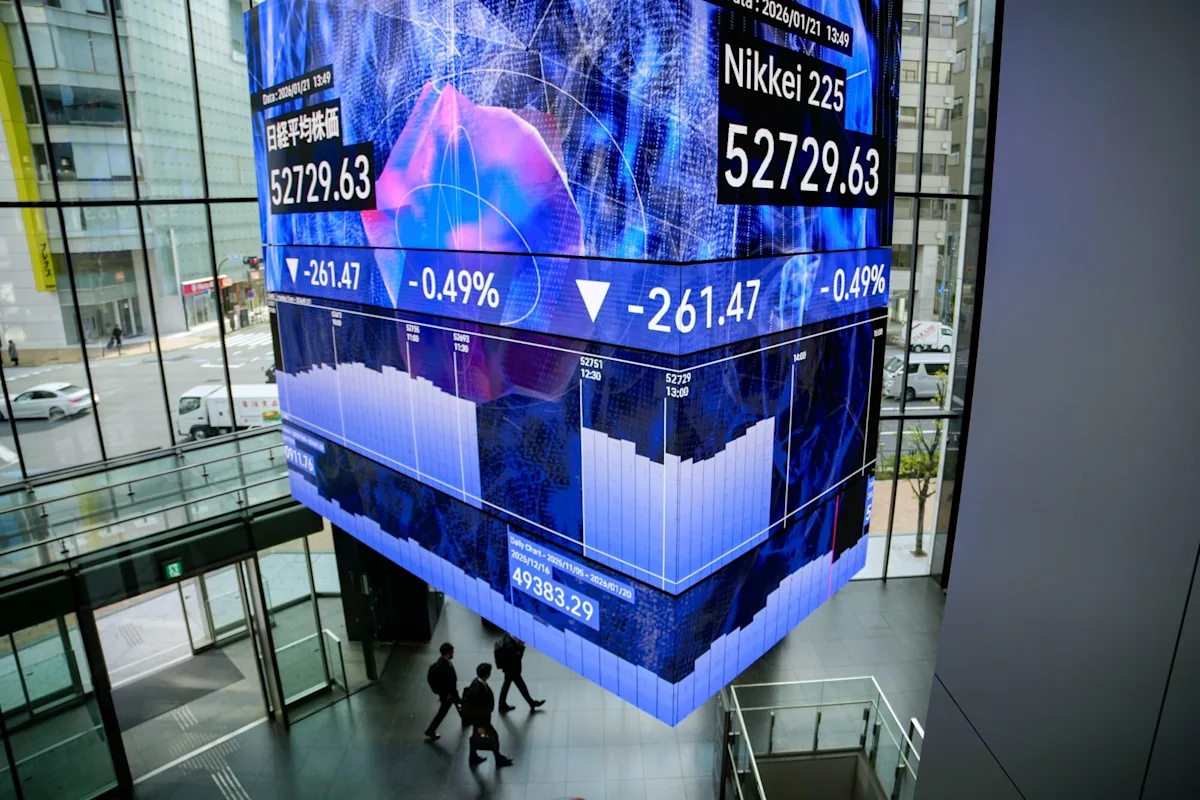
Japan’s Nikkei 225 stock gauge plunged the most since April’s tariff rout as climbing oil prices and mounting Middle East tensions clouded the nation’s economic outlook.

The blue-chip benchmark lost 5.2% Monday to close at 52,728.72, marking a more than 10% decline from its record high in late February and entering a technical correction. The broader Topix fell 3.8% to 3,575.84. Economically-sensitive sectors like tech and banks were among the biggest losers, with SoftBank Group Corp and Advantest Corp plummeting more than 9%.

Most Read from Bloomberg

Japanese government bonds dropped alongside equities amid a global bond selloff, with yields on 30- and 40-year debt rising around 11 basis points at one point. The yen is trading around its weakest level against the dollar since January.

The market turmoil came as oil surged above $100 a barrel, with major producers curbing production as the conflict around Iran extended into its 10th day. Stocks pared some losses in late afternoon after a Financial Times report that G-7 members are considering a coordinated release of emergency oil reserves.

Japan imports around 90% of its oil from the Middle East, leaving its economy particularly exposed to price spikes and supply disruptions.

“The plan to release oil reserves may ease immediate concerns, but supply worries will inevitably persist until the de-facto blockade of the Strait of Hormuz is resolved,” said Masahiro Yamaguchi, head of investment research at SMBC Trust Bank Ltd.

The pullback in Japanese equities is especially stark given their strong start to 2026 — the Nikkei had been outpacing major global indexes before the Iran crisis, powered by Prime Minister Sanae Takaichi’s expansionary fiscal policies.

Many global investors had been long on Japanese equities before the Iran conflict broke out, meaning “these high-performing positions became prime targets for quick cash raising, amplifying the selloff,” said Hui Shi Yeo, portfolio manager and researcher overseeing Japan equities at iFast Financial.

The Nikkei’s one-year implied volatility gauge soared to its highest level since the pandemic on Monday, a signal of rising investor fears.

Japan’s reliance on Middle Eastern oil imports is another pain point. Japan is “among the most affected countries globally” by higher oil prices, making its stocks look especially risky, said Hiroshi Matsumoto, a senior client portfolio manager at Pictet Asset Management Japan Ltd.

Concerns that the Iran conflict could drag on for longer if the US does not approve of Tehran’s new chosen leader are driving selling, Matsumoto added.

Japanese stocks have attracted strong foreign inflows in recent months, largely fueled by optimism for the Takaichi administration amid political uncertainty in the US and elsewhere.

But Japan now looks to be among the worst positioned to deal with rising oil prices, according to BMI economist Daniele Fraietta.

“Further expanding subsidies would likely add to an already weak fiscal position” and could worsen headline deficits in the near term, Fraietta wrote in a report. Japan’s “monetary policy flexibility” is also lower than peers like the US and South Korea “because real policy rates are negative,” Fraietta added.

The unfolding crisis may dim the appeal of Japanese stocks for overseas buyers, said Mamoru Shimode, chief strategist at Resona Asset Management Co. “The flow of short-term foreign investors buying Japanese shares seems to be reversing,” he said.

“Stock prices haven’t fallen enough to feel undervalued, so it’s also hard for domestic investors to buy the dip,” Shimode said. If oil prices remain above $100 per barrel, US stocks will also come under pressure, delivering more near-term headwinds to Japanese equities, he added.

–With assistance from Momoka Yokoyama, Toshiro Hasegawa, Kentaro Tsutsumi and Mia Glass.

Most Read from Bloomberg Businessweek

©2026 Bloomberg L.P.


Source link

  • Related Posts

    Once a beacon of cheap homes, Nevada has become a symbol of America’s struggle with high costs

    LAS VEGAS (AP) — When his parents were about his age, they bought their first home. But for 27-year-old Brian Torres Suazo, that milestone feels like a distant dream, despite…

    Video appears to show missile strike near Iranian school

    IE 11 is not supported. For an optimal experience visit our site on another browser. Iran Names New Supreme Leader Amid Escalating Violence 02:29 Now Playing Video appears to show…

    Leave a Reply

    Your email address will not be published. Required fields are marked *

    You Missed

    Harlem Globetrotters Are Getting Their First Basketball Video Game In Two Decades

    Harlem Globetrotters Are Getting Their First Basketball Video Game In Two Decades

    Hesson: Pakistan's new faces have 'earned the right to get opportunities'

    These lawmakers were shaped by combat after 9/11. Now they're grappling with a new Mideast war

    These lawmakers were shaped by combat after 9/11. Now they're grappling with a new Mideast war

    Qualcomm’s new Arduino Ventuno Q is an AI-focused computer designed for robotics

    Qualcomm’s new Arduino Ventuno Q is an AI-focused computer designed for robotics

    Glasgow Central station to stay closed for at least two days after fire and building collapse | Glasgow

    Glasgow Central station to stay closed for at least two days after fire and building collapse | Glasgow

    Sen. Tim Kaine says supporting Kristi Noem as DHS secretary was a “big mistake”

    Sen. Tim Kaine says supporting Kristi Noem as DHS secretary was a “big mistake”