dailynewsnblog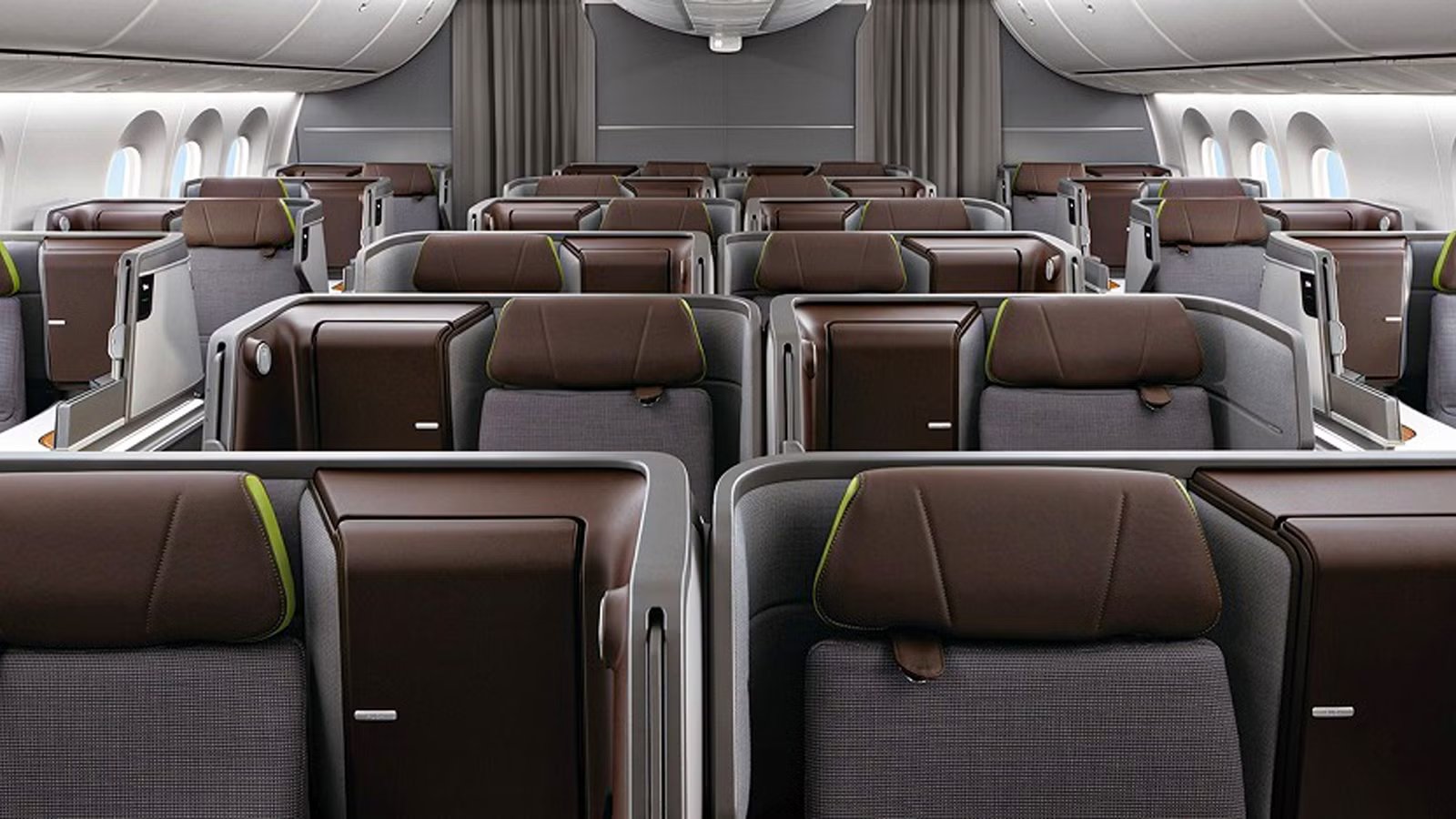
In recent years, EVA Air has quietly become one of the most talked-about airlines in long-haul travel thanks to its blend of superior hospitality and premium cabin innovations. For passengers flying between North America and Asia, a ticket in the carrier’s business class is more than just a route across the Pacific Ocean; it is a gateway to a level of comfort that has, in some configurations, reset passengers’ expectations of what a smartly designed business class experience can feel like. On transpacific flights, which are often more than 12 hours long, every inch of space onboard counts, and EVA Air manages to deliver an experience that combines practical comfort with premium touches.
One of the most distinctive features of EVA Air’s business class offering is not just the service or the food, which are both highly rated; it is the legroom. In a world where many airlines squeeze as many seats into their widebody aircraft as possible, EVA Air’s long-haul business class seats boast an astonishing seat pitch of 60 inches, making it one of the most spacious business class cabins flying across the Pacific. Let’s take a closer look…
All About EVA Air

Firstly, it is important to understand the background to EVA Air and how the  Star Alliance carrier came to be. EVA Air, officially called EVA Airways Corporation, was founded in March 1989 by Dr. Chang Yung-Fa as a private international airline based at Taipei Taoyuan International Airport (TPE) in Taiwan, under the umbrella of Evergreen Marine Corporation, the global shipping giant.
Regulatory shifts in Taiwan’s air transport industry created an opportunity for private carriers, and EVA quickly seized it, placing large orders for Boeing and McDonnell Douglas aircraft within months of incorporation. Its first commercial flights began on 1 July 1991, connecting Taipei with key destinations, including Bangkok Suvarnabhumi International Airport (BKK), Seoul Incheon International Airport (ICN), and  Kuala Lumpur International Airport (KUL), later expanding west to the likes of Vienna Airport (VIE).
Right from the onset, EVA Air focused on quality and innovation; so much so that it was the first carrier in the world to introduce premium economy seating on its long-haul Boeing 747 routes, offering customers wider seats, individual in-flight entertainment, and leg rests long before many rivals caught on. Over time, EVA Air expanded its global network to more than 65 destinations across Asia, North America, Europe, and Oceania, and became a member of Star Alliance in 2013, cementing its place among the world’s major international carriers, alongside the likes of  Air Canada, United Airlines, and
  Singapore Airlines.

The World’s Widest Transpacific Premium Economy Seats You Can Book Today
Which airlines offer the comfiest rides across the Pacific?
60 Inches Of Legroom At 30,000 Feet

For clarity, the headline figure of 60 inches of legroom is the distance between one seat and the same point on the seat in front, although in the case of EVA Air’s business class product, the amount of legroom is actually more, given that the seats convert into a lie-flat bed.
On its long-haul aircraft such as the Boeing 777-300ER and Boeing 787-9, EVA Air’s Royal Laurel Class seats are arranged in a 1-2-1 configuration, ensuring every passenger has direct aisle access. The cabin avoids the cramped feeling of older 2-2-2 business layouts and instead provides a staggered design that maximizes space and privacy for all passengers.
That 60-inch spacing between seat units also creates space for side consoles, storage compartments, and wide armrests, and the result is a seat that feels less like a recliner wedged into a row and more like a defined personal suite.

Flight Review: EVA Air Boeing 777-300ER Business Class From London To Bangkok
Did this transcontinental flight live up to its grand reputation?
Lie-Flat Beds Across The Pacific

Crucially, as mentioned, EVA Air’s business class seats do not just recline, they also convert into fully flat beds, transforming the space into a horizontal sleeping surface suitable for true rest on lengthy transpacific flights. In upright mode, the seat functions as a workspace and dining area, and there is a large tray table, adjustable lighting, multiple charging ports, and ample space for laptops or tablets. When it is time to sleep, the seat smoothly extends forward, flattening into a bed that measures roughly 78 inches in length, depending on the aircraft type.
The 60-inch seat spacing plays an important role here, as with such a generous cabin footprint between seats, passengers do not feel boxed in while sleeping, and there is room to turn slightly, bend a knee, or shift positions without constantly brushing against hard surfaces. In a competitive long-haul market, that difference can translate to noticeably better rest before arrival.
EVA Air’s Business Class Cabin Design & Onboard Experience

The 1-2-1 layout is central to EVA Air’s long-haul business class identity, as every passenger enjoys direct aisle access. This is something that has become the gold standard for premium international travel, as it avoids having to climb over a neighbor or step around extended footrests in the middle of the night.
With the space next to them, window seats offer a cocoon-like feel that is especially appealing on overnight flights between North America and Taiwan. Meanwhile, center seats are more suited to passengers traveling together, but can also be separated with privacy dividers.
The 60-inch measurement between seat units allows designers to incorporate substantial side consoles, holding reading materials, drinks, amenity kits, and personal electronics without cluttering the main seating area. Storage compartments, literature pockets, and enclosed spaces for headphones or water bottles all fit neatly within this expanded footprint. The lighting is soft and modern, with LED reading lamps and adjustable mood settings that reduce glare, and combined with the 1-2-1 configuration, the wide spacing reinforces the sense of order and calm in the cabin.
EVA Air’s spacious cabins are popular with passengers on both sides of the Pacific, and the fully flat beds, paired with quality bedding and attentive cabin service, make long- and ultra-long-haul flights more comfortable. Dining is another focal point for the airline, with its business class passengers offered a choice of local and international dishes. Meals are served on proper dishware, and the generous seat spacing ensures tray tables feel stable and expansive rather than cramped, and with more than five feet between seat structures, elbow room during meal service is rarely an issue.

The Airlines That Operate The 10 Longest Non-Stop Boeing 777-300ER Routes
Some of the sectors flown by the type exceed 8,000 miles in length.
EVA Airways’ Extensive Transpacific Network

From its hub at Taipei Taoyuan International Airport (TPE), EVA Air operates one of the most extensive transpacific networks, linking Taiwan with major cities across the US and Canada. Passengers can also use Taipei as a stopover point, connecting to and from services throughout the region.
On the US West Coast, EVA Air maintains frequent nonstop service from Taipei Taoyuan International Airport to San Francisco International Airport (SFO) and  Los Angeles International Airport (LAX), which are the busiest links in its transpacific network. In fact, more than one million passengers flew on each of these routes last year. On its San Francisco Route, the carrier goes head-to-head with
  United Airlines, Starlux Airlines, and China Airlines, making it the busiest international route from the airport.
EVA Air also flies to Seattle-Tacoma International Airport (SEA), while elsewhere in the US, it connects Taipei with Chicago O’Hare International Airport (ORD),  Dallas/Fort Worth International Airport (DFW), Houston George Bush Intercontinental Airport (IAH), and New York John F. Kennedy International Airport (JFK). In summer 2026, the carrier will also launch direct services to Washington Dulles International Airport (IAD), marking a significant step in EVA Air’s transpacific strategy and becoming the first nonstop link between Taipei and Washington DC.
Canada also plays an important role in the airline’s transpacific map, with regular nonstop flights between Taipei Taoyuan International Airport and Vancouver International Airport (YVR) and Toronto Pearson International Airport (YYZ). Across all of these services, EVA Air typically deploys its Boeing 777-300ER and 787-9 aircraft, both of which are equipped with its flagship Royal Laurel Class, ensuring that long-haul comfort remains a cornerstone of its transpacific offering.
EVA Air is the largest operator at Taipei Taoyuan International Airport, with more than 11 million passengers, ahead of its rival China Airlines, with nine million. Meanwhile, away from its transpacific routes, the busiest destinations from Taipei Taoyuan International Airport last year were  Hong Kong International Airport (HKG), Tokyo Narita Airport (NRT), Osaka Kansai International Airport (KIX), Bangkok Suvarnabhumi International Airport (BKK), and Seoul Incheon International Airport (ICN).
EVA Air’s Primarily Widebody Fleet

The latest data from ch-aviation shows that EVA Air currently operates a total of 78 aircraft, made up primarily of widebody aircraft. The Star Alliance carrier also has a further 48 aircraft on order, including 24 Airbus A350-1000 aircraft, 18 A321neos, and an additional four Boeing 787-10s.
In the past, EVA Air has operated some of commercial aviation’s most iconic aircraft, including the Boeing 747 and McDonnell Douglas MD-11. In 2026, EVA Air’s fleet is much more modern, and is outlined in the table below:
Aircraft | Number In Fleet | Number On Order |
|---|---|---|
Airbus A321 | 17 | – |
Airbus A321neo | – | 18 |
Airbus A330-300 | 9 | – |
Airbus A350-1000 | – | 24 |
Boeing 777-300ER | 32 | – |
Boeing 787-9 | 8 | 9 |
Boeing 787-10 | 13 | 4 |