dailynewsnblog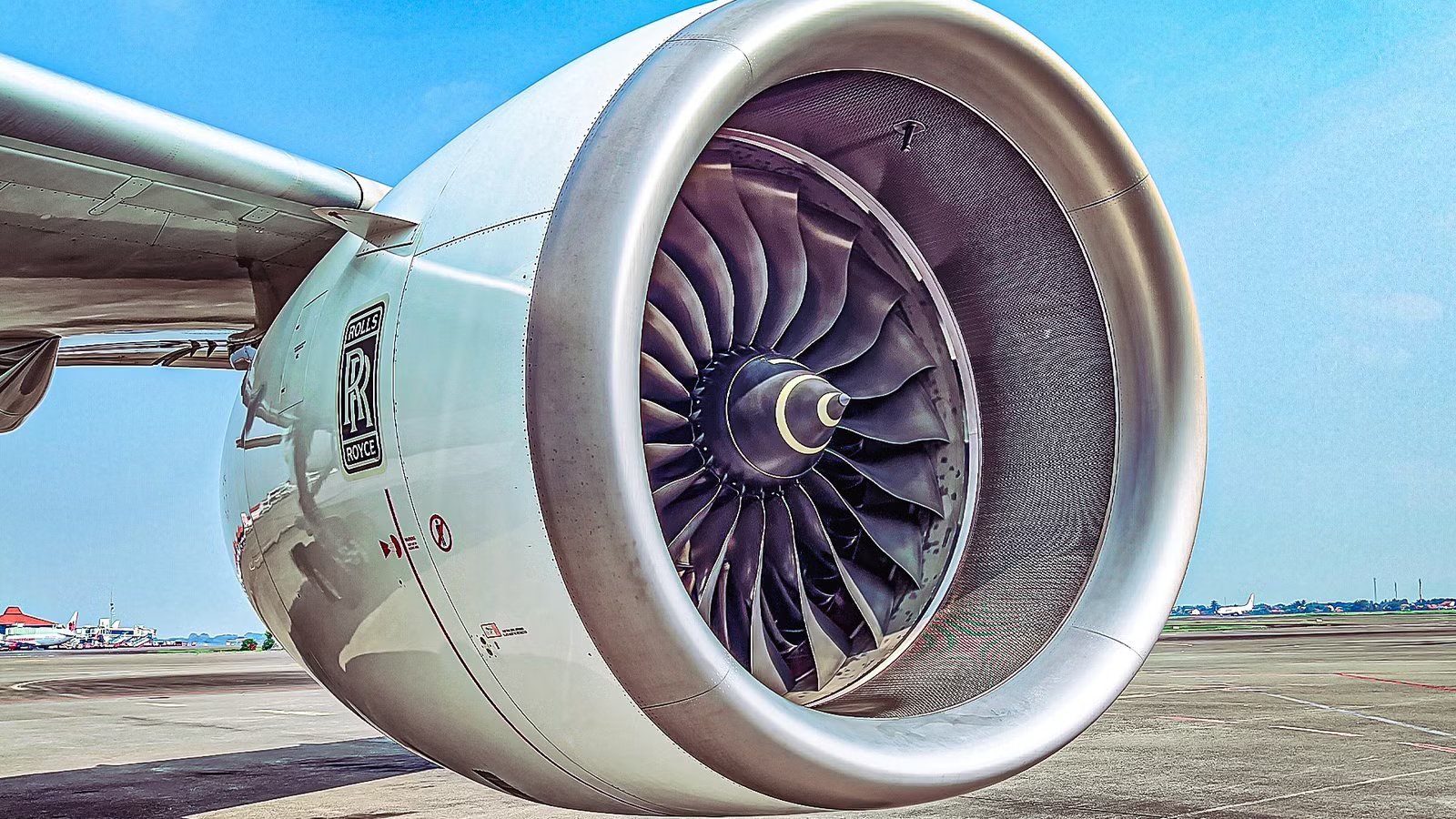
In the modern era of widebody aviation, an aircraft’s identity is fundamentally defined by the powerplants hanging beneath its wings. As airlines navigate intense global capacity demands, two of the most prominent twin-engine jets in the skies, the Airbus A350 and the Airbus A330neo represent two very different purposes. At the heart of this operational divide are their respective engines: the Rolls-Royce Trent XWB and the Rolls-Royce Trent 7000.
While they share the same manufacturer and foundational three-shaft architecture, this guide will explore how different these engines are in terms of physical scale, technological evolution, and operational philosophy. The Trent XWB was born from a clean-sheet design mandate, built specifically to push the boundaries of thrust and thermal efficiency for the heavy-hauling A350 family. Conversely, the Trent 7000 is a masterclass in evolutionary engineering, adapting the cutting-edge core of the Boeing 787‘s engine to seamlessly integrate with the A330neo’s legacy metallic airframe.
Progress In Engine Design

The most immediate distinction between these two giants is their physical presence on the ramp. The Trent XWB is a massive undertaking, featuring a 118-inch diameter fan, the largest in the Rolls-Royce family. This scale was a non-negotiable requirement to generate the 97,000 lbs of thrust needed to lift the Airbus A350-1000 at its maximum takeoff weight. In contrast, the Trent 7000 utilizes a slightly smaller 112-inch fan. This was a deliberate design choice by Airbus to ensure the engine could fit beneath the A330neo’s wings without requiring a complete and costly redesign of the aircraft’s landing gear.
The sheer physics of these fan sizes translates into a massive difference in air displacement. The Trent XWB-97’s fan must manage incredible centrifugal forces while moving over 1.3 tonnes of air per second at takeoff. To handle this, the XWB utilizes 22 hollow titanium fan blades, whereas the Trent 7000, despite its slightly smaller stature, uses 20 hollow titanium blades. By spinning its 112-inch titanium fan at approximately 2,500 RPM, the Trent 7000 delivers 72,000 lbs of thrust, providing the A330neo with a performance profile that far exceeds its predecessor, the Trent 700.
Ultimately, the scale of the Trent XWB allows the A350 to operate as a highly capable heavy hauler, capable of carrying full payloads over ultra-long distances. The Trent 7000, while smaller, is optimized for high-cycle efficiency. Especially notable for the 7000’s development, it holds a bypass ratio of 10:1, the highest of any engine in the Trent family. This creates a cushion of air that makes the A330neo exceptionally quiet, allowing it to excel in regional missions where noise-abatement procedures at urban airports are a primary concern for operators.
How Materials Make The Real Difference

While both engines share a signature three-shaft architecture, the way they interact with the airframe represents a significant fork in engineering history. The Trent 7000 is a unique technological hybrid, utilizing the advanced core of the Trent 1000 but deliberately retaining a traditional bleed-air system. The A330neo requires high-pressure air bleeding from the engine to power the cabin’s environmental control systems and provide wing anti-icing. This makes the Trent 7000 a masterclass in adaptation, bringing 21st-century thermal efficiency to a classic platform without the immense cost of a total electrical redesign.
The Trent XWB, by contrast, was designed for a composite airframe, allowing for a far more aggressive approach to heat management. To produce the massive thrust required for the A350-1000, the XWB-97 operates at internal temperatures that would melt traditional metal alloys. To survive this, Rolls-Royce utilized ceramic matrix composites and advanced single-crystal turbine blades. This thermal resilience is the engine’s hidden power, allowing the A350 to maintain peak performance during 16-hour flights, whereas the Trent 7000 is optimized for a broader mix that includes shorter, high-cycle regional hops where those extreme sustained heats aren’t as prevalent.
Feature | Rolls-Royce Trent 7000 | Rolls-Royce Trent XWB |
System Interface | Full Bleed Air | Optimized Bleed Air |
Bypass Ratio | 10:1 | 9.6:1 |
Turbine Materials | Advanced Superalloys | Ceramic Matrix Composites |
Overall Pressure Ratio | 50:1 | 52:1 (XWB-97) |
The result of these differing architectures is a shift in operational focus. The Trent 7000 delivers a 14% fuel-burn improvement per seat over the legacy A330, largely by leveraging the most efficient core elements of the 787’s engine and integrating them with conventional systems. The XWB, however, is a leap forward in pure materials science. The A350 has the endurance to operate the world’s longest routes while remaining the most fuel-efficient large aircraft engine in service today.

Why The Airbus A350-1000 Has Such An Insane Fuel Burn Advantage
The Airbus A350-1000 cuts fuel burn by 25% thanks to ultralight design, Trent XWB engines and smooth aerodynamics — a real game-changer for long-haul.
Consistent Upgrades

Now that both aircraft have been in operation for some time, airlines are ever more interested in how long the powerplants can last on the wing. To address the high-cycle demands of global operators, Rolls-Royce has rolled out the Durability Enhancement Package for the Trent 7000. This upgrade, which began its rollout in 2022, utilizes a new high-pressure turbine blade design that reportedly triples the time-on-wing in harsh environments, a critical factor for carriers in the Middle East and Southeast Asia.
The Trent XWB has undergone its own evolution with the introduction of the XWB-84 EP standard. Recent data from long-term operators indicates that these refinements have pushed dispatch reliability to a staggering 99.9%. For an airline like Starlux, which recently took delivery of its first A350-1000s alongside its A330neo fleet, this reliability is the linchpin of its premium strategy. By ensuring their engines can handle the thermal stress of transpacific trunk routes without unscheduled maintenance, they can maintain the tight turnaround times required for a high-yield hub.
Supporting these durability gains is a massive £1 billion investment by Rolls-Royce into the Trent family’s service life. This funding has directly enabled the digital twin technology now used by  Delta Air Lines and others to predict component wear before it results in an engine change. This is one of the key selling points not only for Trent engines but also for Airbus aircraft.
Cost Savings All-Round

The Trent XWB is the choice for pure performance, offering a 5–7% fuel burn advantage over the Trent 7000 on comparable long-haul operations. This is largely due to its superior overall pressure ratio of 52:1 and the use of weight-saving composite materials throughout the engine nacelle. Why this is critical for airlines is that this fuel saving translates into millions of dollars in annual OpEx reduction per airframe. Over time, this will allow airlines to offset the cost of the aircraft acquisition and achieve crucial savings that keep them profitable.
However, if costs need to be cut even further, the Trent 7000 counters with a significantly lower capital acquisition cost and a simplified maintenance path. Because it uses the Trent 1000s established architecture, many of its components are already part of a global, high-volume supply chain. This makes the A330neo an incredibly attractive middle-market solution. For an operator like Delta, the Trent 7000’s lower price tag allows them to deploy the A330neo on 8-to-10-hour transatlantic hops where the extreme ultra-long-range efficiency of the XWB isn’t strictly necessary to remain profitable.
If the Trent XWB is the engine that can truly beat the competition on the world’s longest routes, then the Trent 7000 is the engine that is a reliable, high-efficiency option that balances modern fuel savings with a lower barrier to entry. In the current market, this power of choice has allowed Airbus to capture both the premium long-haul and the high-density regional markets simultaneously.

Rolls-Royce Trent XWB Vs. Trent 1000: Which Engines Are More Powerful?
A look at what the data says, and how real-world deployment compares between the two.
The Visible Effects

Beyond the technical specs and fuel burn charts, the true value of these engines is felt by the people who spend countless hours onboard. The Trent XWB and Trent 7000 have both fundamentally redefined quietness in long-haul travel. The A330neo, thanks to the Trent 7000’s 10:1 bypass ratio, emits 50% less noise than its predecessor, the A330ceo. This roughly 6 dB reduction is the difference between a constant roar and a manageable hum, allowing passengers to arrive at their destination significantly less audio-fatigued.
However, the Trent XWB paired with the A350’s composite fuselage takes this a step further. The A350’s structure can handle higher pressure differentials, allowing for a cabin altitude of just 6,000 feet, compared to the 8,000 feet standard on older metallic aircraft. This higher oxygen saturation, combined with noise levels that often sit below 60 dB in cruise, creates a wellness advantage that airlines use as a primary marketing tool. For pilots, the XWB’s advanced digital control systems and reduced vibration mean a more intuitive flight deck experience, especially during the critical hot-and-high departures, where the XWB-97’s massive thrust reserves provide an extra layer of safety.
Feature | Trent 7000 (A330neo) | Trent XWB (A350) | Impact on Passenger/Crew |
Noise Reduction | -6 dB (vs A330ceo) | -9 dB (vs A330ceo) | Significantly lower auditory fatigue. |
Cabin Altitude | ~7,000 to 8,000 ft | 6,000 ft | Reduced jet lag and dehydration. |
Bypass Ratio | 10:1 | 9.6:1 | 7000 is optimized for quiet urban approaches. |
Pilot Experience | Shared A330 Commonality | Advanced Clean-Sheet Cockpit | Ease of transition vs cutting-edge tech. |
Pilots transitioning from the classic A330 to the A330neo find the Trent 7000’s power delivery to be smoother and more predictable, while A350 pilots rave about the XWB’s responsiveness. In today’s airline market, where passenger wellness has become a competitive commodity, these engines help protect the brand reputation of the airlines that fly them.
Prepared For The Future

In summary, the legacy of the Trent 7000 and XWB will likely be defined by their ability to adapt to the industry’s most pressing challenge of sustainability. Rolls-Royce has successfully certified both engine families for 100% sustainable aviation fuel compatibility, meaning that the eventual transition to these fuels will not inhibit the success of the aircraft these engines power. If anything, Rolls-Royce is staying ahead of the curve early to ensure that it is in a prime position to take on the next generation of flight.
This transition is a mechanical necessity for airlines aiming for net-zero targets by 2050, where the A350 and A330neo are seen as crucial to achieving these goals. The technical foundations laid by these engines, specifically the XWB’s ceramic matrix composites, are now serving as the direct blueprint for the UltraFan technology, which aims to deliver yet another 10% efficiency leap in the 2030s.
The A330neo and A350 are not rivals, but instead, a dual-pillar strategy. The Trent 7000 is the pragmatic modernizer, allowing airlines to refresh their fleets with minimal risk and high reliability. The Trent XWB is the high-performance pioneer, pushing the boundaries of materials science to make ultra-long-haul flight viable. Together, they represent a period in engineering when efficiency finally became synonymous with endurance, ensuring that the next generation of travelers can fly farther, quieter, and more sustainably than ever before.