dailynewsnblog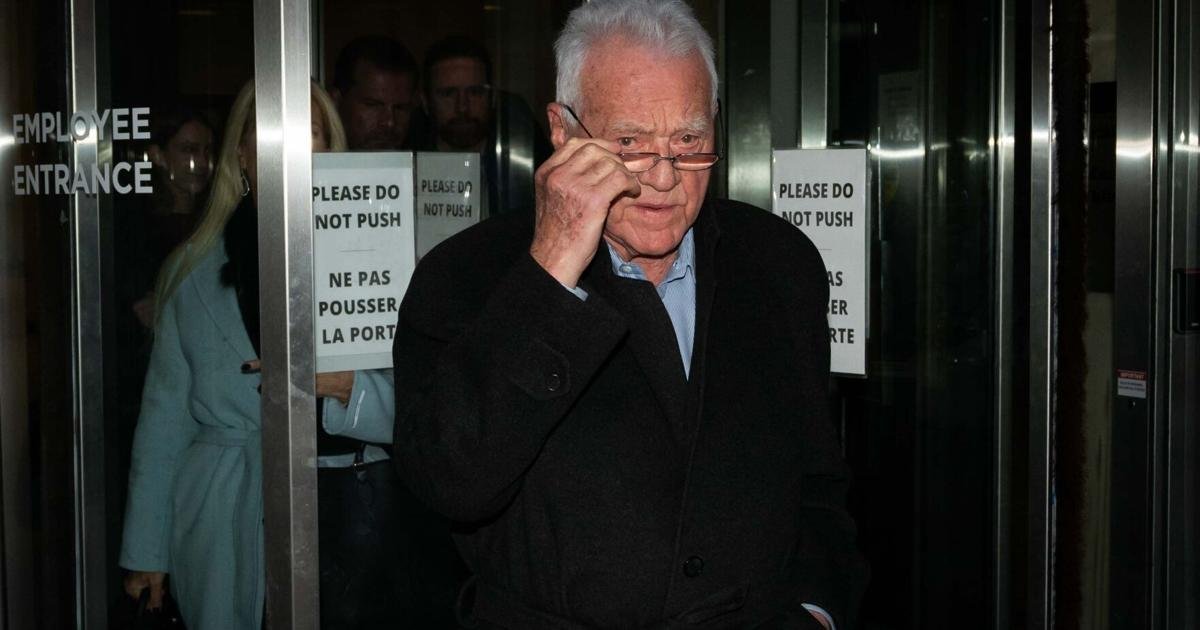
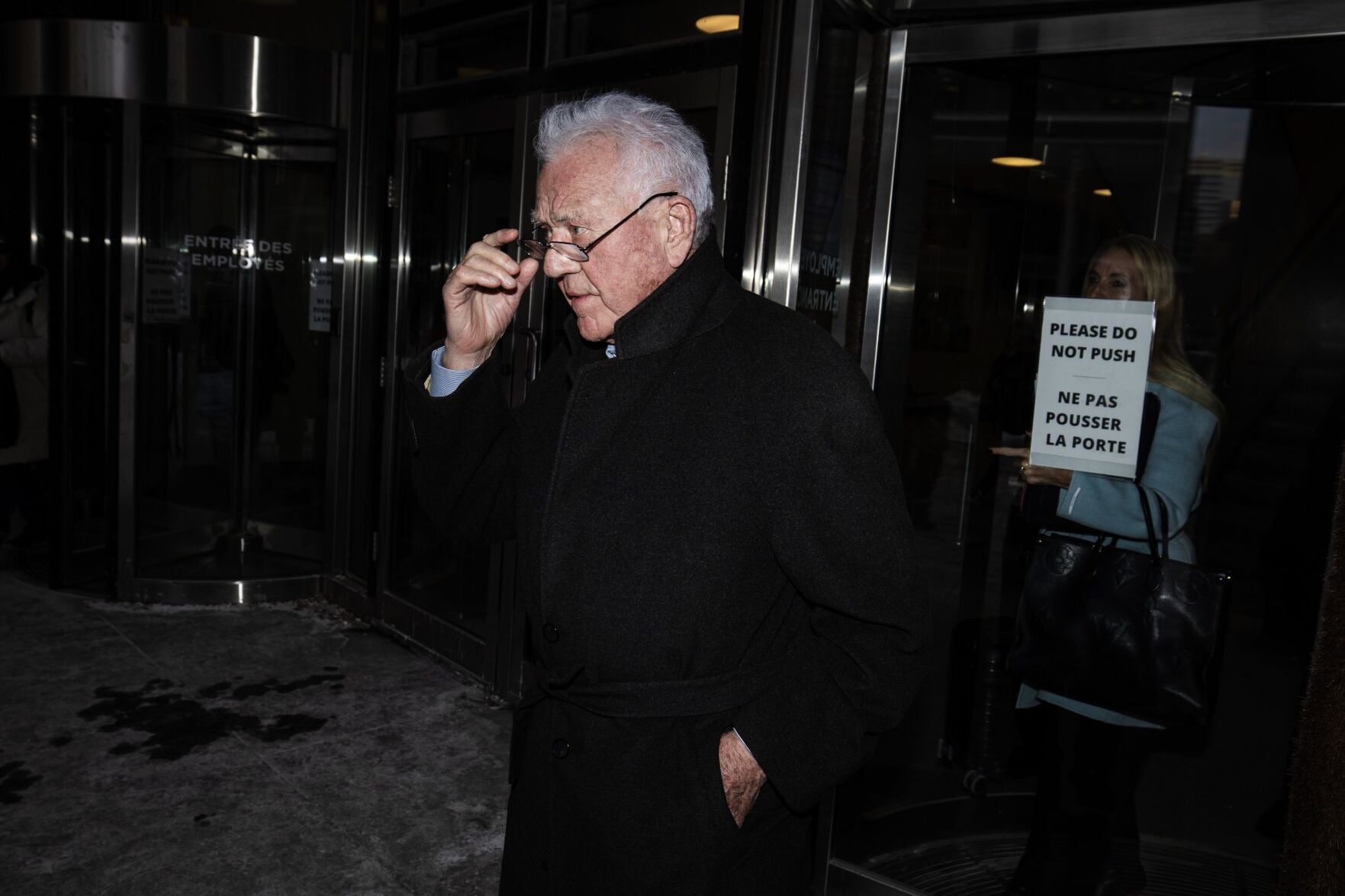
When Frank Stronach’s sex assault trial got underway in Toronto last month, seven women were accusing him of sexual misconduct dating back decades.
It had the potential to be one of the most explosive trials the city has seen — Stronach, 93, an auto-parts tycoon and one of Canada’s richest men, was alleged to be a serial date rapist who preyed on young women in ’70s and ’80s Toronto.
Three-and-a-half weeks later, Ontario Superior Court Justice Anne Molloy has heard from all seven women, and the Crown has closed its case.
But it hasn’t gone smoothly for the prosecution.
On Friday, Crown attorney Jelena Vlacic told court there was not sufficient evidence to proceed on the count of attempted rape in relation to one of the women, although Stronach is still charged with indecently assaulting her. This comes after the Crown on Monday abandoned its prosecution in relation to another complainant.
It also appears that the number is about to get even smaller.
Defence lawyer Leora Shemesh said in court Friday she and prosecutors have “discussed” other counts, which the Crown will address Monday. What that means is not yet clear, but Shemesh said: “In light of some of the discussions that are happening behind the scenes, there are far fewer defence witnesses that need to be called now.” (Shemesh earlier indicated she would be calling between two and three witnesses per complainant.)
She also suggested the defence could be finished calling evidence by Wednesday or Thursday, making it all but certain that Stronach himself will not be testifying.
It’s been enough to fuel speculation that the prosecution’s case is faltering.
Why the truth is not always the main thing at a criminal trial
Gillian Hnatiw, a Toronto-based civil litigation lawyer specializing in gender-based violence, believes firmly the criminal courts are not equipped to uncover the truth about sexual violence — or to reduce its prevalence.
“The problem is we, as a society, think this is the place to test these allegations, despite our experience of it being a bloodbath every time,” she said.
Hnatiw’s name came up at the Stronach trial this past week. Seeking to suggest the complainant had financial motives, Shemesh questioned whether she had contacted civil litigators prior to approaching police. The woman named two lawyers, including Hnatiw, but said she had not retained anyone.
Hnatiw notes the criminal justice system is designed to prevent wrongful convictions, not to determine what actually happened.
Cross‑examination — the heart of a criminal trial — relies on techniques that clash with what is known about memory, stress and trauma. Complainants endure days of questioning that can “chip away” at inconsistencies until the core of their story is overshadowed.
The process rarely produces clarity and often leaves complainants shaken. Meanwhile, prosecutors — already out‑resourced — struggle to prepare for trials that require hundreds of hours of work.
She argues that civil court, with its lower burden of proof and focus on accountability and compensation, is often a more effective path.
At least one woman has chosen that path: Jane Boon, whose name has frequently come up during the trial, is suing Stronach and Magna International, the auto-parts giant he founded, for an alleged sexual assault when she was a 19-year-old intern. “I was compliant, but I did not give my consent,” Boon wrote in an email to the Star.
(In his statement of defence, Stronach denies the sexual encounter and says her claim amounts to “an after-the-fact attempt” to leverage allegations against Stronach “to vitiate her otherwise valid and publicly admitted consent, more than 30 years later.” Stronach ceased to be Magna’s controlling shareholder in 2010 and stepped down as chair in 2011. The company denies it’s vicariously liable for his alleged actions.)
The importance of alternatives to criminal court is being underscored by “what I’ve read about this nasty trial,” Boon wrote. (She emphasized she’s gleaning information about the ongoing trial from the media, since as a potential witness she is not allowed in the courtroom.)
There is nothing shameful, said Hnatiw, about seeking damages for harm — society accepts that principle in every other context. “Nobody says a car crash victim shouldn’t be given money.”
Yet sexual‑assault complainants are often treated with suspicion simply for wanting information or restitution, she said.
Why the Stronach case is a challenge for the Crown
Veteran Toronto defence lawyer Daniel Brown said this week the Stronach trial seems to be the latest example of the Crown pursuing weak or unprovable cases, because the public expects them to prosecute high-profile allegations.
For decades, too few sexual assault cases were prosecuted for a variety of reasons. Yet Brown — who, with co-counsel Hilary Dudding, won the acquittal of their client in last summer’s Hockey Canada trial in London, Ont. — contends the pendulum has swung in the opposite direction. “Today, the system risks overcorrecting.”

The high-profile sexual assault trial of five former world juniors ended in acquittals on Thursday.
The high-profile sexual assault trial of five former world juniors ended in acquittals on Thursday.
“Our justice system deliberately sets a very high bar in criminal prosecutions: guilt must be proven beyond a reasonable doubt. That standard exists to protect innocent people from wrongful conviction. Based on what has been reported publicly, the evidence in the Stronach case appears to fall well short of meeting that threshold,” he wrote in an email in response to the Star’s questions about the trial.
Historical sex assault allegations are particularly challenging — coming with fragile memories, no physical evidence — forget surveillance footage, text messages or email — and little way to corroborate the complainants’ accounts.
Without strong evidence, the Crown struggles to build a case and, Brown notes, the result is often predictable: an acquittal that erodes public confidence and drains limited court resources.
Brown warns that pushing every allegation into the criminal system creates a “boy who cried wolf” effect — when cases fall apart, the public becomes cynical, complainants feel betrayed, and the justice system’s reputation suffers.
The seven women who testified against Frank Stronach
The Star has covered every day of testimony at the trial.
The seven complainants cannot be identified under a publication ban. Here’s what they told the court.
Complainant No. 1
Now 66, the trial’s first complainant told the court she briefly worked as a groomer for Stronach’s race horses. On her first day of testimony, she said that in either 1980 or 1981, Stronach began sexually assaulting her while on the dance floor at Rooney’s. She said she remembered Stronach’s fingers puncturing her pantyhose and penetrating her vagina, and she testified he later did the same again in a booth. She told the court she felt drunk — but didn’t drink much — and the next thing she remembers was lying on a bed and looking at the mirrored ceiling of a lakefront condo, coming to the realization she was in the middle of unwanted sex with Stronach.
Shemesh focused much of her cross-examination on the woman’s lack of memory, and how she could not remember details such as how she got to the condo or anything about what led up to the sexual activity.
The woman also could not remember speaking to police in 2015 about the alleged assault; Shemesh pointed to an officer’s notes that she’d said she was unable to say whether the sex was consensual or not.
Read more of Complainant No. 1’s testimony:

Complainant No. 2
The second woman to testify worked as a cocktail waitress at Rooney’s in her 20s. After she was fired, the now 62-year-old said she contacted Stronach to find out why she’d been terminated, and accepted a dinner invitation. After dining together, she said she agreed to go to his lakefront condo, where he pushed her against a wall, groped her and attempted to kiss her. She felt fearful and left.
Shemesh focused on contradictions in the woman’s police statements — such as saying she had told an ex-boyfriend about what happened — something he recently denied.
Rather than calling Stronach to find out why she’d been fired, Shemesh suggested she was looking for work — and indeed she went to work at Magna for six years. Earlier this week, Shemesh indicated she would be seeking a “directed” not guilty verdict relating to the timing of the alleged sexual assault.
On Friday, all parties agreed to deal with the issue at a later date.
Read more of Complainant No. 2’s testimony:

Complainant No. 3
The now 73-year-old woman testified that in 1977 she met Stronach at Rooney’s, dined with him and went to an apartment where he pushed her over an armchair, lifted her skirt, and “tried to rape me.” She told the court she’s not sure what she said — maybe “what are you doing?” — and then left, and had no further contact with him.
Stronach was charged with attempted rape under the law in place at the time, but based on her testimony in court, the Crown conceded the charge couldn’t be proven. Stronach is also charged with indecent assault (a historical charge that is now covered under sexual assault) relating to her testimony, and he can still be convicted of that.
During cross-examination, the defence emphasized the witness’s conflicting accounts — in court, she testified that she walked to the subway after the incident, yet she had previously told police she had no memory of how she got home.
Read more of Complainant No. 3’s testimony:

Complainant No. 4
The now 63-year-old woman testified that while working as a summer student at Magna in 1983, Stronach invited her to dinner at the Harbour Castle complex, and after drinks, invited her to his condo to see the view. She testified he came up behind her, fondled her breasts and — while she can’t remember how she got there — she ended up in the bedroom having sexual intercourse that she didn’t want, although she didn’t say anything to that effect.
The credibility of the witness took a hit when she admitted to lying in court about not reading an article written by Jane Boon, who is suing Stronach for sexually assaulting her when she was 19. The revelation led to Vlacic receiving a tongue-lashing from the judge.
During cross-examination, Shemesh suggested that the incident the witness described as rape was in fact consensual, and that she’s come forward now because she feels embarrassed and regrets the encounter with the much older man.
Read more of Complainant No. 4’s testimony:

Complainant No. 5
Now 71, this witness testified she met Stronach at Rooney’s in the early ‘80s. They became friendly and, years later, she bumped into him and he asked her for lunch. They ended up in a hotel suite where she said he raped her, despite her verbal and physical attempts to resist.
Shemesh highlighted numerous inconsistencies in her evidence and shared with the court her long record of civil litigation, which included damning comments on her credibility from a Toronto judge. The defence lawyer also confronted her with a lawsuit by a man who sued her for false arrest over an alleged threat.
Read more of Complainant No. 5’s testimony:


Complainant No. 6
The testimony of this complainant was a sad spectacle. The ex-nurse, 73, repeatedly broke down as she described how Stronach raped her in a lakeside condo after meeting him at Rooney’s on Valentine’s Day in 1986. Cross-examination turned into a battleground before it was cut short by the judge, who heard the woman, who has a long history of mental health issues, muttering about suicide.
Soon after, the Crown turned up a police officer’s notes from 2006 that described the woman reporting that Stronach had groped her, but made no mention of forced intercourse. The prosecution withdrew one count of forcible confinement and is seeking to withdraw the sexual assault charge.
Shemesh has asked the judge to find Stronach not guilty on that count.
Read more of Complainant No. 6’s testimony:
Complainant No. 7
The 69-year-old business owner testified that after going on a dinner date with Stronach in either 1982 or 1983, they went to a lakefront condo where he ripped off her pantyhose and penetrated her against her will.
During cross-examination, Shemesh accused her of turning a consensual encounter into rape. The woman vehemently denied this — “if you think that’s consensual, wow … It’s truly, truly, truly shocking,” she said.
Read more of Complainant No. 7’s testimony: