dailynewsnblog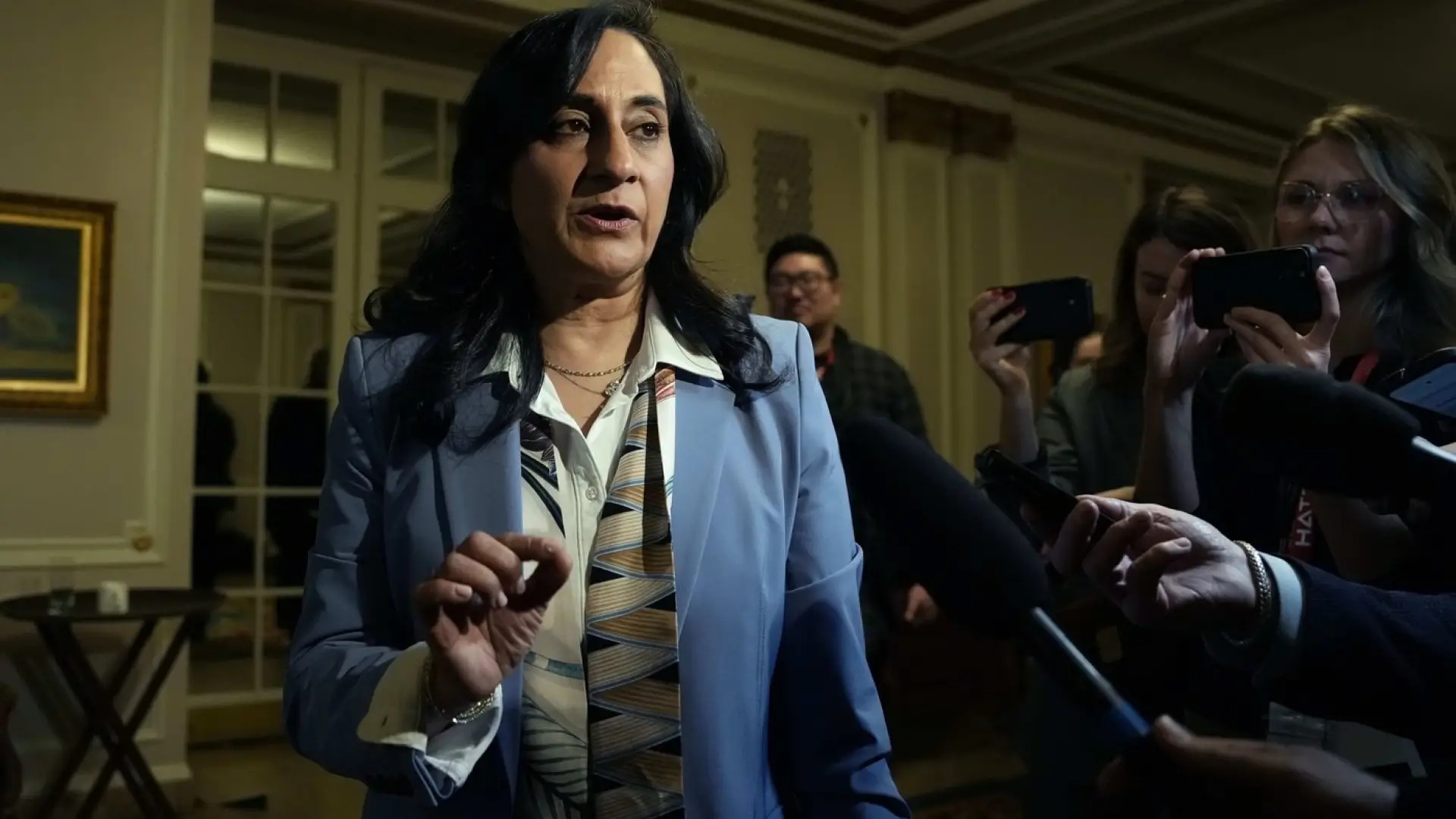
“International law binds all parties and there is no blank cheque, in terms of the operation that is being undertaken,” Anand told reporters in a virtual news conference called to update efforts to help Canadians leave the region.
The United States and Israel do not have a “blank cheque” in their bombing campaign in Iran, and are still bound by international law, Foreign Affairs Minister Anita Anand said on Friday, as the war in the Middle East approaches the seven-day mark.
“International law binds all parties and there is no blank cheque, in terms of the operation that is being undertaken,” Anand told reporters in a virtual news conference called to update efforts to help Canadians leave the region.
Anand scheduled a call on Friday with Liberal caucus members to provide them with information for constituents who are looking for assistance in the Middle East. But the call will likely also include discussion of the government’s position on the war itself.
Some caucus members have said publicly they’re uneasy with Prime Minister Mark Carney expressing support for Washington’s decision to launch the war last weekend.
While Anand said she welcomes a diversity of views among her caucus colleagues, she noted the two decades of talks aimed at preventing Iran from obtaining nuclear weapons.
After the U.S. began its attacks on Iran on Feb. 28, Anand initially refused to say whether the American bombing campaign violated international law. Carney said on March 3, during a news conference in Australia, that the airstrikes likely violate international law and he expressed his support for the mission with “regret.”
Other Liberal MPs like Will Greaves have said Canada can only defend its sovereignty and the principles of international law when it shows consistency.
The Conservatives say Ottawa is flip-flopping, while some analysts argue the Liberals are kowtowing to Washington in order to avoid a suspension of the CUSMA continental trade deal.
Others have questioned Ottawa’s push for diplomacy, arguing the Carney government has implicitly accepted the American claim that diplomacy wasn’t working to prevent Iran from obtaining a nuclear bomb.
Anand responded to those concerns by citing international law and saying Ottawa is trying to help de-escalate the situation.
“The safety of civilians is of the utmost importance,” she said. “And in that vein, de-escalation is top of mind in every conversation that I have with our partners in the Middle East and the Gulf.”
She added that Canada has sanctioned Iranian leaders and participated in diplomatic measures aimed at dismantling Iran’s nuclear program over the years.
“We believe in ensuring that we are doing our part for greater stability,” she said.
Anand also said she will wait to hear from Gen. Jennie Carignan, chief of the defence staff, before commenting on the possibility of Canada helping Persian Gulf states defend themselves from Iranian bombing.
Speaking to reporters at a defence and security conference in Ottawa Thursday, Carignan said a meeting had been set for early Friday morning to discuss such a proposal among allied militaries and the Canadian Armed Forces would present a recommendation to the government.
Carignan said any assistance would be to aid Gulf states defend themselves, and it wasn’t yet known if they needed or wanted help.
Carney said this week that Canada couldn’t “categorically” rule out military participation in the escalating conflict if Canada was asked by allies to participate, but described the prospect as a “fundamental hypothetical.”
Canada has about 200 military members in the Middle East and Anand said there is no imminent plan for troops or ships to take on an active role.
“We are not anticipating military involvement at this time,” she said.