dailynewsnblog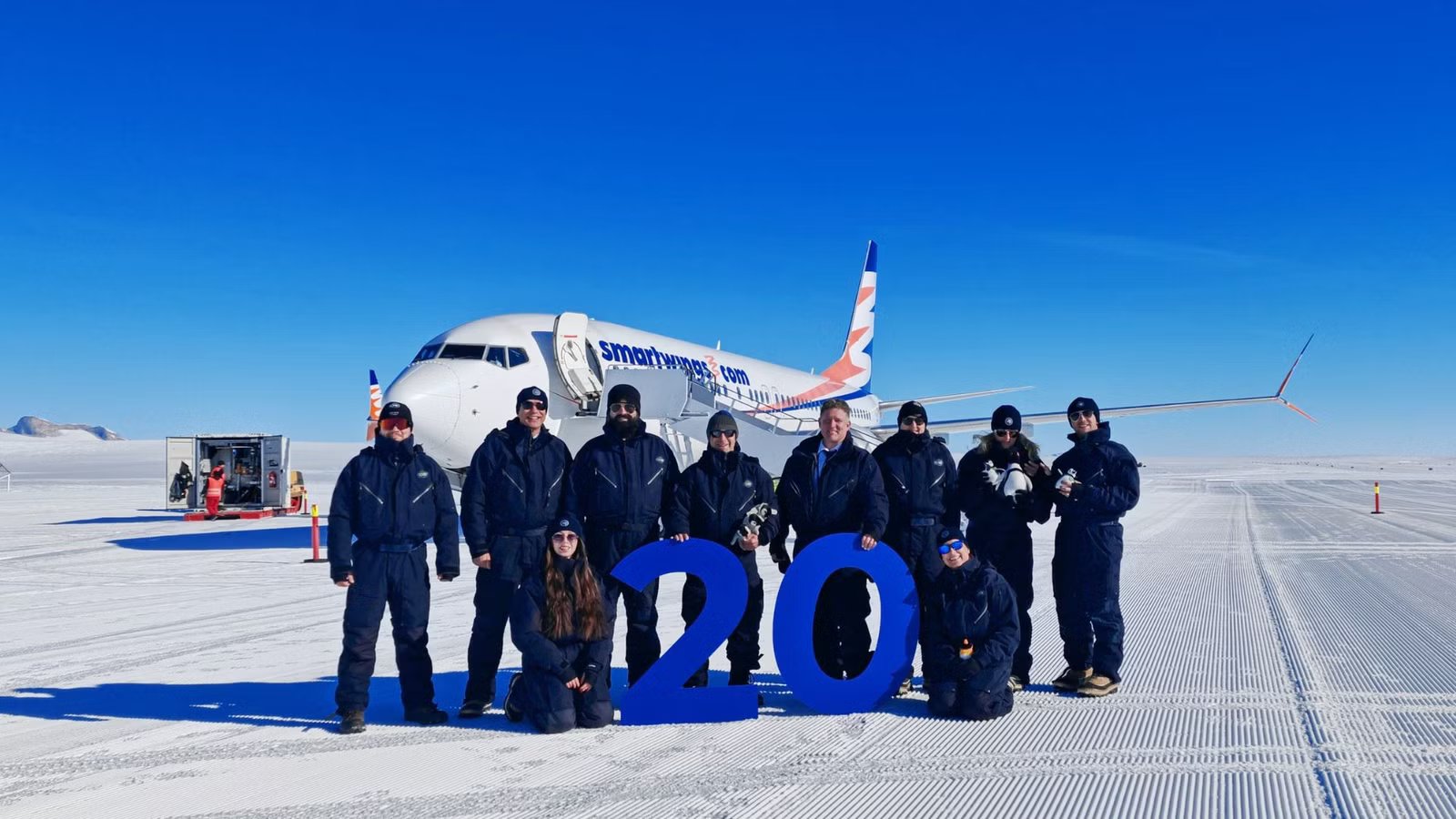
Czech Republic carrier Smartwings has completed its 20th logistical flight to the Troll Antarctic research station using a Boeing 737 MAX 8. The mission, conducted in late February, transported supplies and expedition personnel between Europe, Africa, and Antarctica. After staying in Cape Town, the aircraft flew to the remote Troll Research Station in Queen Maud Land. The complex operation highlights the airline’s growing experience with highly specialized polar aviation missions.
The aircraft, registered OK-SWM, departed on February 23 and followed a multi-stop route across Europe and Africa before reaching South Africa. From there, crews waited for a narrow weather window before flying to the Antarctic base on February 26. Such flights require extensive planning, specialist pilot training, and careful coordination with researchers and logistics teams operating in one of the harshest environments on Earth. The successful mission further reinforces the airline’s position among a small group of civilian operators capable of Antarctic operations.
Smartwings Completes 20th Logistics Flight To Troll Antarctic Research Station

The journey began on February 23 when the aircraft departed Oslo Airport in Norway and flew via Prague, Czech Republic, and Abuja, Nigeria, before arriving in Cape Town early on February 24. This first phase allowed crews to position the aircraft closer to Antarctica while carrying cargo and equipment for the Norwegian research station. After reaching South Africa, the team began preparations for the polar leg of the mission. Weather monitoring and operational checks continued for two days before conditions were deemed safe for the flight south.
In the early hours of February 26, the aircraft departed Cape Town and flew to the ice runway serving Troll Station. Landing in Antarctica requires strict meteorological conditions, including suitable visibility, wind, and surface quality on the ice runway. The aircraft successfully delivered supplies and equipment to support ongoing polar research activities. The mission represented the twentieth Antarctic operation conducted by Smartwings, highlighting years of experience in this specialized niche of aviation. A spokesperson told Simple Flying:
“These missions require a high level of pilot expertise, meticulous preparation, and the trust of clients who turn to the company to solve unique logistical challenges. The entire operation was another proof of the professionalism of the flight and ground crews and their ability to handle extremely complex and detail-oriented tasks.”
Boeing 737 MAX 8 Waited In Cape Town For Narrow Weather Window

After landing successfully, the aircraft remained overnight at the Troll base. This stop allowed the crew to rest while also preparing the aircraft for the return journey north. On the afternoon of February 27, the Boeing 737 MAX departed Antarctica carrying members of a polar expedition. The flight returned to Cape Town before continuing back through Africa and Europe.
Operating commercial aircraft in Antarctica is extremely rare due to the continent’s unpredictable weather, lack of infrastructure, and strict environmental protections. Only a limited number of aircraft types and crews are certified or experienced enough to attempt such flights. Logistics operations often rely on specially prepared ice runways and short weather windows to complete missions safely. As a result, each successful flight represents a significant achievement in both aviation planning and polar logistics.
Smartwings have played an important role in supporting research activities at Troll Station in recent years. The Norwegian Polar Institute operates the Norwegian base and serves as a hub for scientific work in East Antarctica. Deliveries of supplies, equipment, and personnel are essential for maintaining year-round operations at the remote facility.

A Frigid First: Hi Fly Makes A Historic Landing In Antarctica
The European charter specialist has been flying to Antarctica for five straight years.
Czech Carrier Continues Building Experience In Rare Antarctic Aviation Missions

In January 2022, Smartwings made aviation history by becoming the first airline to land a Boeing 737 MAX in Antarctica. The achievement highlighted the aircraft’s ability to operate in some of the world’s most isolated environments when supported by detailed planning and specialized procedures. Since that milestone, the airline has continued refining its approach to long-range charter and logistics missions serving polar regions. The latest operation further demonstrates the carrier’s growing expertise in complex Antarctic flying.
Flights to Antarctica are likely to remain primarily limited to charter operations rather than scheduled commercial services. Research institutions and national polar programs typically contract aircraft capable of transporting both cargo and personnel across vast distances. As scientific activity on the continent expands, operators with proven polar experience may play an increasingly important logistical role. Airlines such as Smartwings help bridge the gap between remote research facilities and the rest of the world.
The successful completion of February’s mission highlights the extensive coordination required to support research operations in Antarctica. Every stage of the flight, from weather monitoring to crew preparation, must be carefully managed to ensure safe operations. For Smartwings, the twentieth flight to the Troll Research Station marks another achievement in a highly specialized area of aviation.