dailynewsnblog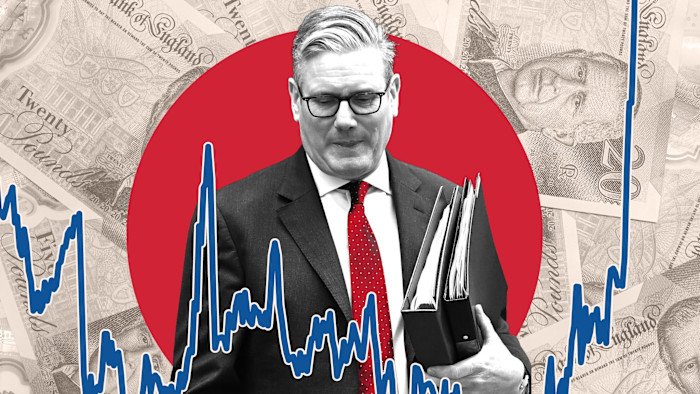
Sir Keir Starmer started 2026 vowing to bend the entire machinery of Whitehall towards tackling Britain’s cost of living crisis.
Downing Street strategists said they believed the prime minister’s focus on household finances would get a “fair wind” from further interest rate cuts and measures by Donald Trump to push down the global price of fuel ahead of midterm elections in the US.
But that ambition has been left teetering by US-Israeli strikes on Iran since last weekend, which have sent oil and gas prices soaring and dashed hopes for Bank of England rate reductions.
At the same time, the centrepiece of Starmer’s approach on foreign policy — hugging the US president close — looks damaged by his more cautious approach to the Middle East conflict.
“Every time we think we’ve managed to take a few steps forward we’re being knocked back three steps,” one minister said this week.

In a push to deliver “positive change” for voters, Starmer and chancellor Rachel Reeves have recently set out various “cost of living” measures such as lowering annual household energy bills by £150.
But those efforts could be overwhelmed if the Iran war drags on, constraining gas production by big exporters such as Qatar.
With petrol prices rising, some analysts have estimated that regulator Ofgem’s energy price cap could jump by as much as £500 from July.
Ministers and officials are already thinking about what support could be needed to shield households from higher gas prices, which threaten to impede the BoE’s efforts to return inflation to the 2 per cent target.
In September 2022, Liz Truss, then Conservative prime minister, spent more than £100bn on a scheme to limit energy bills after Russia’s full-scale invasion of Ukraine that year caused a sharp rise in wholesale costs.
In Tuesday’s Spring Statement Reeves presented forecasts from the Office for Budget Responsibility that showed inflation would fall faster than had been expected in the autumn, and pledged to deliver “stability”.
But the fiscal watchdog’s projections came with a warning: “Conflict in the Middle East, which escalated as we were finalising this document, could have very significant impacts on the global and UK economies.”
Starmer is meanwhile being criticised by both left and right over his handling of the war.
Zack Polanski, leader of the leftwing Green Party, which beat Labour in the Gorton and Denton by-election last week, has urged him to condemn the conflict and stop the US using British air bases to launch strikes.
Conservative leader Kemi Badenoch and Reform UK leader Nigel Farage have hit out at Starmer’s refusal to let Trump use those bases for the initial strikes against Iran.

Differences of opinion at the top of government emerged after the Spectator reported Starmer clashed with Reeves, energy secretary Ed Miliband and foreign secretary Yvette Cooper at a meeting of the National Security Council last Friday.
In the meeting the trio of cabinet ministers raised concerns about allowing the US to use British military bases, even to defend allies from Iranian counterstrikes.
Consensus was achieved at a later NSC meeting on Sunday, and the UK has since given permission for the American military to use British bases to hit Iranian missile storage depots and launchers, citing self-defence of British nationals and interests in the region and support for Gulf allies.
But government figures said the episode demonstrated Starmer’s lack of a firm hand, with one acknowledging that the UK had been “slow” in its defence and consular responses to the conflict.
Another official said there was “frustration” about how the week had played out and that Air Chief Marshal Sir Richard Knighton, chief of the defence staff, was coming under scrutiny for the military options presented to Number 10.
Ministers had landed in the right place on policy but “they know they’ve got it all wrong in terms of presentation” to allies, the official added.

A Downing Street official said they did not recognise the complaint about Knighton and a second official defended his input.
Lord Peter Ricketts, former national security adviser, said criticism of Starmer “for ‘damaging’ the special relationship” was “completely unjustified”.
But he added that the two-week delay to deploy a British warship to the region was “deeply embarrassing” and revealed a “failure” in planning, since conflict was foreshadowed for weeks.
Some Labour figures have been reassured by polling this week suggesting little appetite among voters for more active participation in the conflict. Only 8 per cent of Britons backed the UK becoming a party to the war, according to research company YouGov.
Labour MP Noah Law said the governing party was “actually pretty united that the prime minister has handled this well and kept a cool head in what’s been a volatile situation”.
One House of Commons select committee chair said most Labour backbenchers thought Starmer had “got it absolutely right” on handling the war.

“There is utter repulsion for the Iranian regime but to prosecute a war with this level of violence with no clear objective, no exit plan, has left most colleagues recoiling,” they said.
Farage, whose party is leading in national opinion polls, is likely to try to exploit tensions between Trump and Starmer when he travels to the president’s Mar-a-Lago resort in Florida on Friday.
The Reform leader has pledged to reiterate his concerns over the government’s deal to hand sovereignty of the Chagos archipelago to Mauritius and then lease back the island of Diego Garcia, which hosts a crucial joint UK-US military base. Trump initially endorsed the agreement but has since branded it an act of “great stupidity”.
One Labour colleague said Starmer’s decision not to allow the US to launch the initial strikes on Iran from British bases had been a significant political moment, “but the PM doesn’t seem to be taking much credit for it because everyone is annoyed with him”.
Anthony Wells, head of politics at YouGov, said Starmer’s unpopularity meant the baseline for the public’s assessment of his effectiveness on the domestic or international stage was already low. More than 50 per cent of Britons believe he is managing the relationship with Trump badly.
“If the question is ‘Did Starmer get out of bed well?’, 60 per cent will say no,” he said.