dailynewsnblog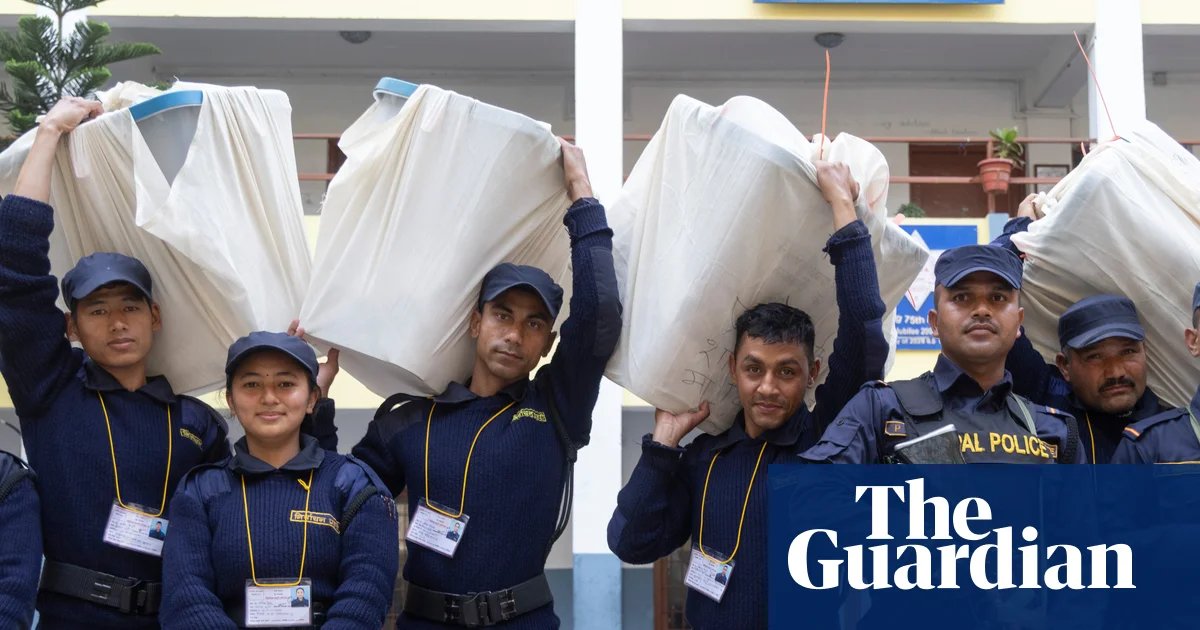
Nearly six months after a wave of unprecedented gen Z-led protests forced Nepal’s then prime minister to quit, people have voted in a general election that is shaping up to be a high-stakes showdown between the entrenched old guard and a powerful youth movement.
“The voting process has been concluded peacefully and enthusiastically,” said the chief election commissioner, Ram Prasad Bhandari. It appeared the turnout was only about 60%, according to initial estimates, the lowest in more than two decades.
Some winners are expected to be published as early as Friday, but full results may take several days.
Due to Nepal’s electoral system, analysts say the vote is unlikely to deliver a outright majority for any single party and coalition negotiations are expected to take place as the results come in.
Key figures contesting the election include the Marxist former prime minister seeking a return to office, a rapper-turned-mayor targeting the youth vote, and the newly elected leader of the powerful Nepali Congress party.
It was the first election since the September 2025 uprising, in which at least 77 people were killed, and parliament and scores of government buildings were torched. The youth-led protests began as a demonstration against a brief social media ban, but were fed by wider grievances at corruption and a woeful economy.
Anger at the government’s handling of the protests, which resulted in police opening deadly fire on demonstrators, forced four-time prime minister KP Sharma Oli and his Marxist government to step down. Over the past six months, the country has been run by a non-political interim government, led by the former chief justice Sushila Karki.
On Thursday, Karki urged people to vote “without any fear”, as thousands of soldiers and police were deployed at polling centres.
The election frontrunner was widely considered to be Balendra Shah, known as Balen, a former rapper who pivoted to politics three years ago to become the popular mayor of Kathmandu.
The 35-year-old, running for the centrist Rastriya Swatantra party (RSP), had cast himself as the face of the gen Z movement and calls for corruption-free politics. He had highlighted health and education for poor Nepalis as a key focus of his campaign, as well as job creation for the young.
His biggest challenger was Oli, the 74-year-old ousted as prime minister last year, who was seeking a return to power for a fifth time. Balen had opted to run in Oli’s constituency of Jhapa-5, on the border with India, in order to directly challenge the veteran politician.
As a result, the constituency became the centre of the election and its 163,000 voters will determine whether Oli secures his seat or whether Balen enters parliament.
“So many people, including gen Z, sacrificed their lives,” said Shiv Shrestha, 57, who will vote in the Jhapa district.
“There has to be change. Corruption must stop, and more employment opportunities should be created here in Nepal. What happened last year should not happen again.”
Also in the race to be prime minister is Gagan Thapa, 49, the new head of the country’s oldest party, Nepali Congress, who has also pitched himself as a fresh face for Nepali politics.
In the aftermath of the protests, the election has had a wave of younger candidates promising to tackle Nepal’s woeful economy, challenging veteran politicians who have dominated for decades and argue that their experience guarantees stability and security.
Whoever takes power will inherit daunting challenges. They must deliver on the high expectations for change demanded by last year’s youth protests, tackle entrenched corruption and carefully manage ties with Nepal’s powerful neighbours, India and China.
Nepal’s mountainous terrain presents logistical challenges in transporting the ballot boxes after the voting ends. Helicopters have flown voter materials to snowbound mountain regions across the country, which is home to eight of the world’s 10 highest peaks, including Mount Everest.
“We are so hopeful,” said Sashi Gurung, 33, who voted in Kathmandu. “This election is not a normal election. This is going to be one of the changing points for Nepalis, for Nepal.”