dailynewsnblog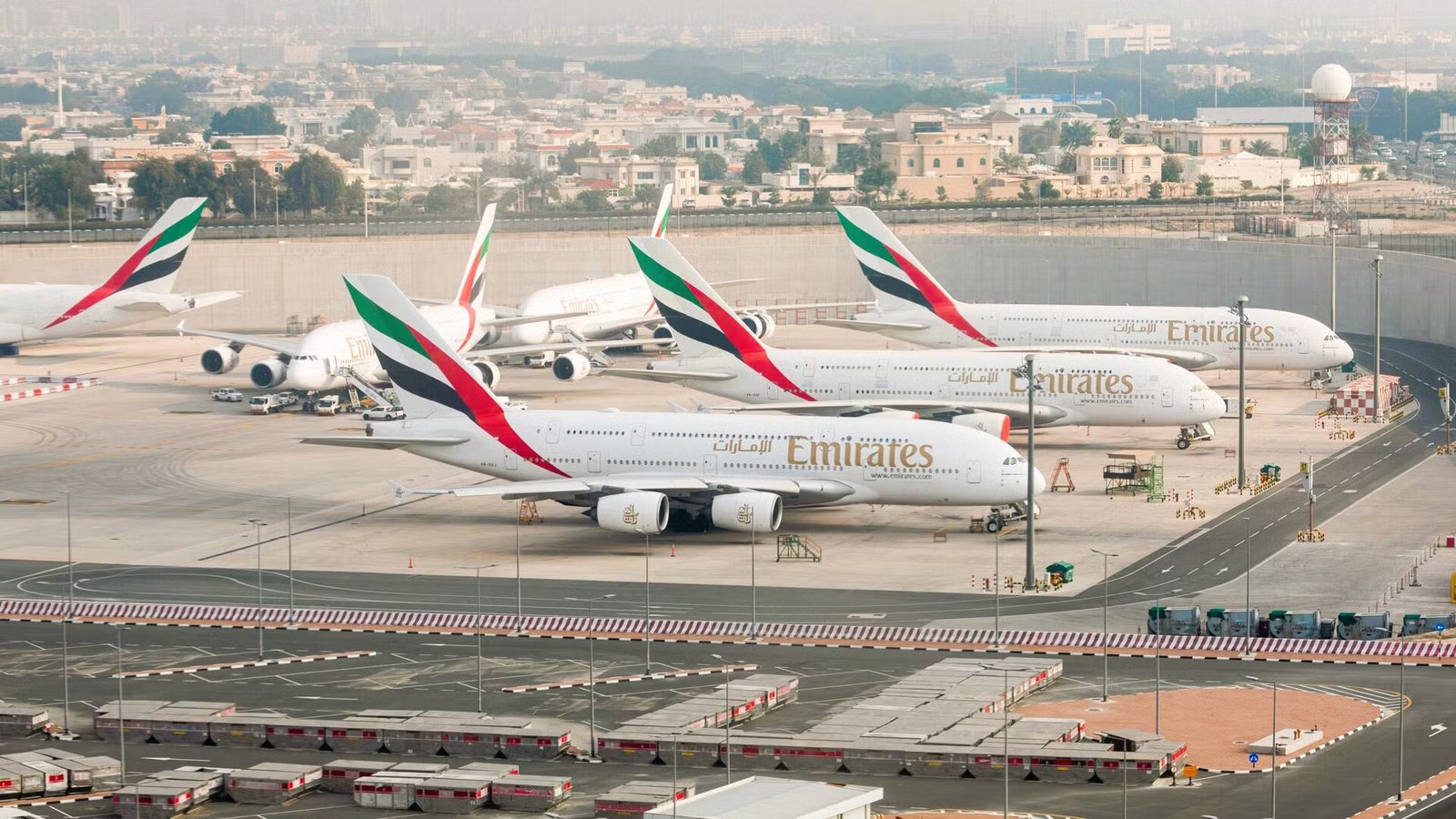
One billion dollars. That’s the cost-to-date in lost revenue to the Gulf carriers since the first United States – Israel strikes on Iran that began on February 28. These triggered retaliatory attacks and an immediate aviation crisis as large swathes of Gulf airspace were closed, major hubs went dark, and airlines scrambled to run only what could be safely cleared through ad-hoc “corridors” and repatriation missions.
For the Gulf’s airline giants, this is the nightmare scenario. Their business model depends on banked connections at mega-hubs, moving the world through airports like  Dubai International Airport,
  Doha Hamad International Airport, and Abu Dhabi International Airport. So when those hubs stop functioning, revenue doesn’t just soften; it falls off a cliff.
Flightradar24 data cited by Reuters shows more than 7,000 flights a day canceled across the Gulf’s major airports, leaving hundreds of thousands stranded. Against that backdrop, the run-rate look at historical revenue shows that the major Gulf carriers combined are bleeding over $200 million per day in lost revenue. With costs now having exceeded $1 billion, the prospect of a weeks-long war could be financially devastating to some of the world’s most prominent airlines.
Airspace Closures Freeze Gulf Hub Schedules

Nearly a week after the first bombs began falling in Tehran, the major Gulf airports remain closed or severely constrained. The United Arab Emirates has been the first to ease restrictions slightly, with Dubai, Abu Dhabi, and Sharjah operating in limited, tightly controlled modes today. Dubai, the region’s busiest airport, is letting a managed trickle of flights run again, with  Emirates saying about 100 flights will operate via controlled corridors to/from DXB over the next two days.
Down the road at Sharjah International Airport, limited operations are possible, but Air Arabia, which operates the vast bulk of operations, has extended its suspension of flights until March 9. Meanwhile, Abu Dhabi’s Zayed International has also resumed limited operations, but  Etihad Airways has still suspended flights until tomorrow at the earliest. Both these examples show how even with the airport partially open, the primary carriers remain paused.
Airport | Status (March 5) | What That Means Operationally |
|---|---|---|
Abu Dhabi (AUH) |
Limited operations | Limited operations, but Etihad has extended its flight suspension until March 6. |
Bahrain (BAH) | Suspended | Gulf Air operations remain suspended due to Bahrain airspace closure. |
Doha (DOH) | Suspended | Qatar Airways operations remain suspended due to Qatari airspace closure. |
Dubai (DXB) | Limited operations | Emirates says about 100 flights will operate in/out of Dubai over the next two days. |
Kuwait City (KWI) | Suspended | Operations suspended without a timeline for service resumption given. |
Sharjah (SHJ) | Limited operations | Limited operations, but Air Arabia has extended its flight suspension until March 9. |
Doha remains the biggest hard stop.  Qatar Airways says operations remain suspended due to the closure of Qatari airspace, with only limited relief flying being organized outside the normal Doha hub-banking system. Further north, service at Bahrain International Airport and Kuwait International Airport is also suspended due to airspace closures, with very limited movements focused on carrying stranded travelers and returning nationals rather than normal commercial schedules.
The Math Behind A Billion-Dollar Revenue Hit

These airport closures and the thousands of canceled flights are having a massive financial impact on the Gulf carriers, which is growing with each passing day. Looking at each carrier’s most recent reporting of revenue, and calculating their average daily “run-rate” revenue, the estimated daily cost to the seven largest Gulf carriers in lost revenue exceeds $200 million. For every week that goes by, the impact will be close to $1.5 billion.
Airline |
Avg. Daily Revenue (millions) |
Avg. Weekly Revenue (millions) |
|---|---|---|
Emirates |
$97.6 |
$683.2 |
Qatar Airways | $66.1 | $462.7 |
Etihad | $23.0 | $161.0 |
flydubai | $10.1 | $70.7 |
Air Arabia | $6.8 | $46.7 |
Gulf Air | $4.5 | $31.5 |
Kuwait Airways | $3.1 | $21.9 |
Total | $211.2 | $1,478.6 |
Of course, there are some caveats to this. The numbers are a calculated average, and seasonality could mean that the real lost revenue figures are marginally higher or lower. And as limited flights resume, as they are with Emirates, and as revenue from deferred travel comes in (people rebooked to travel later), the impact will soften.
But the headline remains the same: the Gulf carriers are seeing hundreds of millions of dollars evaporate daily, and Emirates alone will have lost over $1 billion in revenue by the time the weekend is out. Even once relatively normal operations resume — and there is no clear timeline for that — and the airlines can slow the bleed, they will run into a whole new wall of costs. Because when a hub model breaks, it means broken connections, missed cargo uplift, aircraft and crews in the wrong place, and a network that takes weeks to stitch back together.

Terminal Chaos: Thousands Sleep In Airports As Middle East Hubs Remain Crippled
The region’s air travel infrastructure has come to a halt.
The Real Costs Beyond Lost Revenue

Lost revenue is the headline. The cash costs are the slow bleed that the Gulf carriers will feel for weeks and months. The most immediate is their duty of care to the hundreds of thousands of stranded passengers across the region. While the Gulf states and their carriers have responded quickly and decisively in providing shelter, the daily cost for hotels, meals and transport could easily run to more than $300 per passenger. Do the math: that’s tens of millions of dollars of additional daily costs.
The Gulf carriers are also major cargo players, evident in the fact that the conflict has caused a 22% global reduction in air cargo capacity, a further financial hit to the airlines. And then there are the hundreds of millions of dollars of operational costs to fix the mess nobody sees on a departure board: aircraft and crews stranded out of position, widebodies parked overseas with handling and parking costs, and schedules that take weeks or even months to stitch back together.
And let’s remember that while the focus is on the carriers of the region, this isn’t a Gulf-only problem. Reuters has noted that carriers like  Singapore Airlines, Cathay Pacific, and Thai Airways have been strained by demand shifts and increased costs due to longer routings on Asia–Europe traffic flows. Earlier today, Simple Flying’s interview with Ahmed Bolat, Chairman of Turkish Airlines, revealed that the carrier has had to “pause Middle East flights constituting 6% of capacity and revenue,” while Wizz Air warned of a $58 million profit hit tied to the crisis.
But for now, the spotlight will remain on the airlines in the region that are feeling the biggest impact. The dark irony is that the Gulf airlines have built their empires by turning geography into a competitive advantage. This week is what it looks like when geography turns into a trap — and when the world’s connector hubs suddenly become the world’s biggest bottlenecks.

![17-Hour Nonstop Flights: Delta’s 11 New Ultra-Long Routes Revealed [Full List]](https://dailynewsnblog.com/wp-content/uploads/2026/07/1111-1.jpg)