dailynewsnblog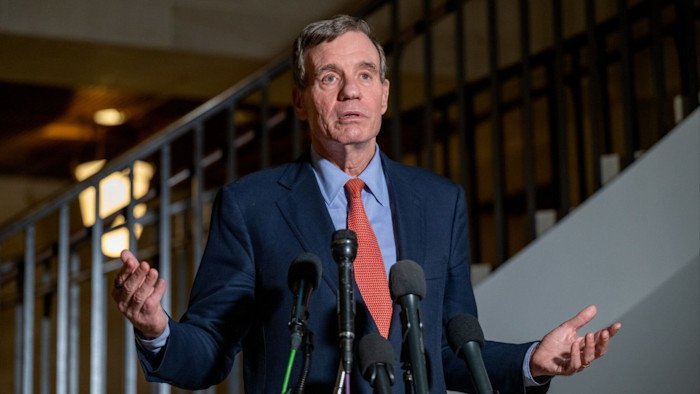
This is an on-site version of the White House Watch newsletter. You can read the previous edition here. Sign up for free here to get it on Tuesdays and Thursdays. Email us at whitehousewatch@ft.com
Good morning and welcome to White House Watch. In today’s edition, we’ll be looking at:
Growing alarm over the lack of an Iran endgame
Whether the Supreme Court ruling will help tariff challenges in the Court of International Trade?
How JD Vance is navigating the Iran war
The US Senate yesterday rejected a resolution to compel Donald Trump to stop military action against Iran without congressional authorisation.
But the victory for the White House on Capitol Hill belied the reality of deepening concern in Washington that Trump has launched a spiralling war in the Middle East without any vision for what comes next.
“This is madness and we don’t even know what the administration’s plan is,” Chuck Schumer, the top Democrat in the upper chamber of Congress, said in a speech on Wednesday. “We still don’t know how long we’ll be there, we still don’t know what Donald Trump is trying to accomplish.”
Speaking to the FT for this piece by Abigail Hauslohner and Lauren Fedor, Mark Warner, the Virginia Democrat and vice-chair of the Senate intelligence committee, issued a stark warning about the lack of a “phase two” plan.
“I have never had, from any of the briefings, any description of what phase two would be,” he said. “One of the concerns that we’ve had is not having a lot of visibility into the Iranian resistance.”
One Republican senator added: “I don’t know that the administration could have possibly thought it through.”
The worry about the lack of any post-war vision for Iran comes as the administration is already facing pressure to explain why it went to war in the first place. Karoline Leavitt, the White House press secretary, insisted that Trump acted based on a “feeling” that Tehran was going to strike US interests first, and had to be pre-empted, an explanation that raised plenty of eyebrows.
Meanwhile, the FT’s Steff Chávez reports that Pete Hegseth, the US defence secretary, refused to put any timeline on the war. “Iran cannot outlast us . . . you can say four weeks, but it could be six, it could be eight, it could be three. Ultimately, we set the pace and the tempo,” Hegseth said in a briefing. Elbridge Colby, the senior Pentagon official, added during a conference yesterday that Trump was “not going to be bound by the sort of conventional wisdom parameters” when it came to implementing any plan to follow the end of hostilities.
So far, Trump has been very cagey about identifying any Iranian leader, whether a regime moderate or an exiled opposition chief, that he would like to run the country’s government once the US stops bombing. The US president has also said that some of the top candidates for the job had been killed in the US and Israeli strikes.
The Trump administration has said US troops on the ground in Iran are not “part of the plan” for now, but when asked how Trump viewed America’s role in post-conflict Iran, Leavitt on Wednesday said it was still being debated.
“It’s something the president is actively considering and discussing with his advisers and his national security team. But, again, right now, the focus, minute by minute, hour by hour, day by day is on ensuring the quick and effective success of Operation Epic Fury,” she said.
The latest headlines
Datapoint
In our Thursday newsletter, Ian Hodgson’s Datapoint gives readers a visual representation of the issues driving US politics, from trade to the economy, political donations and beyond.

Last week, Stefania Palma and I wrote about the Supreme Court striking down Trump’s IEEPA tariffs — and how the decision has already triggered a rush of refund suits at the US Court of International Trade (CIT), the specialist court that hears federal trade disputes.
Since the justices agreed to hear the IEEPA case, more than 2,000 importers have sued in the CIT seeking their money back, spawning a cottage industry of law firms offering to recover the $175bn in duties from 300,000 US importers.
But this IEEPA surge is only the latest wave. A bigger one hit the same court in response to Trump’s China tariffs during his first term — and, in a post-IEEPA world, that older litigation suddenly matters much more.
In 2018, the US Trade Representative used Section 301 of the Trade Act — after a formal investigation — to impose 25 per cent duties on roughly $50bn of imports from China. The petitioners in one of the lead challenges, HMTX Industries, say the agency then used a streamlined “modification” provision to expand the tariffs 10-fold, ultimately reaching up to $550bn of imports — most of the US-China trade portfolio.
More than 4,200 importers filed copycat complaints at the CIT. And federal courts have upheld the government’s ability to “modify” the tariffs.
Last month, HMTX asked the Supreme Court to review that ruling, arguing that “modification” cannot mean an unlimited power to escalate tariffs without the safeguards Congress built into Section 301.
Pratik Shah, lead counsel for the challengers in both the IEEPA case and HMTX, said the timing — the HMTX petition landed on the same day the court struck down the IEEPA tariffs — was “completely coincidental”. But the ruling on IEEPA raises the stakes for the older fight: “Given that the Supreme Court has struck down the IEEPA tariffs and the administration is pivoting to Section 301, the question presented in HMTX becomes hugely consequential,” Shah said.
The HMTX case tests how far officials can widen those tariffs after the fact, and Trump’s administration has said it plans to pivot toward Section 301 once the president’s temporary tariffs expire.
US Trade Representative Jamieson Greer said on Tuesday that the Section 301 investigations would be completed within the next five months.
“Under the Federal Circuit’s decision, the administration has virtually unlimited authority to play around with tariffs once they’re initially imposed under Section 301,” a person familiar with the cases said. “The problem is the modification provision that gives a roadmap to vastly increase tariffs . . . at the president’s discretion, which is what he’s said he wants to do.”
— Ian Hodgson, FT data reporter
Viewpoints
Recommended newsletters for you
FT Alerts — Important breaking news plus exclusive FT scoops and investigations. Sign up here
US Top Stories — The latest US top stories, from markets to geopolitics. Sign up here