dailynewsnblog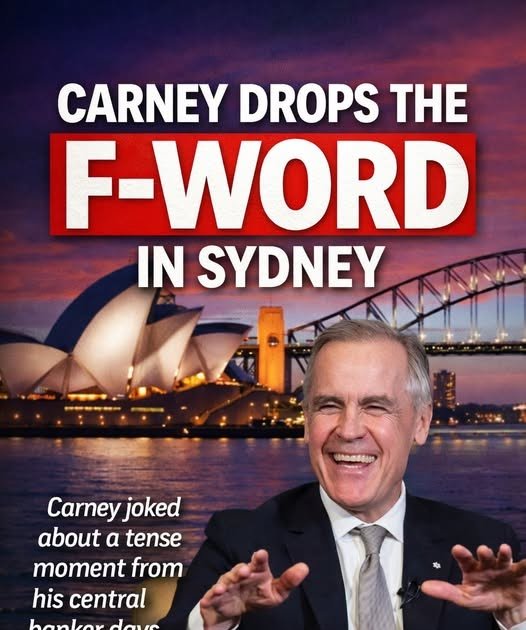

With Carney traveling make friends and influence more trade agreements, I have seen several good comments and interviews that I want to share.
…Prime Minister Mark Carney, very quickly out of the gate, endorsed this military action. Should he have?
This is a complicated question. I don’t say this as a value judgment, just as an empirical matter, but with the radicalism of the change in foreign policy that Carney has brought, Carney is the least Pearsonian prime minister in Canadian history.
The Carney view is, while Canada spent much of its existence as a nation under the protection of the superpower of the day — first Great Britain, then the United States — under that protection, Canadians never had to worry much about their own security. That was somebody else’s job. So Canadian foreign policy could focus on values.
Carney is now saying, Canada has lost its superpower protector, for the first time since 1867. And in that world, Canada must act in a much more cold-blooded and amoral way. And that’s why it must forgive India for committing assassinations on Canadian soil. It must forgive China for interfering in Canadian elections and brutalizing Chinese Canadians on Canadian soil. And it must accept the American intervention in Iran, because those are all things that are important to those much greater powers, and Canada needs to navigate between India, China, and the United States in a world in which Canadian security is much less secure than it ever has been before, and there’s no room in this complicated equation for Pearsonian talk. Canada is out of that business forever.
That seems to be what he’s saying, and it’s very radical.
Let’s pivot to what you see happening on Canadian-American relations. A lot of our politicians are trying very hard to influence this administration, everything from Premier Doug Ford’s commercials featuring former president Ronald Reagan, to Conservative MP Jamil Jivani visiting his old friend the vice-president JD Vance. Is there any evidence that any of that is working?
Well, the fact that it doesn’t work doesn’t mean you shouldn’t do it.
Canadians are not wrong to use the tried-and-true methods first. Politics is extremely hard, and the fact that things don’t work doesn’t mean you are foolish to try them. It’s worth the effort.
And it was also worth taking the measure of how much of Trump’s hostility to Canada was just bluster, and how much of it was settled implacable malice. I think it’s the latter.
And it has taken time for Canadians to accept that that could be true, because it’s so different. It’s so shocking. Canada has a whole history that goes back to the meeting between Franklin Roosevelt and Mackenzie King at Ogdensburg (New York) in the ‘30s, where Roosevelt said an attack on Canadian territory will be (considered) an attack on the United States. It’s America’s first permanent security guarantee to any country. And now that logic has changed, and it’s hard to adjust.
Many people up here wonder whether we should be expending so much effort on a renewed trade agreement with the U.S., because they fear even if he signs it, Trump won’t adhere to it anyway. What’s your view?
As scary and threatening as Trump is, he has one thing in common with every other previous president, which is, he starts with a bucket of minutes, and every day he spends the minutes, and they never return. And as you spend the minutes, the president almost always gets weaker.
So, the longer Canada postpones agreements with Trump, the better Canada will do.
Now Carney is in Australia – here are some of the best interviews and speeches.
First, that f-bomb — which in the clips now is barely heard. Darn it!:
In which Mark Carney drops the F bomb while talking about having drank too much wine 😅
(they muted it out for youtube of course *eye roll* it was more of that whispered fuck as opposed to loud dropping it)
www.youtube.com/shorts/Z6vWP…
[image or embed]
— Krista D. Ball: Canada’s Mean Potato (@kristadb1.bsky.social) March 4, 2026 at 2:07 PM
His was bigger!
The address to Parliament:
TLDW: some good lines-
“Canada’s founding insight is that unity does not require uniformity; that we can share a country without conforming to a single identity; that our differences, honestly acknowledged and respectfully navigated, are a source of strength.”
“As that integration is weaponized, this creates fundamental vulnerabilities. In response, Canada’s strategic imperative is to build sovereign capabilities in these critical sectors at home and in coalition with trusted, reliable partners like Australia, to ensure that integration is never again the source of our subordination.”
“Australia and Canada have never waited for others to write our futures; we’ve written it ourselves through a century of choices”
“We may look to different skies — the North Star in our hemisphere, the Southern Cross in yours — but we have the same orientation. We share a common heritage, have developed a common perspective and can build a common future,” Carney said.
www.cbc.ca/news/politic…
[image or embed]
— I. Pappas (@i-pappas99.bsky.social) March 5, 2026 at 12:23 AM
And here are those firefighters that Carney was thanking:
Canadians are freaking out and furious at Carney’s comment in that last clip about “not categorically ruling out Canadian participation”.
But I think media and politicians are seizing on this remark to create some panic. It is clear, I think, from the clip that Carney was answering a hypothetical question, and that he is is talking about defending only Canadians or “our allies” – and then he gestures at Australian prime minister Albanese.
But the hysteria now just shows why politicians should NEVER answer hypothetical questions. Ever!
Speaking in Australia, Carney said he would “never categorically rule out” Canadian military involvement in defending allies from Iran, but added it’s distinct from offensive actions being taken by the US/Israel. “We will always stand by and defend our allies when called upon”
— Brian Platt (@brianplatt.bsky.social) March 4, 2026 at 7:35 PM
Finally — yes, do let’s work on this: