dailynewsnblog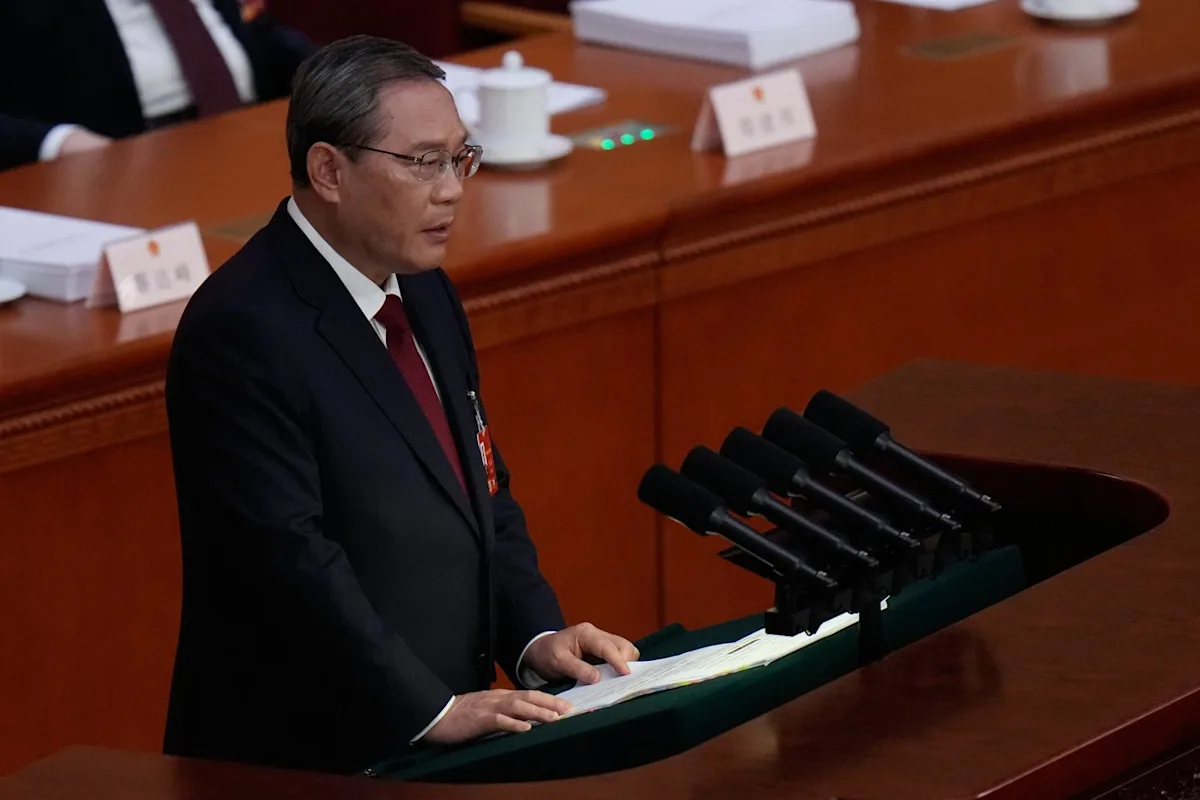
BEIJING (AP) — China signaled continuity rather than change for its economy, announcing Thursday a slightly lower target for growth this year in the midst of a property slump and other headwinds at home and growing uncertainty abroad.
Premier Li Qiang announced a target of 4.5% to 5% annual growth in his report presented to the opening session of this year’s meeting of the National People’s Congress. That compares to actual 5% growth last year and a target of about 5% in the three years before. It’s the lowest growth target since 1991.
“While recognizing our achievements, we are also clear-eyed about the difficulties and challenges we face,” Li said, reading much of the 35-page report in a more than hourlong address.
China’s leaders are striving to balance pursuit of two goals: reviving the flagging economy by boosting domestic spending while also furthering top leader Xi Jinping’s ambitions to build China into a global leader in AI, robotics and other advanced technologies. In line with the government’s approach in recent years, the annual report Thursday indicated it would continue to support domestic demand but not unleash any major new stimulus to boost growth in the short term.
China faces “a grave and complex landscape”
In its draft budget for 2026, the government also trimmed China’s annual increase in defense spending to 7%, down from 7.2% in recent years. The nearly 3,000-member Congress, a largely ceremonial body that endorses policies set by Communist Party leaders, is due to approve the annual report and budget at its closing session next week, along with a five-year plan setting policy priorities until 2030.
China is grappling with tariff wars and actual wars. Like much of Asia, it depends heavily on oil and natural gas from the Middle East, and the war in the Middle East has driven up prices and threatened supplies.
The report said that free trade is under severe threat, noting rising geopolitical risks. At home, it highlighted an “acute” imbalance between strong manufacturing supply and weak demand and the challenge of shifting to new drivers of growth.
“Rarely in many years have we encountered such a grave and complex landscape, where external shocks and challenges were intertwined with numerous domestic difficulties,” Li said in his report.
Boosting consumption will take time
With the domestic economy in the doldrums, China has maintained growth by exporting. Its trade surplus surged to a record of nearly $1.2 trillion last year, though exports to the U.S. fell after President Donald Trump sharply raised tariffs. But the surge in exports to other countries has met pushback from governments worried about their own industries and workers.