dailynewsnblog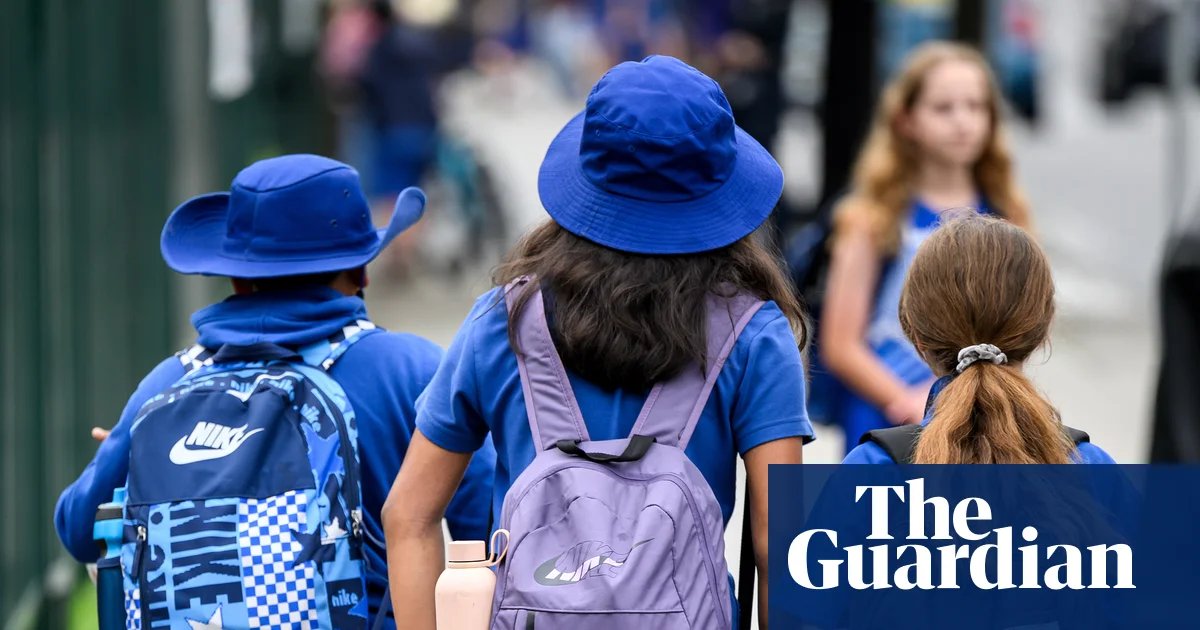
In Sharryn Brownlee’s experience, it’s when their kids reach the final years of primary school that a lot of parents start to ask one another the same question.
“Where are you going to send your kids to high school? Public or private?” she said.
For Brownlee, the president of the New South Wales Central Coast Parents and Citizens Association (P&C), her decision was a no-brainer.
“You think, why would I pay all this money for them to go out of their zone, to have friends that don’t live near them, when you can just as easily go local [to a public school] and be proud of where you are,” she said.
Parents like Brownlee, however, appear to be becoming rarer.
The percentage of students enrolled in public schools has fallen to another record low, as thousands of students fled the system in favour of the private sector, according to Australian Bureau of Statistics (ABS) data released on Thursday.
Over the past 10 years, enrolments in independent schools grew at more than six times the rate of government schools, which went backwards last year for the first time since 2022, Guardian Australia analysis shows.
In total, 4.1 million students were enrolled in schools across Australia in 2025, with 62.8% of them enrolled in government schools, a decline on 63.4% the previous year.
About 20% of students were enrolled in the Catholic system and 17.2% in independent schools, which recorded a combined increase of 21% between 2021 and 2025. At the same time, government school enrolments dropped by 0.4%.
The number of students enrolling in government schools experienced a decrease of 0.2% in 2025, with 6,109 fewer students in the public system compared with 2024. An additional 35,021 students enrolled in private schools during the same period – a 2.3% increase.
Sign up: AU Breaking News email
The Save Our Schools convener, Trevor Cobbold, said the “massive underfunding” of public schools was a key factor in the shift to the private sector.
“The underfunding means that public schools have far fewer human and material resources than overfunded private schools,” he said. “Public schools do the heavy lifting in education but are not being resourced to do the job.”
Only Western Australia, Victoria and the ACT experienced growth in public school enrolments from 2024 to 2025, of 1%, 0.5% and 0.5% respectively. The largest declines were in Tasmania (-1.7%), New South Wales (-0.9%) and SA (-0.9%).
Private schools now account for 38% of students in NSW, up from 30% in 2000, along with 41% in the ACT and 39% in SA.
The chief executive of Independent Schools NSW, Margery Evans, said much of the enrolment growth was in low and mid-fee faith-based schools in Sydney’s fast-growing suburbs including the south-west, Blacktown, Baulkham Hills and Hawkesbury.
“Parents may also be influenced by more practical considerations; more than 85% of independent schools are co-educational and two-thirds combine primary and secondary into one school,” she said. “Many families prefer these types of environments for their child.”
National enrolment analysis by Independent Schools Australia painted a similar picture, with growth strongest in outer metropolitan areas and regional communities, as well as at Christian and Islamic schools and special assistance schools.
Prof Pasi Sahlberg, an educational leadership expert at the University of Melbourne, said the long-term decline government school enrolments had “accelerated” in recent years, indicating confidence in public education “may be under pressure”.
“Australia already has one of the most socio-educationally segregated school systems among advanced countries,” he said.
“Further separation of children into schools characterised by distinct cultural and socioeconomic profiles risks undermining efforts to build social cohesion, inclusion, and mutual understanding through schools.”
For Brownlee, the public education system needs to “tell their successes and what they’re achieving” to draw families back.
“I don’t think they told those stories very well before,” she said. “And I don’t think there was much consistency between every public school – some did much better than others.
“Now [with increased funding] every school is going to be able to do the premier’s debating challenge, every school will have the extras, whereas in the past they didn’t.”
The ABS figures also showed the proportion of students staying in school until year 12 increased annually for the first time since 2017, and student-to-teacher ratios fell to a decades-low of 12.8 students to one teacher.
About 81.3% of students stayed at school from year 7 until year 12, up from 79.9% in 2024 but still below a 2017 high of 84.8%. Retention rates were significantly higher for independent schools (99.1%) than government schools (75.4%).
There were 283,611 Aboriginal and Torres Strait Islander school student enrolments in 2025, 3.2% more than in 2024 and accounting for 6.8% of all students.
The federal education minister, Jason Clare, said the increase in students finishing high school was “good news” but there was “more work to do”.
“That’s what the agreements we’ve signed with every state and territory are all about ,” he said.