dailynewsnblog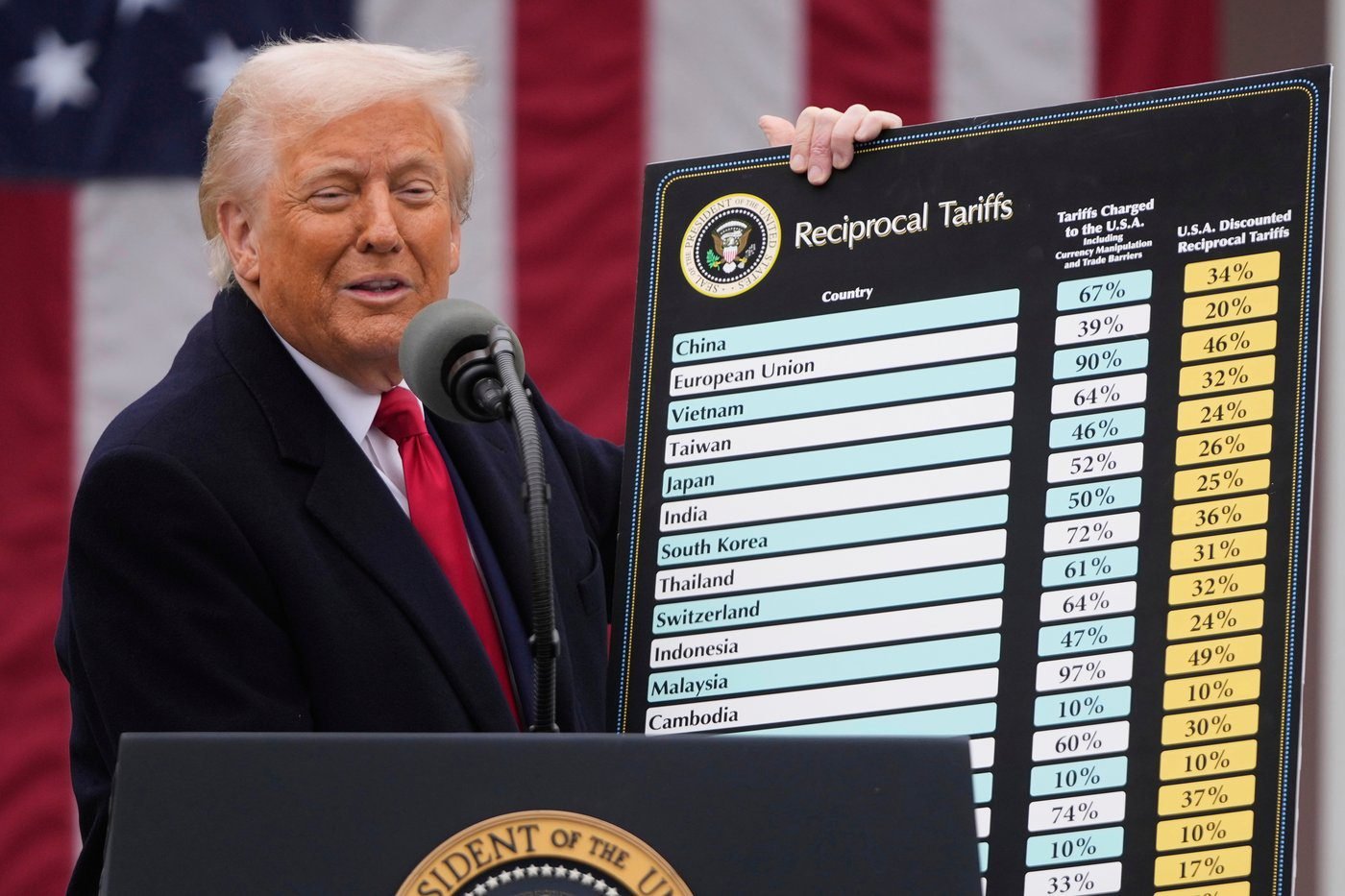
WASHINGTON — A judge with the U.S. Court of International Trade on Wednesday ordered refunds for companies that paid tariffs that were later struck down by the United States Supreme Court.
In a 6-3 ruling last month, America’s top court concluded it was not legal for U.S. President Donald Trump to use the International Emergency Economic Powers Act, better known as IEEPA, for his sweeping and erratic “Liberation Day” tariffs and fentanyl-related duties on Canada, Mexico and China.
The conservative-led court found that the U.S. Constitution “very clearly” gives Congress power over taxes and tariffs.
The Supreme Court ruling did not say whether there should be refunds, leaving companies that paid the duties to sue the federal government.
In Wednesday’s decision in the New York trade court, Judge Richard Eaton said all importers who paid IEEPA duties are “entitled to the benefit” of the Supreme Court’s decision.
Eaton was ruling specifically on a case brought by Atmus Filtration, a filtration company in Tennessee, but said he will be the only judge to hear cases about refunds.
Eaton ordered the Trump administration to finalize import paperwork without charging companies the IEEPA tariffs. If goods are past that process, U.S. Customs and Border Protection will have to recalculate them without the tariffs, Eaton said.
The Liberty Justice Center, which represented five American small businesses that pushed back on Trump’s tariffs, said the decision made it clear that all importers of record hit by IEEPA duties are entitled to refunds.
“This decision is an important step toward ensuring that businesses can recover the money they were forced to pay under tariffs the Supreme Court has now confirmed were imposed without legal authority,” the centre said in a statement on social media.
A coalition of more than 1,000 small businesses called it a victory and called on the Trump administration to act swiftly. Dan Anthony, executive director of the We Pay the Tariffs coalition, said “now the ball is in the government’s court and small businesses are concerned they will drag this out further.”
“American small businesses have waited long enough,” Anthony said in a news release. “A full, fast, and automatic refund process is what these businesses are owed and anything less is unacceptable.”
The White House has not yet responded to a request for comment. It’s unclear if the Trump administration will appeal the order or take other action to slow down the process.
Trump had warned that the Supreme Court’s decision would have catastrophic consequences for the country. After the top court’s decision came down, he said the question of refunds would get “litigated over for the next two years.”
The government had collected more than US$130 billion from the tariffs by mid-December, according to the Penn Wharton Budget Model.
In a court filing Wednesday ahead of the decision, the Trump administration indicated interest would be included if refunds are ordered.
Brandon Lord, a senior official in U.S. Customs and Border Protection’s trade office, wrote that “in accordance with applicable law, any validated refund of IEEPA duties would include interest.”
Lord indicated refunds could take some time because the department “still requires a review period to ensure no violation of other customs laws and no other duties, taxes or fees are owed.”
Some Canadian companies will be waiting on refunds but Canada had largely been shielded by the IEEPA tariffs due to a carveout under the Canada-U.S.-Mexico Agreement on trade, known as CUSMA.
Trump declared an emergency at the northern border related to the flow of fentanyl last year in order to use IEEPA to hit Canada with 35 per cent tariffs. Those duties didn’t apply to goods compliant under CUSMA.
Trump replaced his IEEPA tariffs last week with a 10 per cent worldwide tariff using Section 122 of the 1974 Trade Act. That duty can only increase to 15 per cent and it will expire after 150 days unless Congress votes to extend it.
That global tariff also does not apply to CUSMA-compliant goods.
Additionally, Canada is being hammered by Trump’s sector-specific tariffs on industries like steel, aluminum, automobiles, lumber and cabinets.
This report by The Canadian Press was first published March 4, 2026.
— With files from The Associated Press
Kelly Geraldine Malone, The Canadian Press