dailynewsnblog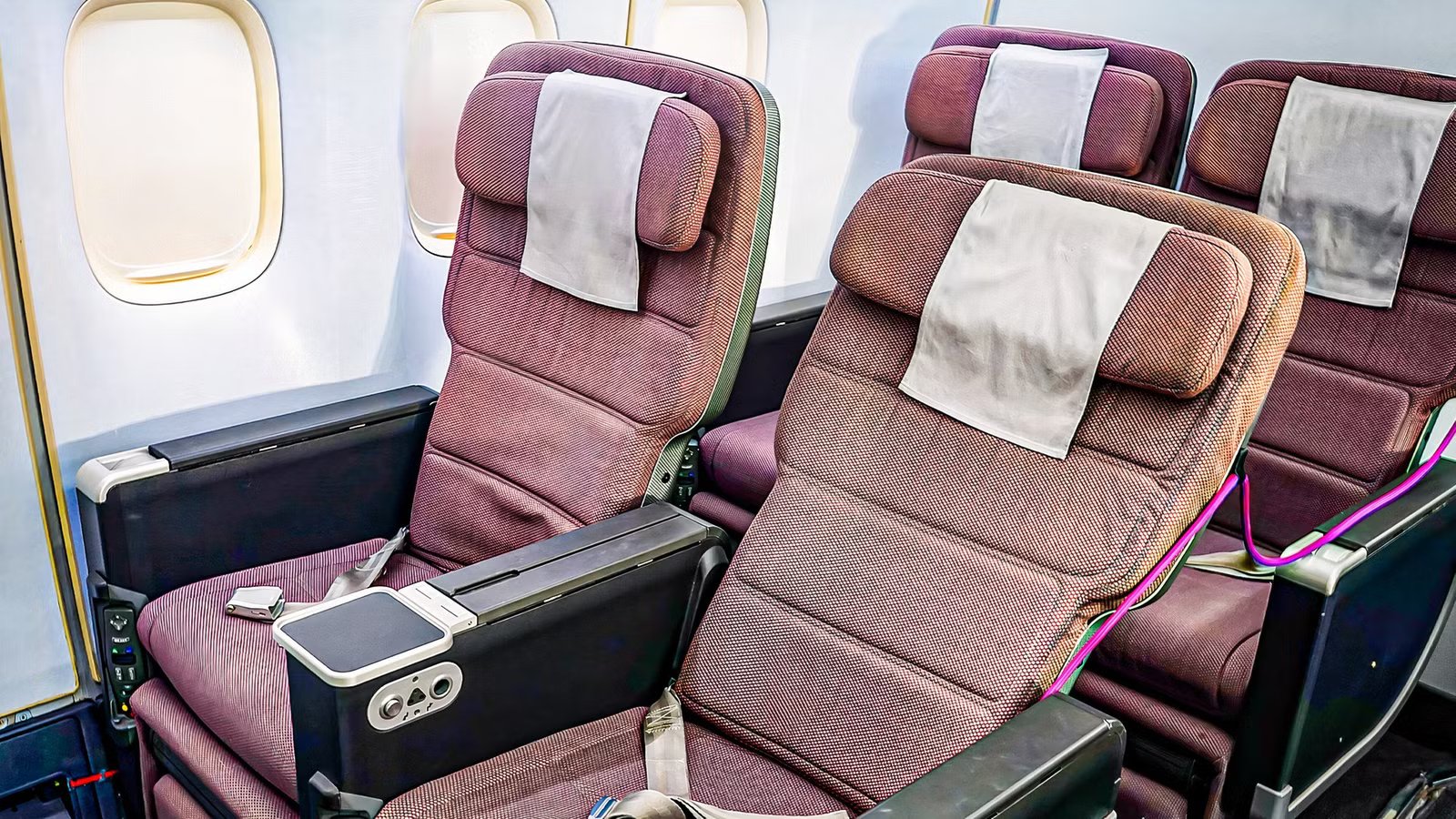
Innovation in aviation is not limited to headline-grabbing technologies like folding wingtips or next-generation engines. Some of the most impactful shifts happen quietly — in business models that reshape not only the passenger experience but the economics of the industry itself. As market conditions evolve, airlines continually adapt their product strategies to remain competitive and financially sustainable. One clear example is the steady global reduction of first class cabins, a trend explored in our coverage of why airlines are phasing out first class.
Once considered a niche experiment, Premium Economy has matured into one of the most strategically imperative cabins in commercial aviation. Once viewed as a modest comfort upgrade for long-haul travelers, it is now a carefully engineered revenue tool that sits at the heart of airline profitability strategies. Positioned between economy and business class, premium economy has expanded rapidly across global fleets and has become a staple offering on long-haul aircraft. Its rise is not accidental. Airlines have spent decades refining cabin segmentation to maximize revenue from every square meter of aircraft real estate. As first class shrinks and business class becomes ever more sophisticated, Premium Economy has emerged as the sweet spot—offering meaningful comfort improvements without the price tag of lie-flat luxury.
It’s Nothing New : The Three-Decade Evolution Of Premium Economy

Premium Economy may feel like a modern response to today’s travel demands, but its roots stretch back more than three decades. In the 1970s, most airlines operated either a single-class configuration or a simple two-class system—first and economy. The introduction of business class by Qantas in the late 1970s reshaped long-haul travel by inserting a middle tier between luxury and affordability. That move proved airlines could successfully segment demand.
The next leap came in 1991 when EVA Air introduced “Evergreen Class” on its Boeing 747-400 fleet. Located in a dedicated cabin ahead of economy, it featured wider seats and a more spacious layout. This was not merely extra legroom—it was a distinct product aimed at passengers willing to pay more for comfort without breaking the bank by flying business.
Soon after, Virgin Atlantic launched “Mid Class”, later rebranded as Premium Economy. By the mid-1990s, the product had been refined and renamed premium economy. Other carriers took notice. Over the next two decades, the cabin concept spread globally, evolving from an experiment into an expected feature on widebody aircraft.
Hybrid-service Carriers?

Traditionally, “luxury” and “comfort” were not words associated with low-cost carriers. However, as more hybrid and low-cost airlines introduce premium economy-style cabins, the decision between a low-cost carrier’s upgraded seat and a full-service carrier’s standard economy seat has become a legitimate comparison.
Take the Seoul Incheon – San Francisco route as an example. The sector is operated by established players like  United Airlines, Korean Air and Asiana Airlines. Yet competing alongside them is Air Premia, which claims to be a “hybrid” airline that offers both full-service and low-cost.
Here’s where the comparison becomes interesting.
|
United Airlines |
Boeing 787-9 |
Economy (31-inches) |
|
Air Premia |
Boeing 787-9 |
Premium Economy (Minimum 42-inches) |
According to Air Premia, its “Wide Premium” seats offer at least 42 inches – nearly business class legroom from a decade ago. Compared to United Airlines’ 31-inch seats, it is quite spacious.
A recent TikTok review of Air Premia’s premium economy cabin gained attention after a passenger shared a straightforward look at the seat features and overall inflight comfort. The clip drew a strong response from viewers, many of whom expressed a positive overall impression of the airline and its product.
While specifications may vary slightly by aircraft, the difference between the two airlines’ classes is substantial. For some passengers, a lesser-known airline’s premium seat may offer more physical comfort than a legacy carrier’s standard economy seat. The trade-off lies in the service ecosystem, alliance connectivity, and frequent flyer benefits. This evolving comparison highlights how premium economy is no longer exclusive to legacy carriers — it is influencing competitive strategy across the board.

Air Premia Adjusts US Network With More Los Angeles Flights
Air Premia expands flights between Seoul and Los Angeles while adjusting Newark services. Honolulu route canceled possible due to competition.
What Premium Economy Actually Offers

American Airlines, Simple Flying
At its core, Premium Economy is defined by two things: seating and service. The most visible difference lies in space. Typical seat pitch ranges from 36 to 38 inches, compared to 30 to 33 inches in economy. Seats are often 1–2 inches wider, with deeper reclines and adjustable leg rests. Larger entertainment screens and consistent access to power outlets are now standard.
Beyond the seat itself, the experience frequently includes priority check-in, priority boarding, additional baggage allowance, better meals, complimentary alcoholic beverages, and amenity kits.
According to Forbes, Premium Economy offers an upgrade in many areas, as seen in the table below.
|
Premium Economy |
Economy |
|
|
Seat Pitch |
36 – 38 inches |
30 – 33 inches |
|
Seat Width |
18 – 20 inches |
17 – 18 inches |
|
Recline |
7 – 9 inches |
2 – 4 inches |
|
Foot Rest |
Usually |
Rarely |
|
Seatback Entertainment |
Available |
Usually |
|
Power Outlets |
Usually |
Sometimes |
|
Upgraded Meals |
Usually |
None |
|
Alcohol |
Usually |
Limited |
|
Amenity Kits |
Usually |
Rarely |
|
Priority Check-In |
Usually |
Optional |
Although Premium Economy includes amenities like basic amenity kits—features that standard Economy typically lacks—the appeal of this cabin isn’t rooted in luxury. Its strength lies in balance. For many travelers, especially on long-haul flights beyond eight hours, the additional space, deeper recline, and small comfort upgrades translate into noticeably better rest and reduced fatigue.
Importantly, the value extends beyond the seat itself. Priority check-in helps streamline the airport experience, reducing stress and time spent in queues before the flight even begins. When combined with the in-flight comfort improvements, the overall journey feels smoother end to end.
How Premium Economy Is Reshaping Airline Strategy

An example of how the Premium Economy class is reshaping airline strategies can be found in Emirates’ new network strategy. Emirates is accelerating the rollout of its new Premium Economy cabin, expanding the product to 10 additional cities and increasing frequencies on select routes. By July 1, the upgraded cabin will be available on more than 84 routes, installed on retrofitted Airbus A380 and Boeing 777 aircraft as well as the airline’s new Airbus A350 fleet.
Cities gaining the cabin include Barcelona, Rome, Copenhagen, Taipei, Phuket, Brisbane, Addis Ababa, Cape Town, Kuwait City, Tehran, Basra, Karachi, and Cochin — underscoring how Premium Economy is no longer a niche addition, but a central component of network planning and long-haul revenue strategy.
Maintaining A Competitive Edge

New-generation aircraft such as the Airbus A350 and Boeing 787 are increasingly delivered with factory-installed premium economy cabins. Airlines are not experimenting; they are planning around it.
Carriers including Korean Air,  Emirates, and Cathay Pacific are investing heavily in next-generation cabin concepts that elevate Premium Economy by improving seat ergonomics, upgrading materials, and refining soft products. Furthermore, with the introduction of Starlink WiFi, there may soon come a point when high-speed onboard connectivity is considered almost as essential as access to a lavatory.

All The Airlines Installing Starlink WiFi & How Soon They’ll Go Live
Some aircraft already have the system up and running.
Future differentiation will likely center on:
|
Complimentary High-Speed WiFi |
|
Dining Experience |
|
Improved Bedding For Overnight Sectors |
|
More Distinct Cabin Aesthetics |
|
Sustainable Materials, Lighter Seat Structures |
The Revenue Logic : Why Airlines Are Sticking With Premium Economy

Delta Air Lines | Simple Flying
For airlines, Premium Economy is not simply a comfort upgrade — it is a pricing strategy rooted in market segmentation. Any airline accountant would argue that sustainable profitability depends on offering the right product to the right customer at the right price. That principle applies equally to regional operators and global flag carriers. Regardless of size, the objective remains constant: fill as many seats as possible while maximizing revenue and keeping costs under control.
Historically, airlines operated with limited cabin choices. Over time, however, as carriers gained a deeper understanding of passenger preferences and aircraft technology advanced, the opportunity to diversify onboard products expanded. At the same time, competitive pressures kept economy fares relatively low, while first and business class tickets remained expensive. As travelers became more aware of their options and more selective about value, airlines were forced to refine their product offerings to reflect shifting demand.
Premium Economy emerged directly from this adjustment. It allows airlines to capture passengers willing to pay more than economy fares for additional space and a sense of exclusivity, without requiring the pricing levels of business class. By introducing this intermediate cabin, airlines can better balance load factors and yields — two critical components of airline revenue management.