dailynewsnblog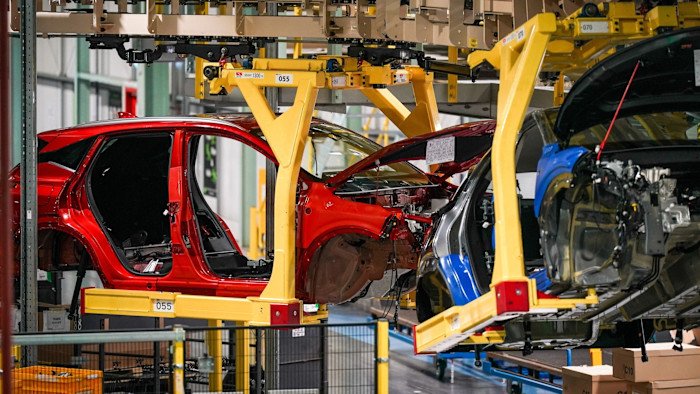
Unlock the Editor’s Digest for free
Roula Khalaf, Editor of the FT, selects her favourite stories in this weekly newsletter.
The EU will offer to include the UK and Japan and dozens of like-minded partners in its “Made in Europe” manufacturing targets, in a bid to shield its strategic sectors from unfair competition from China.
Under proposals unveiled by the European Commission on Wednesday, access to subsidies in clean technology, heavy industry and carmaking would be granted to manufacturing in as many as 40 trusted partners including the UK, provided they offer reciprocal access to EU-based manufacturers.
“It’s a change of doctrine that was unthinkable just a few months ago,” said EU internal market commissioner Stéphane Séjourné. “We must support our strategic sectors.”
The Industrial Accelerator Act is intended to bolster European industry against cheaper imports from Asia. It aims to streamline permitting for all manufacturers, with the goal of raising manufacturing’s share of the bloc’s GDP from 14.3 per cent in 2024 to 20 per cent by 2035.
US restrictions on public procurement for European companies mean American groups are unlikely to qualify for the subsidies, officials said.
The proposal marks a departure from Séjourné’s initial ambitions that mirrored a French desire to focus exclusively on EU-based manufacturers, according to people familiar with discussions.
France’s finance minister Roland Lescure and industry minister Sébastien Martin said in a joint statement that the proposal was a “major rupture, pushed by France” but added that “what is proposed isn’t protective enough of our interests. The advantages given to those who produce in Europe must clearly be reinforced.”
President Emmanuel Macron has repeatedly argued that European public money should “reduce our dependencies in strategic sectors”, pushing for a “European preference” that ties state support to production within the bloc.
But other countries have pushed back against this protectionist approach, resulting in the Commission’s proposal to include partners with existing trade agreements in the act. The plans split the Commission, with directorates at odds over whether to include third countries, according to people familiar with the proposals.
As a result, the focus shifted on reducing Europe’s reliance on trade partners such as China, at a time when the European industrial base is struggling to compete on the global stage, another official said.
The UK government welcomed the move, which came after weeks of lobbying by Peter Kyle, business secretary, for Britain to be included in any “Made in Europe” scheme.
William Bain, head of trade policy at the British Chambers of Commerce, said that fears that UK companies might be excluded from EU supply chains as a result of the IAA had not materialised.
However, he added future pieces of legislation in the ‘made in Europe’ agenda including on autos and EU assembly requirements still presented a risk to UK industry. “A solution must be found here too,” he said.
The act will restrict foreign investments of more than €100mn from countries with over 40 per cent of global production in strategic sectors, including batteries, solar panels and nuclear power.
These investments will have to ensure at least 50 per cent of workers are from the EU, that local companies are involved in the manufacturing process and companies transfer technological knowhow to European partners.
Such measures will aim to avoid situations where Chinese manufacturers open factories in the bloc but employ solely Chinese workers and do not partner with local businesses.
Officials had initially targeted up to 70 per cent local content thresholds for some strategic sectors. This target will now be set for components in cars excluding batteries in line with current levels in a bid to protect jobs.
Other requirements include measures to ensure a limited number of battery components, including the cell, are made in Europe. Targets have also been set for aluminium and cement.
The European car sector may still find these measures insufficient, as it remains dependent on batteries made in Asia for many of its cars and also manufactures some vehicles destined for Europe in regions such as north Africa.
The proposals must be negotiated with member states and the European parliament before they become law.
Additional reporting by Peter Foster and George Parker in London